Man called ‘uncivilised’, ‘monkey’ for sleeping on Delhi Airport bench; internet fires back: ‘Have some empathy’
Man Labeled 'Uncivilised Monkey' for Sleeping on Delhi Airport Bench Sparks Online Debate Controversy Over Public Space Usage Theindiapostdaily.com – A recent viral incident at Delhi Airport has ignited a…
Man Labeled ‘Uncivilised Monkey’ for Sleeping on Delhi Airport Bench Sparks Online Debate
Controversy Over Public Space Usage
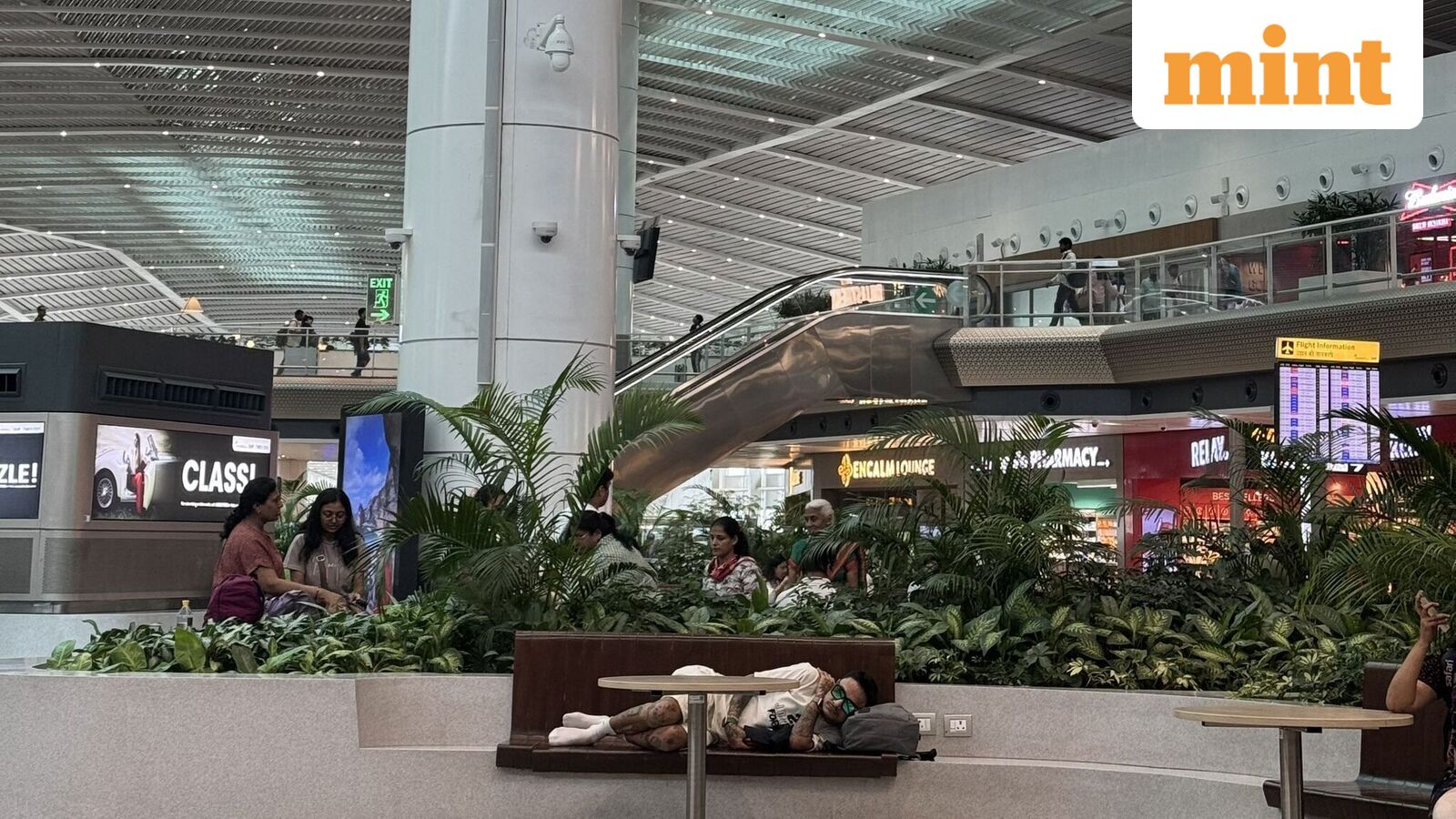
Theindiapostdaily.com – A recent viral incident at Delhi Airport has ignited a fierce online debate, as a man was publicly called an “uncivilised monkey” for sleeping on a bench. The photo shared by social media user Pulkit Sharma quickly gained traction, sparking discussions about how public spaces are used in India. While the image of the man resting on a bench with a cabin bag as a makeshift pillow drew sharp criticism, the controversy extended beyond the individual, questioning societal norms and the expectations of public behavior.
Sharma’s post criticized the individual’s actions, labeling them as a sign of poor civic awareness. The user argued that the man’s choice to occupy a shared bench undermined the purpose of such spaces, which are meant for communal use. This led to a wave of comments on the post, many of which echoed Sharma’s sentiments, while others defended the traveler, highlighting the challenges of long-haul flights and the need for empathy in public settings. The debate underscored a growing divide between critics of perceived laziness and supporters who emphasized the context of travel fatigue.
“No government can bring civic sense to Indians. Utterly pathetic and shameful, this nut job has occupied this public space (meant to be shared) like he owns it.”
Sharma also called for a specialized police unit to address incidents like this, suggesting that such actions reflect a broader issue in Indian society. His critique extended to the airport itself, where he pointed out that even though modern facilities are provided, they are often underutilized or misused. The post’s comments revealed a mix of opinions, with some users agreeing with Sharma’s assessment and others pointing out that similar behavior occurs globally, challenging the notion that it is uniquely Indian.
“Even an average bus stop of west looks cleaner and more civil than India’s biggest airport. Full marks to the authorities for providing many modern facilities, but it has been provided to a bunch of monkeys.”
Internet Comes to Passenger’s Defence
While Sharma’s critique gained momentum, a significant portion of the internet rallied to defend the man who slept on the bench. Many users pointed out that the individual might have been exhausted after a long flight or waiting for a delayed connection. “There’s nothing wrong in sleeping on benches and seats in airport as people might be tired, so please have some empathy,” one commenter wrote, adding that even in the U.S., passengers sometimes leave their shoes on while resting.
Others criticized the overgeneralization of the issue, arguing that labeling someone a “monkey” for resting was an unfair stereotype. “Welcome aboard the civic sense outrage train, where complex problems are reduced to lazy stereotypes because they’re great for venting and even better for social media traction,” remarked another user. This perspective highlighted how social media can amplify individual actions into broader cultural critiques, often oversimplifying the context behind such behavior.
Global Reactions and Comparative Context
Some commenters drew comparisons to first-world countries, suggesting that similar scenes of people resting in public spaces are common in places like the U.S. or Europe. “In London or Paris, you’ll find travelers napping on benches just like here,” said one user, emphasizing that the incident was not unique to Delhi or India. This global perspective encouraged a more nuanced discussion about public behavior, with many arguing that the act of resting is a natural response to exhaustion, regardless of location.
Others pointed out that Delhi Airport, despite its modern facilities, is often overcrowded, making it difficult for passengers to find seating. “Even with hundreds of seats available, people end up sitting where they can, not where they feel comfortable,” explained a user, adding that the design of airport spaces should account for such needs. This argument shifted the focus from the individual to the broader infrastructure challenges, suggesting that the blame should be shared between the traveler and the environment they’re in.
Public Perception and Cultural Norms
The incident also sparked a conversation about cultural norms and perceptions of “civilization.” Some users argued that the man’s behavior reflected a growing trend of relaxation and informality in Indian society, contrasting it with more rigid expectations of public decorum. “In a fast-paced world, people need moments to rest, and that’s perfectly normal,” said one commenter. This viewpoint introduced a cultural angle to the debate, suggesting that the criticism was not just about the action itself, but also about how it aligned or clashed with traditional norms.
Meanwhile, others maintained that the behavior was a symbol of poor public awareness. “Sleeping on a bench in an airport is a sign of negligence, especially when the space is meant for waiting and socializing,” another user stated. These contrasting opinions revealed the complexity of the issue, with some seeing it as a cultural shift and others as a failing in civic responsibility. The discussion also highlighted how public spaces are often judged by their usage, and how a single moment can become a symbol for broader societal expectations.
Broader Implications of the Debate
As the conversation expanded, it began to touch on deeper themes, such as the role of social media in shaping public opinion. Users noted that platforms like Twitter and Facebook can turn everyday occurrences into viral controversies, often with minimal context. “This incident is a perfect example of how a single photo can create a narrative that’s not entirely accurate,” one person wrote. The idea that online reactions can amplify a simple act into a cultural critique is a key takeaway from the debate.
Additionally, the discussion raised questions about the balance between convenience and etiquette. Some users suggested that while the man’s actions may seem impolite, they were a necessary response to the physical demands of travel. “If you’ve been waiting for hours, a quick nap is understandable,” said one commenter. Others, however, argued that such behavior could be avoided with better planning. “If you’re tired, you should have a plan to rest without inconveniencing others,” they added. These perspectives illustrate the nuanced nature of public behavior in crowded spaces, where individual needs and collective expectations often intersect.