US-Iran war LIVE: IRGC warns countries hosting US forces to prepare for ‘corresponding response’
In a dramatic escalation of tensions, the Islamic Revolutionary Guard Corps (IRGC) has
US-Iran War LIVE: IRGC Warns of ‘Proportional Response’ to U.S. Strikes
Theindiapostdaily.com – In a dramatic escalation of tensions, the Islamic Revolutionary Guard Corps (IRGC) has issued a stark warning to nations hosting U.S. military forces, stating they must prepare for a “proportional response” to ongoing attacks. This comes amid heightened hostilities between the United States and Iran, with both sides intensifying their military operations in the region. The live updates highlight a critical moment in the US-Iran war LIVE, as Iran’s leadership signals readiness to retaliate against American actions, including strikes on Iranian infrastructure and presence in key strategic locations.
Strait of Hormuz: A Flashpoint for Conflict
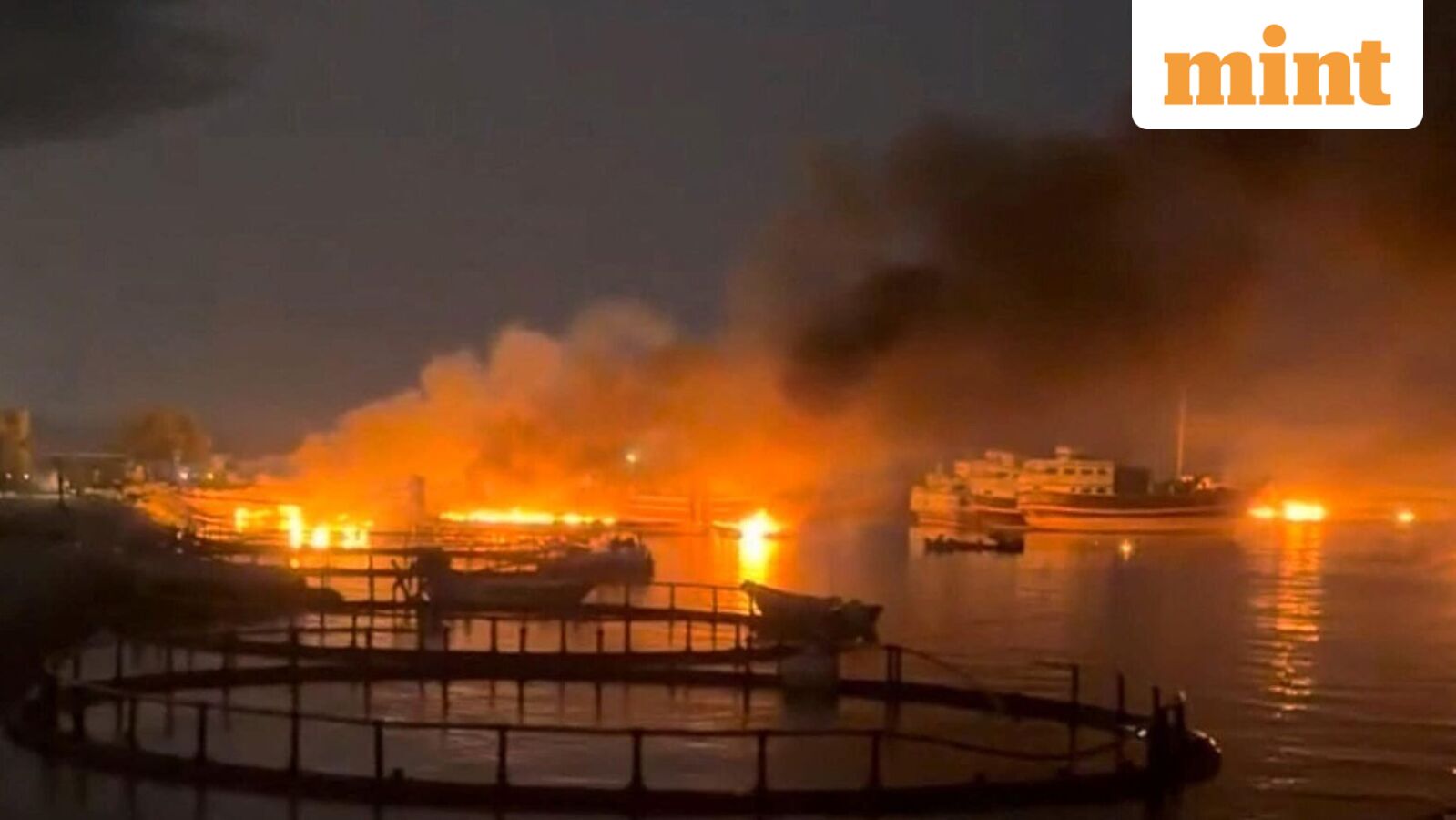
The latest developments in the US-Iran war LIVE have seen the IRGC claim responsibility for detonating two oil tankers in the Strait of Hormuz, a vital waterway that connects the Persian Gulf to the Arabian Sea. According to Tasnim, an Iranian semi-official news agency, the vessels were targeted as they navigated a minefield under “deceptive American intelligence.” The incident underscores the strategic importance of the strait, which is a critical artery for global oil trade, and adds to the growing list of confrontations between the two nations. The IRGC further stated that they had neutralized four additional ships attempting to cross the channel, raising concerns about potential disruptions to maritime traffic.
“The explosion of these tankers is a calculated move to assert Iranian dominance in the region and demonstrate readiness to counter U.S. aggression,” said an IRGC statement.
The attack on the oil tankers in the Strait of Hormuz is part of a broader pattern of escalation, with both the U.S. and Iran using the waterway as a symbol of their rivalry. The incident has drawn international attention, with some analysts warning of the possibility of a larger conflict if tensions continue to rise. The IRGC’s claim that the vessels were operating under American deception suggests a coordinated effort to undermine U.S. intelligence efforts and provoke a stronger response from Washington.
U.S. Strikes and Iranian Retaliation
Over the past week, the U.S. military has launched a series of strikes targeting Iran’s military infrastructure, marking the most intense phase of hostilities since the conflict resumed. Central Command (CENTCOM) reported that the attacks are aimed at “reducing Iranian military capabilities,” a statement that aligns with President Donald Trump’s earlier threats to target Iranian facilities. While no official confirmation of the exact number of strikes emerged from Washington on Friday, reports indicate that the U.S. has been conducting strikes for seven consecutive nights, with the goal of disrupting Iran’s ability to project power in the region.
“Iran’s military operations were carried out in direct response to recent U.S. attacks, with Tehran asserting it has expanded its strikes to multiple Gulf nations and beyond,” stated IRIB, the Iranian state broadcaster.
Iran has accused the U.S. of damaging civilian infrastructure, including an airport, railway station, and two bridges, as part of its military campaign. In retaliation, Iranian forces launched coordinated strikes on U.S. military assets across the Gulf, targeting bases in Qatar, Kuwait, Jordan, Oman, and Syria. These attacks have not only increased the stakes of the US-Iran war LIVE but also raised the specter of a wider regional conflict, with allies of both nations caught in the crossfire.
Chabahar Port: A Strategic Target in the US-Iran War LIVE
On Friday, U.S. Central Command (CENTCOM) confirmed the destruction of a surveillance tower at Chabahar Port, a critical hub in Iran’s southern region. The tower was part of the IRGC’s long-standing maritime monitoring system, used for decades to track commercial vessels and military activity in the Gulf of Oman. The attack on Chabahar Port, which is located in the Shahid Kalantari facility, has been interpreted as a direct blow to Iran’s ability to monitor and control key shipping lanes, further complicating the dynamics of the US-Iran war LIVE.
“U.S. forces successfully destroyed the Chabahar Shahid Kalantari Port surveillance tower, a key component of the IRGC’s network for monitoring shipping in the Gulf of Oman,” said a CENTCOM post on X.
The Chabahar Port incident has drawn attention to its role as a strategic asset for Iran, particularly in its efforts to counter U.S. influence in the region. The port serves as a gateway for Iran’s trade with India and other regional partners, and its destruction has raised questions about the long-term impact on economic and military operations. Analysts suggest that the U.S. is targeting such facilities to weaken Iran’s logistical capabilities and send a clear message of dominance in the area.
As the US-Iran war LIVE continues to evolve, the situation remains volatile, with both sides demonstrating their commitment to escalating the conflict. The combination of strikes on Iranian infrastructure, attacks on U.S. bases, and the detonation of oil tankers in the Strait of Hormuz signals a deepening crisis. The IRGC’s warning to allies hosting U.S. forces, coupled with the destruction of the Chabahar Port tower, has placed the region on edge, with global powers closely monitoring the developments. The next phase of the conflict could determine the extent of damage to both nations’ strategic interests and their ability to sustain operations in the Gulf.