Skip to content
Now streaming सितम्बर 3, 2026
Hot pulse

Tribunal twist: NCLT to hear Chandra plan again, this time with a bigger bench

NCLT Deadlock on Chandra Repayment Plan Triggers Emergency Five-Member Bench

Theindiapostdaily.com – The insolvency saga surrounding media veteran Subhash Chandra took a sharp procedural turn this week when the National Company Law Tribunal admitted that its earlier three-member panel had failed to reach a collective decision on the founder’s proposed repayment arrangement. Within hours of that admission, the tribunal’s appellate wing, the National Company Law Appellate Tribunal, moved to constitute an entirely new five-member special bench tasked with re-examining the plan from scratch. The hearing is scheduled for Tuesday, and aggrieved lenders have simultaneously lodged an urgent petition before the NCLAT, effectively placing the matter under two parallel judicial tracks.

The Split Inside the Original Bench

The impasse at the heart of the situation is not a question of whether Chandra owes money — that point is settled — but rather how a repayment scheme approved by a required creditor majority should bind institutions that voted against it. According to the tribunal’s own explanation, one member of the earlier panel believed the plan ought to apply exclusively to creditors who had supported it, leaving dissenting banks and financial institutions free to continue independent recovery proceedings. A second member took the opposite position, arguing that once the requisite majority threshold was crossed, every creditor in the insolvency process was bound by the arrangement regardless of individual objections.

The tribunal acknowledged that these two readings carried materially different consequences for the rights of creditors who had opposed the proposal. In its clarification order, the bench stated:

“All said and done, no majority view has emerged in the matter. In the wake, no order can be passed at this stage. Resultantly, we have no option but to make fresh reference to Hon’ble President in terms of the provisions of Section 419(5) of the Code.”

That language effectively nullifies the Friday order that had appeared to sanction the repayment plan, leaving creditors without a final, enforceable tribunal determination.

Composition of the New Bench and the Appellate Challenge

The replacement panel is headed by NCLT President Justice Anupinder Singh Grewal and includes judicial members Bachu Venkat Balaram Das and Mahendra Khandelwal Das alongside technical members Atul Chaturvedi and Ravindra Chaturvedi. The expanded composition — five judges rather than three — is designed to produce a clear majority and avoid the kind of internal deadlock that just paralysed the earlier sitting.

On Monday, before the tribunal’s clarification was issued, creditors LIC Housing Finance, HDFC Bank, and Union Bank of India had already filed an urgent petition before the NCLAT contesting the Friday order. That petition now sits alongside the fresh reference to the five-member bench, meaning the question of whether opposing creditors can be compelled to accept a partial repayment may be addressed at two levels of the insolvency judiciary in quick succession.

What the Plan Actually Involves

The repayment arrangement under scrutiny would see Chandra pay a total of ₹6.5 crore. Of that sum, ₹6.25 crore is earmarked for distribution to creditors, while ₹25 lakh is allocated to cover the costs of the insolvency process itself. The plan was initially approved on 25 August by a three-member bench that included Nilesh Sharma, whom the NCLT president had appointed as the third member in February 2026.

Sharma’s reasoning, as recorded at the time of approval, rested on two pillars. First, he found that creditors had meaningfully participated in the voting process and that no creditor had demonstrated a sufficient degree of prejudice from being bound by the majority decision. Second, he held that the tribunal should not substitute its own commercial judgment for the collective choice made by the requisite majority of creditors. Those holdings are now in limbo pending the five-member bench’s determination.

Scale of the Underlying Exposure

The broader context of the case is important for readers who may have encountered headlines suggesting that Chandra personally borrowed thousands of crores. Government officials, speaking on condition of anonymity, clarified that the insolvency proceedings were initiated against him not because he was the primary borrower but because he had provided personal guarantees for loans taken by several Essel and Zee-linked companies. Approximately ₹2,574 crore of the total claims relate to guarantees he gave at the time those loans were originally disbursed. The majority of his remaining guarantees were furnished later, as additional security for existing obligations.

That distinction matters because it frames the legal question before the courts: the dispute is not about whether a single individual consumed a multi-thousand-crore credit facility, but about how a guarantor’s limited repayment capacity interacts with the rights of creditors who hold different views on the best path to recovery.

Creditor Voting and the Majority Threshold

When the plan was put to a vote, HDFC Bank, Axis Bank, Canara Bank, RBL Bank, and Union Bank of India cast their votes against it. Nevertheless, the arrangement cleared the statutory threshold, receiving 80.81% support by value from the creditor body. The question now before both the five-member bench and the NCLAT is whether that supermajority is sufficient to bind the dissenting institutions or whether those institutions retain the right to pursue separate, parallel recovery actions outside the insolvency framework.

The answer will carry implications well beyond the Chandra matter. Indian insolvency law permits a creditor majority to approve a resolution plan, but the precise contours of that majority’s binding force — particularly where a guarantor’s repayment capacity is a fraction of total exposure — remain underdeveloped in case law. A definitive ruling from either the expanded NCLT bench or the appellate tribunal could set a precedent that shapes how future insolvency proceedings handle partial-repayment proposals opposed by a minority of creditors.

What Happens Next

The five-member bench is expected to hear arguments on Tuesday. Simultaneously, the NCLAT petition filed by LIC Housing Finance, HDFC Bank, and Union Bank of India remains pending. Depending on the sequencing of hearings, creditors may receive appellate guidance before the tribunal bench delivers its own view, or vice versa. Either way, the original Friday order is effectively suspended, and Chandra’s repayment plan — along with the rights of every creditor in the process — hangs in procedural uncertainty until a final, majority-backed determination is issued.

Frequently Asked Questions

What is Tribunal twist?

Tribunal twist is the main topic of this guide. The article explains the context, practical details, and next steps readers should understand.

Why does Tribunal twist matter?

Tribunal twist matters because readers are looking for a useful answer, not just a short summary. Good content should match search intent and help them decide what to do next.

Lionel Messi announces retirement; fans struggle to accept: ‘Poetic ending to his GOAT career’

Messi Retires; Fans Struggle to Accept

Theindiapostdaily.com – When Lionel Messi announces retirement from international football, fans struggle to accept that the man who carried a nation’s hopes for two decades has finally set the weight down. Confirmed via Instagram on Monday, the decision ends a chapter spanning six World Cup tournaments and culminating in Argentina’s run to the 2026 final. At 39, the Argentine forward stepped away from the national team — not from club football — a distinction that underscores just how singular his bond with the Albiceleste has been.

The announcement arrived in Messi’s own words rather than through a federation press release. Supporters worldwide received the news with a mixture of grief, disbelief, and a strange, bittersweet gratitude for having witnessed the full arc of what many consider the greatest career in the sport’s history.

A Nation Reacts

Within minutes of the post going live, social media filled with tributes and tears. Followers who had tracked Messi since his early days at Barcelona could not immediately process the finality of the moment.

“This is not true. He can’t hand up like that 😭”

Others framed the news not as a loss but as a privilege — the chance to have watched every chapter unfold in real time.

“Can’t even feel sad about this. It was worth it all watching him from the very first start to the last.”

The sentiment of an era closing echoed across continents:

“Truly the end of an era. We will never see a player like him.”

One fan captured the poetic finality of the moment with a line that quickly went viral:

“Greatest of all time, going after a poetic ending to his GOAT career. We will miss you leo.”

The Farewell Message

Messi’s own words carried the weight of two decades of pressure, triumph, and heartbreak. He opened by acknowledging the pain of the choice:

“It was a decision that hurt and still hurts deep inside, but I understand that this is the right moment.”

He insisted his commitment had never wavered, even in the years before the trophies began arriving:

“I swear I always gave everything, not only in these last few years when we won everything, but before that too. I always fought and gave everything for this shirt, to bring you happiness and make you feel proud to be Argentine through football.”

Speaking of the broader timeline of his life, Messi noted that multiple chapters were reaching their conclusions simultaneously:

“There isn’t much time left, and different chapters are coming to an end. This is one that hurts me a lot. I love, I loved, and I will always love being part of the national team. I gave everything I had, and I don’t have anything more to give.”

He pointed to the next generation already knocking on the door of the senior squad:

“Also, there are great young players coming through who deserve to be here.”

The emotional core of the message came when he described what it would mean to shift from inside the stadium to outside it:

“Thank you for all the love during these 20 years. I’m going to miss hearing you from the inside. Now I’ll be one of you, always supporting from the outside, in the good times and even more in the bad ones.”

He extended gratitude to his family, every coach, teammate, and director who shared the journey, and closed with a declaration of peace:

“I leave with peace and pride, knowing that together with my teammates we gave you moments we once dreamed of. It was crazy to experience all of this with you. I love you!”

The final lines carried a spiritual and national weight:

“Thank you God for making me Argentine. Vamos Argentina!”

The Personal Catalyst

Beneath the public farewell lay a deeply private grief. Messi revealed that the message was originally composed on July 21, just two days after the 2026 World Cup final concluded. But circumstances changed between writing and posting. His father’s death, which occurred after the tournament, sharpened his resolve to step away from the national team.

“Today, after what happened with my dad, I’m even more convinced of this decision than before.”

That single sentence reframed the entire announcement. What might have been read as a routine post-career wind-down became, in context, a man processing loss and choosing to close a chapter while he still could do so on his own terms, surrounded by the people who mattered most.

FAQ

Did Lionel Messi announce retirement from all football or just the national team? He retired from international football with Argentina. No indication was given that he is leaving club football.

How did fans react to the announcement? Reactions ranged from outright disbelief to gratitude. Many described it as “the end of an era” and called it a “poetic ending to his GOAT career.” Social media filled within minutes of the Instagram post going live.

What personal event influenced the timing of the announcement? Messi’s father died after the 2026 World Cup final. Messi stated that this loss made him “even more convinced” of his decision to retire from the national team.

When was the farewell message originally written? Messi said the message was composed on July 21, two days after the World Cup final, but was held until after his father’s passing.

John Galliano withdraws from Met Gala 2027 after backlash over past racist, antisemitic remarks: ‘I’m deeply sorry’

John Galliano Withdraws from Met Gala

Theindiapostdaily.com – John Galliano withdraws from Met Gala 2027 in a move that effectively cancels a major retrospective the Metropolitan Museum of Art had announced just weeks earlier. The British designer pulled out of the exhibition titled John Galliano: Horizons, which was unveiled publicly on 31 July and was slated to anchor the Costume Institute’s spring programme. The reversal came barely a month after the museum made the announcement, ending a project that had already drawn sustained public criticism.

The backlash centred on remarks Galliano made earlier in his career that were widely characterised as antisemitic, racist, and anti-Asian. Those comments cost him his roles at Christian Dior and at the house bearing his own name, and a Paris court later convicted him of public insults grounded in race, religion, ethnicity, or national origin. Many observers argued that a museum retrospective would amount to institutional erasure of that history — a reading the designer himself now appears to accept.

The Exhibition That Never Was

The planned show was ambitious in scope, designed to trace the full arc of a four-decade career. It would have begun with Galliano’s graduation collection from Central Saint Martins, moved through his tenure at Givenchy and his transformative years at Dior, and concluded with his later creative reinvention under the Maison Margiela banner. Garments, accessories, design sketches, research volumes, toiles, and archival documentation were all slated for display.

The museum’s original framing did not pretend the controversy had never occurred. Its stated intent was to examine Galliano’s derogatory conduct and the rupture it caused, alongside his subsequent treatment for addiction and his public acknowledgement of his actions. The institution positioned the show as a reckoning as much as a celebration — an approach that nonetheless failed to quiet the outcry.

Galliano’s Own Words

In a lengthy statement released alongside the withdrawal announcement, the designer addressed the museum’s leadership directly and spoke to the communities he said he had wounded. He described reaching the decision after discussions with The Met and other parties involved in the project, and expressed gratitude to museum director and chief executive Max Hollein, Costume Institute curator Andrew Bolton, and Anna Wintour.

“I am profoundly grateful to The Metropolitan Museum of Art, and particularly to Max Hollein, Andrew Bolton and Anna Wintour, for the extraordinary honour of proposing an exhibition devoted to my work. After much reflection and discussion with all those involved, I have decided, with great sadness, that it is best for the exhibition not to take place at this time. I remain fully accountable for the pain caused by my words in the past, particularly the hurt I caused to the Jewish and Asian communities, and I remain deeply sorry. I understand that meaningful atonement is not achieved through an exhibition, institutional recognition or a single public gesture. It is a continuing responsibility, demonstrated through listening, learning and one’s conduct over time.”

“I would also like to express my deepest gratitude to all those who have guided, supported and accompanied me throughout these fifteen years of sobriety and recovery from alcoholism and addiction. Your wisdom, patience and humanity have helped me more than I can ever adequately express.”

What Comes Next at the Costume Institute

The Met confirmed that the cancellation was a joint decision between the museum and Galliano. The Costume Institute will now need to identify a replacement exhibition for its 2027 programme, a process that typically requires eighteen to twenty-four months of curatorial planning. Museum spokespersons indicated that the schedule would be revised in due course, though no replacement title or designer has been named as of this writing.

Frequently Asked Questions

When was the Galliano exhibition originally announced? The Metropolitan Museum of Art publicly unveiled John Galliano: Horizons on 31 July, with the show intended to coincide with the 2027 Met Gala season.

Why did Galliano withdraw? He cited ongoing public debate over his earlier remarks and did not want the controversy to place the museum in a difficult position or distract from the Costume Institute’s broader work. He described the decision as made after discussions with museum leadership.

Was the withdrawal a unilateral decision? No. The Met confirmed it was a joint decision between the institution and the designer.

What happened to the exhibition’s planned content? The garments, sketches, toiles, and archival materials that were to be displayed will return to their respective owners and archives. No items have been permanently acquired by the museum for this cancelled show.

Lionel Messi Net Worth 2026: Salary, endorsements, cars, properties and luxury assets

Lionel Messi Net Worth 2026: Full Breakdown

Theindiapostdaily.com – When the final whistle closed out Lionel Messi’s international career on 31 August 2026 — following a World Cup final defeat and the recent loss of his father — many assumed his earning power would plateau. The reality, as captured in every Lionel Messi Net Worth 2026 estimate, tells a different story. He remains under contract at Inter Miami, where his compensation package blends salary, revenue-sharing, and a future equity stake in the club itself.

Forbes currently values his total net worth at roughly $1.1 billion, while Celebrity Net Worth places career salary and bonus income above $700 million. The broader gross-earnings figure Forbes cites — approximately $1.8 billion before taxes and agent commissions — spans two decades of matchday wages and commercial revenue, placing him among the wealthiest athletes ever measured.

How Career Earnings Evolved Across Three Clubs

The financial trajectory shifted dramatically with each move. The landmark 2017 Barcelona agreement layered performance bonuses atop an already extraordinary base salary, pushing effective annual earnings well beyond headline figures. A subsequent two-year spell at Paris Saint-Germain added another tier of top-division wages, though the structure was less generous than what preceded it.

Inter Miami introduced a qualitatively different model. Rather than a straightforward wage, the Miami arrangement bundles compensation with revenue-sharing mechanisms and, critically, an option to acquire an ownership stake upon retirement. Club owner Jorge Mas has publicly framed the annual package in the $70 million to $80 million range — a figure that, combined with upside from equity, transforms the contract from a salary into a long-term investment position.

Endorsements, Social Media, and the Commercial Engine

Playing contracts alone cannot explain a nine-figure valuation. Forbes estimates that endorsements and business ventures have contributed more than $600 million across his career. The anchor partnership remains his lifetime Adidas deal, valued at roughly $25 million per year by industry analysts. Beyond that, Messi has fronted campaigns for Pepsi, Gatorade, Mastercard, Budweiser, and a roster of multinational brands whose combined spend compounds annually.

His social-media footprint amplifies every deal. Sponsored Instagram content can generate around $2.7 million per post by industry estimates, though figures fluctuate with platform algorithms and campaign scope. Structurally, his audience spans multiple generations of football fans, granting a commercial shelf life most athletes never achieve.

Properties, Hospitality, and Tangible Luxury

Real estate constitutes a substantial slice of the portfolio. Messi’s property holdings are valued above $200 million and reportedly span luxury residences in Barcelona, Miami, and his hometown of Rosario, Argentina. He has also channeled capital into the MiM Hotels hospitality brand, extending his name into the travel and lodging sector. Family investment vehicles reportedly hold additional European hospitality and property assets, generating recurring income independent of matchday or endorsement revenue.

On the tangible-luxury front, he is linked to a private aircraft used for family travel and team logistics. Automotive associations reported over the years have included Mercedes-Benz, Maserati, Range Rover, and Audi models, alongside a comparatively understated Toyota Prius that drew attention precisely because it defied expectation. Online inventories sometimes inflate his garage into a sprawling exotic-car collection, but most listed models lack reliable ownership confirmation.

What distinguishes the Argentine’s financial picture from most athletes is not a single windfall but the compounding effect of equity upside, lifetime brand deals, and diversified hospitality income operating simultaneously.

Frequently Asked Questions

How much is Lionel Messi worth in 2026? Forbes estimates his net worth at approximately $1.1 billion as of mid-2026, combining career earnings, endorsements, real estate, and business interests.

Does Messi still earn from playing football? Yes. He remains active at Inter Miami under a contract that includes an annual package reported in the $70 million to $80 million range, plus revenue-sharing and a future equity option.

What is his largest single income source outside football? His lifetime Adidas sponsorship, valued at roughly $25 million per year, is the single most valuable individual endorsement. Collectively, endorsements and business ventures have exceeded $600 million over his career.

Where does Messi own property? Reported holdings include luxury residences in Barcelona, Miami, and Rosario, Argentina, along with stakes in the MiM Hotels hospitality brand and additional European property assets held through family investment vehicles.

Will his wealth continue growing after retirement? Analysts expect an upward trajectory driven by the Inter Miami equity option, ongoing brand partnerships, media and broadcasting opportunities that open post-international-retirement, and recurring hospitality income.

Quote of the Day by Optimus Prime: ‘There’s a thin line between being a hero, and being a memory’

The Voice Behind the Hero: What Optimus Prime’s Final Words Mean After Peter Cullen’s Passing

Theindiapostdaily.com – Peter Cullen, the Canadian actor whose deep, resonant baritone gave voice to one of cinema’s most iconic sci-fi characters for over two decades, died at the age of 85. His departure prompted a wave of tributes across the entertainment world, but perhaps no single line from the franchise he helped define resonated more deeply than the one delivered by Optimus Prime in the 2007 live-action Transformers film:

“There’s a thin line between being a hero, and being a memory.”

Spoken by the Autobot commander near the film’s climax, the sentence functions as a quiet meditation on mortality and consequence. It does not announce triumph or declare victory. Instead, it acknowledges the precarious boundary between a living protector and the echo that protector leaves behind once the final battle is over. For audiences who first encountered the line in theaters more than a decade ago, its meaning has shifted considerably since Cullen’s death.

A Leader Defined by Responsibility, Not Glory

Optimus Prime occupies a singular position in popular culture: he is a warrior whose primary identity is not combat but stewardship. As commander of the Autobot faction, he repeatedly positions himself between catastrophic threats and the civilians—both human and Cybertronian—who depend on his judgment. His heroism, as the franchise portrays it, is less about the spectacle of destruction and more about the weight of choosing who gets saved, who gets sacrificed, and what comes after the smoke clears.

That framing is what gives the quote its emotional gravity. Being a hero, in this telling, is not a fixed identity one can hold indefinitely. It is fragile, contingent, and always one decision away from becoming something else entirely. A single act of self-sacrifice, a final stand, a choice made under impossible pressure—any of these can tip the balance from “the person still standing” to “the name on the memorial.” The line does not romanticize that transition. It simply names it.

The Actor Behind the Authority

Cullen’s contribution to the character extended far beyond vocal performance in the conventional sense. His delivery combined a measured gravity with an undercurrent of warmth, lending Prime an authority that never felt cold or mechanical. Audiences who grew up with the character in the 1980s animated series carried that specific timbre into the live-action films, and the continuity of voice across formats gave the character an emotional anchor that pure visual design could not replicate.

Yet reducing Cullen to a single role would do an injustice to a career spanning decades across animation, television, and film. He was equally recognizable as Eeyore, the perpetually gloomy donkey from the Winnie-the-Pooh franchise, a role that demanded a completely different register: small, weary, self-deprecating. The contrast between the stoic, forward-looking optimism of an interplanetary warlord and the gentle melancholy of a cartoon donkey illustrated a range that few voice actors have matched. That duality made his passing feel like the loss of two beloved presences at once.

Voices That Outlive Their Speakers

There is a particular poignancy in watching a film now knowing the voice you hear belongs to someone no longer alive. The character continues to exist in archives, in streaming libraries, in the memories of children who first saw the movie at a family screening. The actor does not. The voice becomes a recording, a relic, a piece of cultural history. In that sense, Cullen has crossed the very line the quote describes—not as a fictional hero, but as the human being who made the hero audible.

This dynamic is not unique to Cullen or to Transformers. It applies to every voice actor whose work became inseparable from a character’s identity. The distinction between the performer and the performance dissolves over time, and what remains is the sound itself, embedded in the listener’s childhood, in the cultural record, in the collective memory of a generation. The quote, written for a fictional warlord, ends up describing the fate of the real person who gave that warlord his voice.

Freedom, Sacrifice, and Enduring Purpose

Another line from the franchise, often cited alongside the memory quote, crystallizes the philosophical core of the character:

“Freedom is the right of all sentient beings.”

Read together, the two statements outline a complete ethic. The first declares what the hero fights for: universal liberty, extended without exception to every conscious entity. The second acknowledges what that fight costs: the possibility that the fighter will not survive to enjoy the freedom they secured. Optimus Prime’s enduring appeal rests on this pairing. His heroism is never framed as a quest for personal glory. It is rooted in sacrifice, in the willingness to bear risk so that others need not, and in the conviction that freedom is non-negotiable regardless of species, origin, or circumstance.

As audiences continue to revisit the Transformers films—now streaming in households where the original theatrical audience has grown into parents raising children of their own—the distinction between a hero and a memory takes on a new, uncomfortable intimacy. The voice that once filled a darkened theater now belongs to history. The character persists. The line persists. And the thin boundary it describes grows thinner with every passing year, reminding viewers that every act of protection carries within it the quiet possibility of its own erasure.

Frequently Asked Questions

What is Quote of the Day by Optimus?

Quote of the Day by Optimus is the main topic of this guide. The article explains the context, practical details, and next steps readers should understand.

Why does Quote of the Day by Optimus matter?

Quote of the Day by Optimus matters because readers are looking for a useful answer, not just a short summary. Good content should match search intent and help them decide what to do next.

‘Drunk’ pilot steals plane, flies into no-fly zone before crash-landing in sunflower field

Intoxicated Man Hijacks Cessna, Flies Over Hungary’s Nuclear Plant, and Ends Up in a Sunflower Field

Theindiapostdaily.com – A sunflower field in southern Hungary became the unlikely final resting place for a stolen Cessna 172 after a 24-year-old man, already under the influence of alcohol, took off from a nearby airfield and flew directly into restricted airspace surrounding the country’s sole nuclear power station. The aircraft touched down roughly four miles from the Paks facility, sustaining heavy structural damage, though the pilot walked away from the wreckage with only minor injuries.

The episode, which unfolded over a matter of minutes on a single afternoon, raised immediate questions about airport security protocols in Hungary and prompted a swift military response that included the scramble of two Gripen fighter jets to track the intruder.

Military Radar Catches the Intruder

The Hungarian Minister of Defense, Dr. Romulusz Ruszin-Szendi, confirmed via a social media post that the aircraft was picked up by military radar the moment it crossed into the no-fly zone encircling the Paks nuclear power plant. Civilian aircraft are barred from operating within approximately two miles of the facility at altitudes below 20,000 feet, a restriction designed to minimize risk to a site that generates roughly half of Hungary’s total electricity output.

Once the radar return was confirmed, two Gripen jets were launched from their bases and vectored toward the small propeller plane. The fighters located the Cessna and held station nearby, effectively escorting it while ground emergency services were mobilized toward the area where the aircraft was expected to come down.

Emergency Landing in a Sunflower Field

Within minutes of the jets’ arrival, the Cessna made an uncontrolled landing in a field of sunflowers situated about four miles from the nuclear installation. The airframe sustained extensive damage on impact, yet the pilot managed to extricate himself without sustaining serious harm. Police later described his condition as involving only “slight injuries” sustained during the crash.

After leaving the wreckage, the man reportedly walked through the sunflower field until he reached a nearby roadway. Officers found him there in what they described as a disoriented condition.

“He was found in a confused state,” the police release stated.

Distressed and clearly impaired, the suspect then attempted to seize the steering wheel of a passing driver’s car and drive off. Officers intervened before he could move the vehicle and placed him under arrest. He was transported for questioning, where initial screening indicated he had been intoxicated at the time of the incident. Additional toxicology examinations were ordered to establish whether any other drugs or substances had been consumed.

How Did He Reach the Aircraft?

Investigators believe the man took the Cessna without authorization from Kalocsa Airport, a small regional airfield located in close proximity to the Paks site. Authorities are examining the full chain of events: how he gained physical access to the aircraft, whether any security procedures were bypassed, and what motivated him to take flight in the first place.

As part of the broader inquiry, officials announced plans to conduct inspections at other Hungarian airports to assess whether similar vulnerabilities exist elsewhere in the national aviation network.

Legal proceedings have been initiated against the suspect on charges including unlawful taking of control of a vehicle, alongside additional offences yet to be fully detailed.

Why the Paks Proximity Matters

The Paks nuclear power plant, situated along the Danube in southern Hungary, is the backbone of the country’s baseload electricity generation. It supplies approximately 50 percent of Hungary’s total power output, making any incursion into its protective airspace a matter of national infrastructure security rather than merely a local aviation curiosity.

The no-fly zone surrounding the plant exists to ensure that no uncontrolled aircraft—whether by mechanical failure, pilot error, or deliberate action—can approach the reactor buildings at low altitude. The fact that a single-seat, single-engine Cessna 172 penetrated that zone and remained airborne long enough for fighter jets to be vectored to it underscores both the effectiveness of Hungary’s air-surveillance infrastructure and the narrow margins involved in keeping a nuclear site safe from airborne threats.

The plant itself was confirmed unaffected by the incident. No radiation anomaly, operational disruption, or evacuation was reported at the facility.

Broader Implications for Regional Aviation Security

Small general-aviation airfields in Hungary, like those across much of Central Europe, often operate with limited staffing and comparatively light physical security compared with major commercial airports. An incident of this kind—where an intoxicated individual walks onto a tarmac, enters an unlocked or lightly secured aircraft, and takes flight—highlights a persistent vulnerability in the general-aviation sector.

The planned inspections at other Hungarian airports signal that authorities intend to treat the episode not as an isolated act of individual recklessness but as a potential indicator of systemic gaps. Whether those inspections lead to tightened keying procedures, enhanced perimeter monitoring, or revised access-control policies at regional fields will shape the longer-term outcome of the investigation.

For now, the sunflower field where the Cessna came to rest has become an unlikely symbol of how quickly a routine afternoon in southern Hungary can escalate into a military scramble, a nuclear-plant airspace breach, and a police pursuit—all before dinner time.

Frequently Asked Questions

What is Drunk pilot steals plane flies into?

Drunk pilot steals plane flies into is the main topic of this guide. The article explains the context, practical details, and next steps readers should understand.

Why does Drunk pilot steals plane flies into matter?

Drunk pilot steals plane flies into matters because readers are looking for a useful answer, not just a short summary. Good content should match search intent and help them decide what to do next.

Trump calls Iran a ‘failed nation’, says ‘IT IS DEAD’ in scathing attack

Trump Brands Iran a “Failed Nation” as Washington and Tehran Trade Fire in the Strait of Hormuz

Theindiapostdaily.com – The already volatile relationship between the United States and Iran took a sharp turn when President Donald Trump took to social media to declare, in his words, that the Islamic Republic is effectively finished as a functioning state. His post, published on the Truth Social platform, did not merely criticize Tehran’s policies — it announced, in capital letters, that the country was dead. The timing of the message coincided with a fresh round of kinetic exchanges between American and Iranian forces in the Persian Gulf, marking the first direct military contact between the two sides in several weeks.

A Post That Left No Room for Nuance

Trump’s message on Truth Social was blunt and sweeping. He labeled Iran a “Failed Nation” and followed that designation with an emphatic declaration:

“Iran is officially a Failed Nation. IT IS DEAD!”

Beyond the headline verdict, the post catalogued what Trump described as Iran’s total collapse across multiple domains. He asserted that the country possesses neither a navy nor an air force, that its currency has collapsed, and that inflation has surged to roughly 300 percent. He further alleged that Tehran could no longer reliably pay its soldiers or its police, and that its leadership was mired in what he called “total disarray,” rendering it incapable of representing the nation in any meaningful sense.

The president also turned his attention to domestic unrest in Iran. He accused Iranian authorities of killing protesters on a massive scale, claiming that more than 100,000 people had died. In his framing, those killings warranted prosecution as war crimes. He simultaneously dismissed what he termed “FAKE NEWS from the USA,” arguing that Iran relied on rhetoric rather than concrete action to address its internal problems. The post closed with a single, unfiltered verdict on the Iranian leadership’s response to its own citizens, which he dismissed as a good line of “BULLSHIT.”

Strikes on Larak Island and Retaliation Across the Region

The rhetorical escalation arrived alongside actual combat. On Sunday, August 30, the United States carried out strikes against Iranian rocket launchers positioned on Larak Island, a small landmass sitting within the Strait of Hormuz — the narrow waterway through which roughly a fifth of the world’s traded oil passes. Washington stated the operation was designed to stop Tehran from laying mines in that critical shipping corridor.

Iranian state media reported that three people were killed and several more wounded in the American strikes. Tehran responded quickly, launching missile and drone salvos aimed at US military installations across the region. The Islamic Revolutionary Guard Corps announced that its ballistic missile attack on two American bases in Jordan had inflicted “heavy damage.”

Trump, however, presented a markedly different picture of the engagement. He said US forces had intercepted every incoming missile except one, and characterized that final projectile as posing no genuine threat. Jordan’s military confirmed it had shot down eight missiles but declined to specify their origin. Iran additionally claimed it had targeted US personnel at an air base in the United Arab Emirates and had downed an American drone over the Strait of Hormuz. The UAE acknowledged that a drone was intercepted over its waters but called the allegation that Al Minhad Air Base had been struck “baseless.”

Earlier in the same period, Trump had warned of a forceful American reply after the two sides exchanged fire for the first time in weeks. Speaking briefly with a Fox News reporter, he said:

“We’re going to hit them hard. There will be a response.”

Those remarks raised the prospect that months of relative quiet between Washington and Tehran could give way to a renewed cycle of hostilities.

Tehran Calls for Dialogue While Maintaining Its Hormuz Blockade

Even as missiles flew, Iranian President Masoud Pezeshkian urged a return to diplomacy. Addressing a summit in Kyrgyzstan, he framed continued fighting as contrary to both Iran’s interests and those of the wider region:

“We continue to strive for a path of agreement and understanding, and we believe that continuing the war is neither in our interest, nor in the interest of the region.”

He added that the answer to the existing problems lay in “dialogue and cooperation.” Foreign Minister Abbas Araghchi reinforced the message on Iranian state television, stating:

“The solution is completely clear and straightforward: the United States must return to its commitments.”

That diplomatic language sits in tension with Tehran’s continued blockade of the Strait of Hormuz, a move that has kept global energy markets on edge and given Washington a persistent economic lever over the Iranian economy.

Economic Pressure as the Backdrop

The latest military flare-up followed weeks of relative calm during which the Trump administration had shifted its primary emphasis toward economic coercion — sanctions, financial restrictions, and pressure on trade partners. US Treasury Secretary Scott Bessent had been at the forefront of that campaign, tightening the financial noose around Tehran’s oil revenues and currency reserves. Trump’s Truth Social post, published earlier on Monday, layered his political denunciation atop that economic strategy, portraying Iran as simultaneously militarily hollowed out, economically crumbling, and politically incoherent.

For readers tracking the broader picture, the significance of these events extends well beyond the two governments involved. The Strait of Hormuz carries an estimated 20 million barrels of oil per day. Any sustained disruption — whether through mining, missile strikes, or prolonged blockade — sends immediate ripples through shipping insurance rates, freight costs, and energy prices worldwide. The fact that both sides are now combining kinetic action with economic warfare, while simultaneously issuing contradictory accounts of what happened in the air and at sea, makes the next several weeks a period of acute uncertainty for markets, regional allies, and the millions of ordinary Iranians whose daily lives are already strained by inflation and currency depreciation.

Whether the rhetoric of a “dead” nation and the language of “dialogue and cooperation” can coexist in the same week remains the central question. For now, the missiles have been fired, the strikes have landed, and the diplomatic channels remain open but untested. The gap between what Washington says and what Tehran says about the same events is itself a form of pressure — one that neither side appears willing to close.

Frequently Asked Questions

What is Trump calls Iran a failed nation?

Trump calls Iran a failed nation is the main topic of this guide. The article explains the context, practical details, and next steps readers should understand.

Why does Trump calls Iran a failed nation matter?

Trump calls Iran a failed nation matters because readers are looking for a useful answer, not just a short summary. Good content should match search intent and help them decide what to do next.

Grand Canyon Under Storm Threat After Deadly Weekend Floods

Storm System Looms Over Grand Canyon as Search for Flood Victims Enters Second Week

Theindiapostdaily.com – A fresh wave of monsoon rainfall is bearing down on the Grand Canyon, threatening to derail ongoing search-and-recovery operations in one of America’s most visited national parks. Two hikers have been confirmed dead and at least a dozen others remain unaccounted for after Saturday’s catastrophic flash floods tore through popular trail corridors on the canyon floor. With another round of heavy rain forecast through Monday evening, rescue crews face conditions that could turn already treacherous terrain into a secondary disaster zone.

A Month of Rain in a Single Weekend

The US National Weather Service estimates that the storm system which struck the park this weekend dumped roughly a month’s worth of precipitation onto steep, arid mountain terrain in a matter of hours. Grand Canyon National Park sits in the heart of the Southwest monsoon corridor, where summer thunderstorms build over the surrounding highlands and release their moisture in intense, localized bursts. The geography amplifies the danger: narrow slot canyons, exposed washes, and steep drainage channels funnel water into confined spaces with little warning.

Flood alerts now blanket much of Arizona, and forecasters warn that rainfall rates exceeding one inch (2.5 centimeters) per hour remain possible through Monday night local time. The combination of saturated ground and renewed precipitation creates textbook conditions for repeat flooding in areas already scarred by Saturday’s event.

“After recent heavy rain and significant flash flooding, we are extremely vulnerable,” Weather Prediction Center forecaster Joshua Weiss wrote in a Monday update. “Any additional heavy rain today will likely lead to flash flood impacts, which locally could be significant.”

What Happened on Saturday

The initial flood wave struck Bright Angel Canyon at approximately 2:30 p.m. local time Saturday, sending a wall of muddy water surging through the narrow corridor that cuts into the canyon’s inner rim. Within minutes, crews initiated evacuations in the Phantom Ranch area, a cluster of dormitories and cabins perched on the canyon floor along the Colorado River. Phantom Ranch serves as a critical waypoint for hikers attempting the full rim-to-rim traverse across the park, a journey of roughly 21 miles that typically takes two to three days. Because the ranch sits below the rim, it is reachable only by river raft, on foot via Bright Angel or Kaibab trails, or by mule train — meaning that once water rises, escape routes vanish almost instantly.

The National Park Service confirmed on Saturday that it was conducting helicopter evacuations for approximately 50 people stranded near the ranch. By Sunday evening, the body of a 46-year-old man had been recovered near Crystal Rapids, a shallow stretch of the Colorado River downstream of Phantom Ranch. The death toll climbed to two on Monday morning as search and recovery teams continued combing the affected corridors, according to a statement posted on the agency’s X account. The parks service has not issued further updates on the number of missing individuals.

Multi-Agency Response on the Canyon Floor

Both the Arizona Department of Public Safety and Grand Canyon National Park staff deployed to the scene on Sunday, coordinating evacuations and conducting headcounts for anyone who may have been in the flood-affected zones. The Coconino County Medical Examiner’s Office was also present on site to assist with victim identification and documentation. The scale of the operation — spanning air, river, and ground assets across a landscape where cell coverage is patchy and distances between trailheads stretch for miles — underscores how quickly a single afternoon storm can overwhelm a remote wilderness corridor.

Infrastructure Damage and Water Shortages

Beyond human losses, the flooding inflicted substantial damage on the park’s aging water infrastructure. Approximately 40 percent of the Transcanyon Waterline was compromised, leaving the park with sharply reduced reserves for campgrounds, restrooms, and lodging areas. The pipeline, originally installed in the 1960s, has been the subject of a long-running replacement program by the National Park Service due to recurring failures and leaks. With a large fraction of the system now offline, the park announced Monday that it would remain open for day use and “dry camping” only — a designation that excludes tent camping and limits water-dependent services until repairs are completed.

What Visitors Should Know

The Grand Canyon monsoon season, which typically runs from mid-June through September, transforms the canyon’s normally dry washes and slot canyons into fast-moving waterways with little advance warning. Hikers are advised to check trail conditions before descending, carry sufficient water for the full round trip, and turn around if they hear thunder or see darkening skies upstream. The current closure of overnight facilities and the ongoing search operations mean that trail access may be restricted or rerouted without notice. Those planning rim-to-rim traverses should monitor National Park Service advisories closely, as Phantom Ranch and surrounding corridors remain active search zones where helicopter operations and ground teams share the space with any remaining visitors.

As the next storm cell approaches from the west, every hour of dry weather becomes a tactical asset for crews working to locate the missing. The canyon’s reputation as a place of sublime, almost mythic scale makes it easy to underestimate the speed with which a summer afternoon can become a life-or-death event — a lesson this weekend’s toll has driven home with painful clarity.

Frequently Asked Questions

What is Grand Canyon Under Storm Threat After?

Grand Canyon Under Storm Threat After is the main topic of this guide. The article explains the context, practical details, and next steps readers should understand.

Why does Grand Canyon Under Storm Threat After matter?

Grand Canyon Under Storm Threat After matters because readers are looking for a useful answer, not just a short summary. Good content should match search intent and help them decide what to do next.

Lionel Richie hospitalised in ICU after St Louis concert

Iconic Pop Star Lionel Richie Admitted to ICU After Saturday Night Show at St Louis’s Forest Park Amphitheatre

Theindiapostdaily.com – The 77-year-old singer-songwriter was moved into an intensive care unit at a St Louis hospital following his Saturday evening set at The Muny, the open-air amphitheatre nestled inside Forest Park. Medical staff are examining whether mild dehydration played a role in his sudden need for inpatient care, though no formal diagnosis has been made public as of this writing.

Richie reportedly walked into the facility on his own initiative after the final note of his performance, seeking a full battery of diagnostic tests. People close to the situation described the move as a precautionary step rather than an emergency response, characterising the veteran artist as someone who errs on the side of caution when his body sends warning signals.

What the Audience Saw

Several concertgoers who were in the crowd that night recalled a visible shift in the performer’s energy during the closing stretch of the show. Rather than powering through the final number standing, Richie called to his stage crew and requested a chair. He then delivered the last song of the evening — the 1983 ballad “All Night Long” — from a seated position, completing the set without cutting it short.

“He asked his team to bring him a chair while he performed his final song, ‘All Night Long.’ He subsequently completed the performance while seated.”

The moment, witnessed by thousands under the St Louis sky, sent ripples through fan communities within hours. Social media threads filled with well-wishes and questions about the singer’s long-term health, even though no medical details beyond the dehydration inquiry had been confirmed.

Career Context: Five Decades on Stage

Richie’s presence at The Muny was one stop on an ongoing run of live dates that have kept him touring well into his late seventies. Before becoming a solo phenomenon, he spent years as the lead vocalist of the Commodores, a funk-and-soul group out of Memphis whose mid-1970s catalogue helped shape the sound of that era. His solo breakout in the early 1980s produced a string of chart-toppers — “Hello,” “Say You, Say Me,” and the duet “Endless Love” — that cemented his place among the most recognisable voices in popular music history.

That decades-long touring habit means his body has logged an extraordinary number of performances under varying climates, stage conditions, and travel schedules. For artists of his generation, the line between pushing through a rough night and protecting long-term health can blur quickly, particularly in summer months when outdoor venues like The Muny expose performers to heat and humidity for extended periods.

What Is Known and What Remains Unclear

The hospitalisation itself is confirmed. The ICU placement is confirmed. The dehydration hypothesis is the working theory cited by those with direct knowledge of the medical team’s line of inquiry. Beyond that, the picture stays deliberately narrow:

  • No official diagnosis has been issued by the singer’s camp or by the treating physicians.
  • Richie’s representatives were reached for comment ahead of publication but had not responded at the time of filing.
  • The expected discharge window, as conveyed by insiders, points to Tuesday — roughly two days after the Saturday-night show.

Until the treating team or the artist’s management issues a statement, the public record will remain limited to what was observed in the venue and what was relayed by those present in the hospital corridor.

Why This Matters Beyond One Concert

Each time a performer of Richie’s stature is seen visibly fatigued on stage, it reframes a conversation that fans tend to postpone: how do artists in their seventies and eighties manage the physical toll of touring without compromising the shows they have built their reputations on? The Muny’s open-air setting, where summer temperatures in St Louis can climb well above 90 °F, amplifies the risk of fluid loss during a two-hour set. Hydration protocols, shorter encore windows, and built-in rest periods have become standard practice for many veteran acts, yet the pressure to deliver a full-length programme — especially on a ticketed outdoor date — can make those safeguards feel like concessions to the audience’s expectations.

For now, the story is one of a cautious artist who recognised his own limits, walked into a hospital, and is expected to walk out again within days. The broader narrative — about longevity, audience loyalty, and the quiet negotiations between ambition and biology that define the later chapters of a performing career — will continue regardless of what happens in that ICU room this week.

Additional details regarding Richie’s condition, the specifics of his medical workup, and any adjustments to his remaining tour dates are expected to emerge as his representatives engage with the press. Until then, fans are left with the image of a seated figure finishing “All Night Long” under the Forest Park canopy, and the quiet hope that the next chapter begins with a discharge, not a diagnosis.

Frequently Asked Questions

What is Lionel Richie hospitalised in ICU after?

Lionel Richie hospitalised in ICU after is the main topic of this guide. The article explains the context, practical details, and next steps readers should understand.

Why does Lionel Richie hospitalised in ICU after matter?

Lionel Richie hospitalised in ICU after matters because readers are looking for a useful answer, not just a short summary. Good content should match search intent and help them decide what to do next.

US H-1B visa rules may tighten: Trump administration clears review of proposal to end 60-day grace period after layoffs

A Layoff Could Become an Immediate Exile: What the Pending H-1B Grace-Period Change Means for Millions of Workers

Theindiapostdaily.com – For the foreign professional who receives a termination notice on a Tuesday morning, the question that follows is rarely just about rent or groceries. It is about whether the person can remain in the country long enough to find another employer, file the necessary paperwork, and keep a family together. A regulatory proposal now moving through the highest levels of the Trump administration threatens to collapse that narrow window of time to essentially zero, leaving laid-off workers with no automatic right to stay while they scramble for a new sponsor.

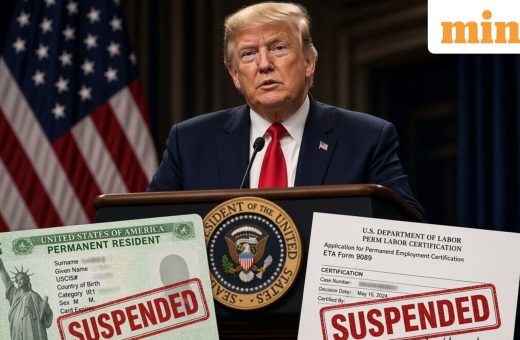
The White House has finished its internal review of a Department of Homeland Security (DHS) draft rule that would strip away the 60-day post-employment grace period granted to certain nonimmigrant visa categories. The DHS package was forwarded to the Office of Management and Budget (OMB) earlier this month for the standard interagency clearance. Specific textual details of the draft have not been made public, but the direction of travel is clear: eliminate the automatic stay-of-status that currently cushions the blow of sudden job loss.

Where the proposal sits in the rulemaking pipeline

Clearance by OMB does not mean the rule is final. Before any provision takes effect, the text must appear in the Federal Register, triggering a public comment window that typically spans 30 to 60 days. During that interval, employers, immigration attorneys, worker advocacy groups, and individual visa holders can submit objections or suggestions. The administration retains the option to amend, withdraw, or adopt the regulation in its entirety once comments close. Until publication occurs, the exact scope, effective date, and any transitional provisions remain unknown.

How the 60-Day Grace Period Works Today

Introduced through a 2017 DHS final rule, the grace period gives nonimmigrant workers and their qualifying dependents a 60-day buffer after employment ends. Within that window, an H-1B holder who is laid off, whose employer ceases operations, or whose position is eliminated can remain in the United States, search for a new sponsoring employer, and file a change-of-employer petition without immediately falling out of status.

The provision is not limited to H-1B. It extends to H-1B1, L-1, O-1, E-1, E-2, E-3, and TN visa categories, as well as to eligible dependents accompanying the principal worker. DHS retains case-by-case discretion to shorten or deny the period, though immigration practitioners note that such denials are exceedingly rare in practice.

What Elimination Would Change on the Ground

Under the current framework, a terminated worker has roughly two months to identify a new employer, complete Form I-129 filings, and maintain lawful presence. Remove that cushion, and the default expectation becomes departure from the United States the moment employment ceases—unless another immigration pathway is independently available or USCIS exercises individualized discretion to forgive a status lapse.

Because H-1B status is structurally tethered to a specific employer and job description, the loss of that employment severs the legal basis for remaining in the country. Without the grace period, a worker would face a compressed, high-stakes sprint: locate a willing sponsor, prepare and file a petition, and hope for adjudication—all while technically out of status. The practical difficulty of completing that sequence in days rather than weeks is substantial, particularly for roles requiring specialized credentials or security clearances.

Why Indian Professionals Face the Sharpest Exposure

The demographic math makes the stakes uneven. Indian nationals accounted for 71 percent of successful H-1B petitions in fiscal year 2024, the largest single-country share by a wide margin. That concentration means any contraction of post-employment protections lands disproportionately on Indian-origin technology engineers, consultants, financial analysts, and other skilled workers embedded in American firms.

The exposure sharpens further during cyclical downturns. Sectors where H-1B workers are heavily represented—software development, management consulting, quantitative finance—tend to shed headcount in waves. A layoff cycle that already strains workers’ finances would, under the proposed rule, simultaneously trigger an immigration countdown, compounding the crisis.

The Family Dimension

The proposal’s reach extends beyond the principal worker. Eligible dependents—spouses and children holding derivative status—lose their own lawful presence when the principal’s employment ends. For an Indian H-1B professional with a spouse and school-age children in the United States, a single termination notice could convert into an immediate, household-wide immigration emergency. Packing, international flights, school withdrawals, lease terminations, and medical transitions would all need to occur within days rather than weeks.

Criticism and the Case for Extension

Ajay Jain Bhutoria, a former White House adviser, has publicly opposed the proposal and urged policymakers to expand the grace period to 180 days rather than abolish it.

“Eliminating the 60-day grace period is both inhumane and unworkable,” Bhutoria said.

He contended that even the existing 60 days can prove inadequate for a highly skilled worker who suddenly loses employment, especially when dependents are in the country.

“People will not even have the time required to manage their leases, transition their children out of schools, or handle personal affairs,” he said.

Procedural Status and What to Watch

The 60-day grace period remains in force. No final rule has been issued, and no effective date has been set. The critical next milestone is publication in the Federal Register, at which point the precise language—scope, exceptions, effective timing, and any grandfathering for workers already in status—will become visible. Until that publication, the administration could still modify or withdraw the proposal in response to public comment.

For the hundreds of thousands of Indian-origin professionals and their families whose daily lives depend on employer-sponsored visas, the central anxiety is straightforward: an unexpected layoff, already a financial and emotional shock, could become an overnight immigration crisis, leaving far less time to secure new employment, complete required filings, and preserve lawful status while remaining in the United States.

Frequently Asked Questions

What is US H 1B visa rules may tighten?

US H 1B visa rules may tighten is the main topic of this guide. The article explains the context, practical details, and next steps readers should understand.

Why does US H 1B visa rules may tighten matter?

US H 1B visa rules may tighten matters because readers are looking for a useful answer, not just a short summary. Good content should match search intent and help them decide what to do next.