Kharif sowing slows amid patchy rains as paddy, oilseeds decline sharply
Kharif Sowing Slows Amid Patchy Rains as Paddy, Oilseeds Decline Sharply Theindiapostdaily.com – India's kharif planting season has faced challenges due to erratic monsoon patterns, with farmers sowing crops across…
Kharif Sowing Slows Amid Patchy Rains as Paddy, Oilseeds Decline Sharply
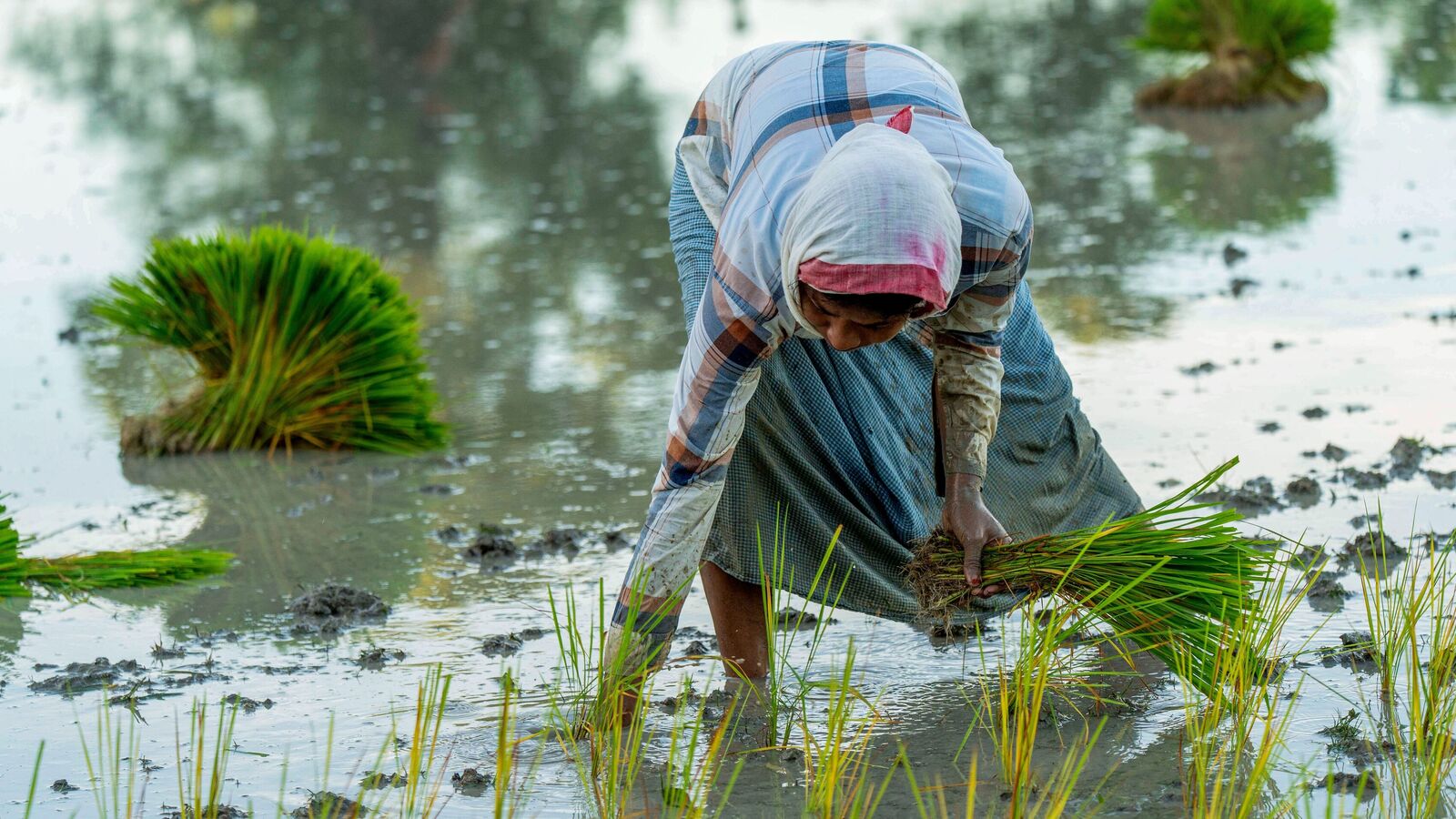
Theindiapostdaily.com – India’s kharif planting season has faced challenges due to erratic monsoon patterns, with farmers sowing crops across 53.12 million hectares by 10 July—less than the 63.25 million hectares recorded a year earlier, as per government statistics. This figure also represents a 1.8 million hectare drop from the 2021–25 average, highlighting a slowdown in planting activities across rain-dependent states.
El Niño conditions have exacerbated the situation, leading to uneven rainfall distribution. While the southwest monsoon finally achieved full coverage nationwide last week, its delayed arrival came after a particularly dry June, which was the driest in over a decade and the fifth-driest since 1901. The rainfall deficit during this period stood at 39.8% compared to the long-period average (LPA), with the country receiving 99.5mm of rain versus the normal 165.3mm.
The most significant declines have been observed in paddy and oilseeds. Paddy acreage, for instance, fell to 11.47 million hectares by 10 July, a 1.08 million hectare shortfall from the previous year. Despite this, the area remains 1.7 million hectares above the five-year average, suggesting that rice planting is still ahead of long-term trends. Oilseeds, on the other hand, saw a steeper drop, with total sown area at 11.78 million hectares—down 3.13 million hectares from 14.92 million hectares in the same period last year.
Soybean, India’s top oilseed crop, was planted over 9.05 million hectares, marking a 1.72 million hectare decrease from the previous year. Groundnut also declined by 1.20 million hectares. Coarse cereals, including Shri Anna, faced similar struggles, with acreage at 9.87 million hectares—2.86 million hectares less than the prior year. Bajra dropped by 1.22 million hectares, maize by 1.36 million, and jowar by 213,000 hectares.
Pulses planting also lagged, with the total area sown reaching 5.66 million hectares, 1.72 million hectares below last year’s level. Arhar, a key pulse, recorded the largest drop at 849,000 hectares, followed by urdbean (395,000 hectares) and moong (256,000 hectares). Cotton sowing reached 7.95 million hectares, down 1.44 million hectares from the previous year and 1.63 million hectares below the normal level.
“This augurs well for kharif sowing trends, and we expect it to pick up during the current lull in the monsoon rains. India typically receives ~32% of its entire season rainfall in July, followed by 29% in August. Furthermore, ~55% of the total area sown in the kharif season is usually covered in July, with this share rising for crops like pulses (65%), oilseeds (66%), and coarse cereals (62%). Adequate rainfall during July-August remains vital to sustain planting, boost output, and mitigate inflationary pressures in the fiscal year,” said Aditi Nayar, chief economist at Icra Ltd.
Although the monsoon’s advance was delayed, recent surplus rains have reduced the rainfall deficit, according to the India Meteorological Department (IMD). The monsoon is forecast to deliver 90% of the LPA for the June-September season, a critical period for agriculture. As a major contributor to India’s annual rainfall, the southwest monsoon plays a pivotal role in shaping the nation’s economic and agricultural outlook.
A report from Crisil Ltd, titled “Water, water, every where. But not a lot to grin,” released on 10 July, noted historical patterns where weaker monsoons often result in softer agricultural output. The report emphasized that the impact varies across regions and crops, with areas having robust irrigation systems better equipped to handle disruptions. Conversely, rain-dependent regions remain vulnerable to weather-induced shocks.