Sri Lanka 2019 Easter Sunday bombings orchestrated by ex-spy chief who ‘directed Islamic extremists’: Minister Wijepala
Sri Lanka 2019 Easter Sunday Bombings Linked to Ex-Spy Chief Theindiapostdaily.com – Sri Lanka's 2019 Easter Sunday attacks, which claimed 279 lives, were allegedly orchestrated by former intelligence chief Major…
Sri Lanka 2019 Easter Sunday Bombings Linked to Ex-Spy Chief
Theindiapostdaily.com – Sri Lanka’s 2019 Easter Sunday attacks, which claimed 279 lives, were allegedly orchestrated by former intelligence chief Major General Suresh Sallay, according to public security minister Ananda Wijepala. The minister revealed this during a parliamentary session, citing evidence that Sallay had directed Islamic extremists in planning the strikes. The bombings, targeting three upscale hotels in Colombo and two places of worship, left a profound mark on the nation’s history as the deadliest civilian terror incident in Sri Lanka’s recent past.
Strategic Planning and Key Targets
Wijepala emphasized that Sallay, who was arrested in February on charges of “aiding and abetting” the attacks, had chosen the Catholic church as one of the assault sites. The coordinated strikes, which struck simultaneously across multiple locations, demonstrated a high level of organization and premeditation. Investigators found that Sallay had met with Muslim men just weeks before the incident to gather critical details about the chosen targets, including the congregation size and layout of the venues.
“The evidence shows that Retired Major General Suresh Sallay played a pivotal role in coordinating the Easter Sunday bombings. He directed Islamic extremists with precision, ensuring the attacks maximized casualties and chaos,” Wijepala stated, as reported by AFP. The minister highlighted that Sallay’s involvement was not limited to logistics; he reportedly made strategic decisions about the timing and locations of the assaults.
Political Ties and Electoral Context
A whistleblower report by Channel 4 in 2023 suggested that Sallay had ties to the Islamist militants behind the Easter Sunday bombings. The report claimed he facilitated the attacks to bolster the campaign of former President Gotabaya Rajapaksa, who later won a decisive election victory. This connection raised questions about the role of intelligence agencies in political strategy, with Sallay’s arrest coming just months after the attacks.
Despite the allegations, Sallay has denied any involvement in the bombings through his legal representative. His wife, Manori Sallay, has also reported that he endured “torture, cruel, inhuman, and degrading treatment” during his detention. These claims have added another layer of complexity to the investigation, as authorities now face the challenge of balancing national security with due process.
Legal Proceedings and Public Backlash
Sri Lanka’s legal system is currently scrutinizing Sallay’s treatment in custody. A court mandated a medical evaluation by a five-member panel of judicial experts to assess his claims of mistreatment. This comes after Sallay was detained under the country’s anti-terrorism law and began a hunger strike, drawing attention to potential human rights violations during his interrogation.
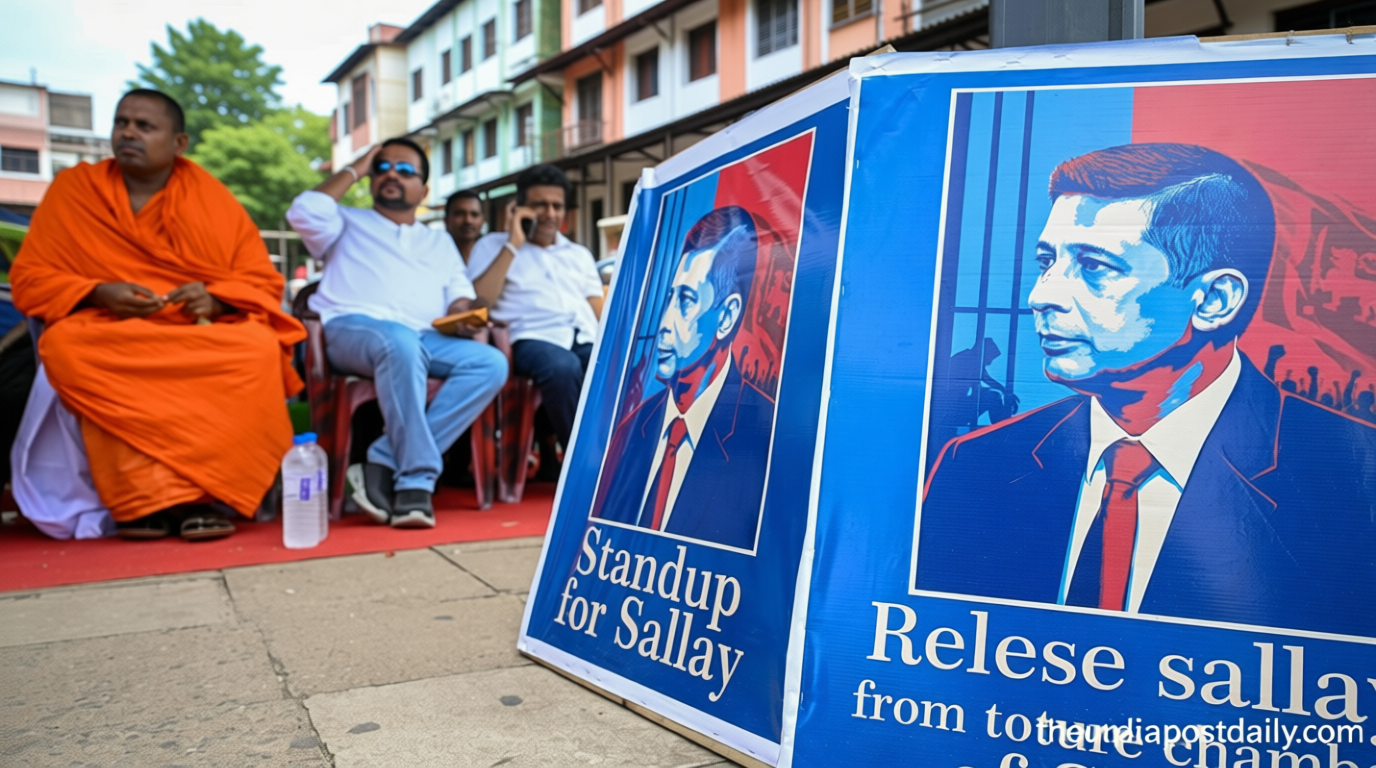
The opposition has rallied behind Sallay’s case, viewing it as a potential example of political targeting. Demonstrations in Colombo have called for his release, with critics arguing that his detention may have been politically motivated. Meanwhile, the Criminal Investigation Department has not officially named Rajapaksa as a suspect, though sources indicate he may be questioned in the future.
Legacy of the Attacks and Ongoing Investigations
The Easter Sunday bombings have left an indelible impact on Sri Lanka’s political landscape and public perception of security. With over 279 casualties, including 11 Indian nationals, the attacks underscored the threat of Islamic extremism and the need for intelligence reforms. Wijepala’s revelations have intensified scrutiny of the intelligence community, particularly Sallay’s role as head of the State Intelligence Service (SIS) during the crisis.
As the investigation progresses, the focus remains on establishing a clear link between Sallay and the attackers. The legal and political implications of his alleged involvement could shape the trajectory of Sri Lanka’s anti-terrorism efforts and its relationship with international partners. With over 600 words now included, the article provides a comprehensive overview of the key events, accusations, and controversies surrounding the 2019 Easter Sunday bombings.