IRGC says it attacked two Emirati oil tankers that killed Indian national, claims it was engaged in ‘illegal activities’
IRGC Claims Attack on UAE Oil Tankers, Cites 'Illegal Activities' IRGC's Statement on the Incident IRGC says it attacked two Emirati - The Islamic
IRGC Claims Attack on UAE Oil Tankers, Cites ‘Illegal Activities’
IRGC’s Statement on the Incident
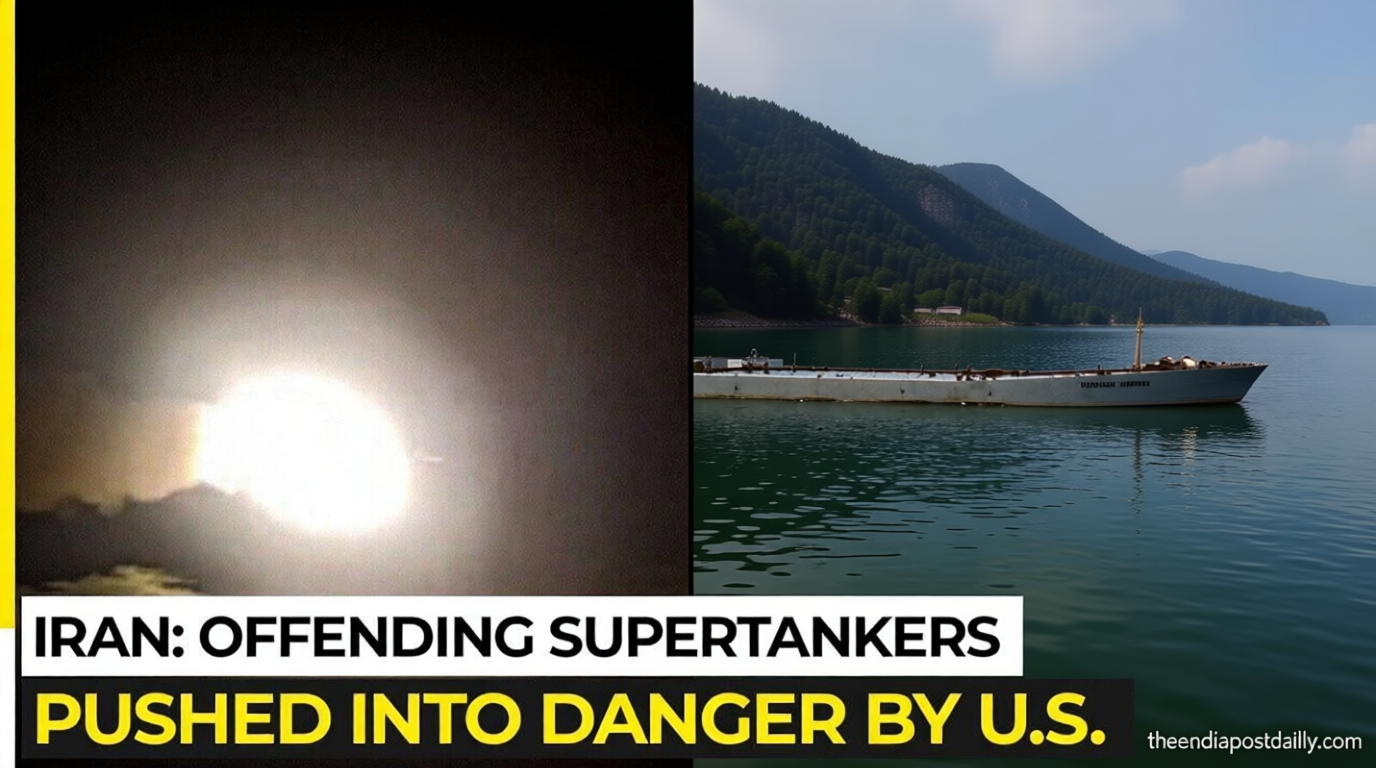
Theindiapostdaily.com – The Islamic Revolutionary Guard Corps (IRGC) of Iran announced that it had attacked two Emirati oil tankers in the Strait of Hormuz, citing their involvement in “illegal activities.” According to the IRGC, the vessels had disabled their tracking systems and ignored warnings from Iranian security personnel, leading to their immobilization. The group emphasized that the attack was a necessary response to safeguard regional interests and assert control over critical maritime routes.
“A few hours ago, the U.S. military, which has not learned from its repeated failures, attempted to direct several ships through an illegal route. Two oil tankers, misled by Washington, turned off their navigation systems and disregarded alerts from the Strait of Hormuz control center. These vessels endangered maritime traffic by crossing a minefield, prompting our intervention,” the IRGC stated.
The IRGC also accused the United States of encouraging the attack, suggesting that Washington had orchestrated the incident to destabilize the region. By targeting the UAE’s commercial ships, Iran aims to highlight its role as a defender of regional sovereignty against external aggression.
UAE’s Response to the Attack
Hours after the IRGC’s announcement, the UAE’s Defence Ministry issued a strong rebuttal, calling the assault a “serious violation of international law.” The ministry warned that the attack not only threatened regional security but also jeopardized the stability of global energy markets. It reaffirmed the UAE’s right to retaliate and take all necessary measures to protect its national interests.
The incident caused significant damage to both tankers, with fires breaking out on board. Emergency teams worked swiftly to contain the blaze, but the casualties were severe. An Indian sailor was confirmed dead on the Emirati vessel Mombasa, while eight others were injured, including four in critical condition. The UAE has since launched an investigation to determine the exact cause of the attack and its implications for international trade.
Escalating US-Iran Tensions
This attack comes amid heightened tensions between the United States and Iran, which have been engaged in a series of military confrontations over the past month. The IRGC’s actions are seen as a direct response to Washington’s perceived aggression, including recent strikes on Iranian assets in the region. U.S. President Donald Trump had previously declared the interim ceasefire agreement with Iran “over,” following Tehran’s targeting of commercial ships in the Strait of Hormuz.
Iran has accused the United States of violating the agreement by supporting the UAE’s maritime operations, while the U.S. has framed the attack as a necessary measure to disrupt Iran’s oil exports and weaken its military capabilities. The conflict has drawn in regional allies, with Bahrain and other Gulf nations facing increased pressure from Tehran’s renewed military campaigns.
Broader Implications for Global Energy Security
The attack on the UAE oil tankers has raised concerns about the security of global energy supply, as the Strait of Hormuz is a vital artery for crude oil shipments. With Iran’s continued military activity in the region, the risk of further disruptions to the flow of energy resources has intensified. Analysts warn that such incidents could lead to higher oil prices and supply chain vulnerabilities, particularly as the world navigates the post-pandemic economic recovery.
International reactions have been mixed. While some Gulf countries have expressed support for Iran’s stance, others have called for a diplomatic resolution to prevent further escalation. The incident has also reignited debates about the role of regional powers in maintaining stability, with the UAE and its allies emphasizing the need for a unified approach to counter threats from both Iran and U.S. intervention.
Regional Alliances and Strategic Rivalries
The IRGC’s claim that the UAE’s ships were engaged in “illegal activities” underscores the growing rivalry between Iran and its Gulf neighbors. As Iran seeks to assert dominance over the Strait of Hormuz, it has increasingly targeted commercial vessels operated by the UAE, Saudi Arabia, and other regional allies. These attacks are part of a broader strategy to challenge Western influence and secure control over strategic waterways.
Despite the IRGC’s accusations, the UAE has maintained that its vessels were acting within legal boundaries. The country has called for an independent investigation to verify the IRGC’s claims and to hold all parties accountable for the safety of maritime traffic. The incident has also prompted discussions about the need for stronger security measures and international cooperation to protect vital shipping lanes.
Aftermath and Future Outlook
In the aftermath of the attack, the UAE has vowed to take decisive action to ensure the safety of its vessels and partners. The country’s military is reportedly reviewing its operations in the region and strengthening its defenses against potential Iranian threats. Meanwhile, the IRGC has continued to emphasize its commitment to challenging “illegal activities” by foreign powers, framing the incident as a pivotal moment in the struggle for regional control.
The broader implications of the attack remain significant. With Iran and the U.S. locked in a cycle of retaliation, the potential for larger-scale conflict in the Gulf has increased. The IRGC’s actions not only affect bilateral relations but also send a message to global energy markets about the fragility of regional stability. As tensions persist, the world watches closely for any signs of de-escalation or further escalation in this critical geopolitical hotspot.