Global oil reserves at their lowest since 2003 as Strait of Hormuz closure drains stockpiles, warns report
Global Oil Reserves at Their Lowest in 23 Years Amid Hormuz Closure, Report Warns Global oil reserves at their lowest in a quarter of a century, according to
Global Oil Reserves at Their Lowest in 23 Years Amid Hormuz Closure, Report Warns
Theindiapostdaily.com – Global oil reserves at their lowest in a quarter of a century, according to a report by the U.S. Energy Information Administration (EIA), as the Strait of Hormuz closure disrupts supply chains and accelerates the depletion of strategic stockpiles. The crisis has sent shockwaves through global energy markets, forcing major economies to reassess their reliance on Middle Eastern crude and take emergency measures to stabilize supplies.
OECD Stockpiles Plunge to 23-Year Low
The Organisation for Economic Co-operation and Development (OECD) has seen its oil reserves fall to a 23-year low, with the latest data revealing a sharp decline in stockpiles across its 38 member nations. This trend is part of a broader pattern of global oil shortages, as disruptions in the Middle East have led to a consistent reduction in available reserves. The EIA highlighted that this depletion is the fastest since records began, underscoring the severity of the current situation.
Global oil reserves at their lowest point in 23 years, according to the report, which signals a potential imbalance between supply and demand. With the Strait of Hormuz closure impacting approximately 20 million barrels of daily oil exports, the global market is now grappling with a significant supply crisis. The EIA data suggests that the current quarter will see a further drop of 6.3 million barrels per day, followed by an even steeper decline of 7.66 million barrels in the third quarter.
The Hormuz Disruption
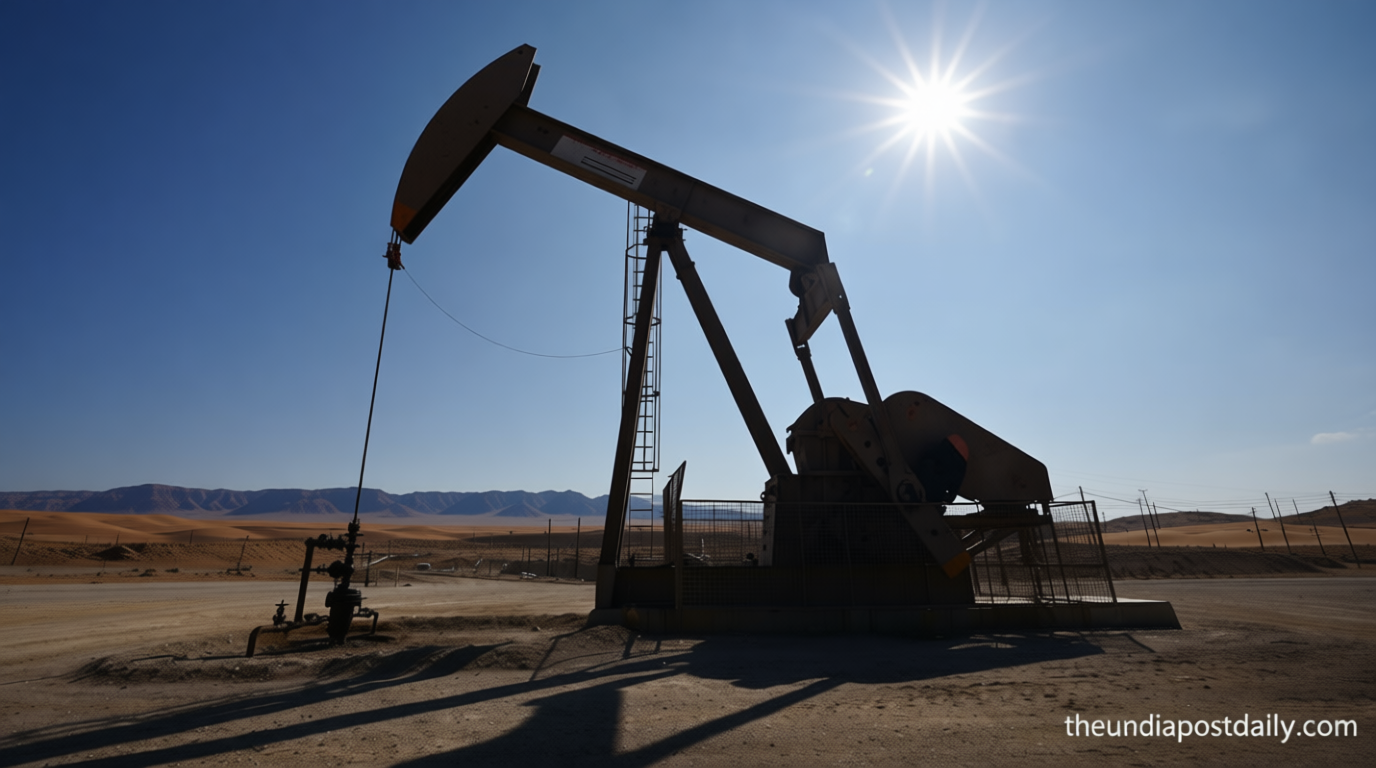
The Strait of Hormuz, a vital artery for global oil exports, has become a focal point of the current energy crisis. Normally responsible for about 25% of seaborne oil trade, the strait’s throughput has dropped by nearly 6 million barrels per day in the first quarter of 2026. This reduction has brought the daily capacity to 14.6 million barrels, a 30% decline from the previous year. The drop has been particularly felt in Asian markets, where China and India account for 44% of the crude shipped via Hormuz.
Global oil reserves at their lowest levels are a direct consequence of this disruption, with the EIA warning that the decline could continue. The closure of the strait has not only affected the volume of oil reaching international markets but also the timing of deliveries, creating a ripple effect on global supply chains. As a result, countries are scrambling to secure alternative sources, with the U.S. stepping in as a key supplier to offset the shortfall.
India’s Vulnerability in the Crisis
India’s strategic oil reserves have come under scrutiny, with a report from EY highlighting that its stockpiles are sufficient to meet only 4 to 5 days of domestic demand. This exposes the country to supply shocks, especially as the ongoing conflict in the Middle East continues to disrupt oil flows. The EY analysis, released in May 2026, emphasizes the need for India to diversify its energy sources and build critical reserves for essential goods like fertilizers and medical supplies.
“The West Asian crisis has revealed India’s heavy reliance on imported energy and goods, necessitating a shift toward strategic diversification,” the report noted.
The firm recommended that India expand its reserves of vital commodities, including LPG and rare earth materials, to enhance resilience against future disruptions. Additionally, it urged the nation to accelerate initiatives like the India-Middle East-Europe Economic Corridor to reduce dependence on a single region for energy imports. These measures, however, require urgent policy reorientation to mitigate long-term risks.
U.S. Strategic Reserve Challenges
The United States is also facing a significant depletion of its crude and petroleum product stocks, with reserves dropping to 1.57 billion barrels—the lowest since 2004. In a single week, the country lost 10.6 million barrels, marking the second-largest weekly decline in history. The U.S. Strategic Petroleum Reserve (SPR) has seen an additional 7.9 million barrels vanish, bringing its total to 357 million barrels, the smallest since January 2024.
Global oil reserves at their lowest have also affected the U.S., which has been forced to export more crude to Asia and Europe to compensate for the reduced Middle Eastern supply. This has raised concerns about the nation’s ability to maintain its own energy security in the face of growing global uncertainty. As the crisis persists, the U.S. and other major economies are rethinking their energy strategies to ensure stability in the face of potential disruptions.