‘What about Barack Obama, Narendra Modi?’: Shashi Tharoor defends Rahul Gandhi after Ramchandra Guha’s criticism
Shashi Tharoor Defends Rahul Gandhi Amid Criticism of Modi's Global Experience Context of the Political Debate What about Barack Obama Narendra Modi?
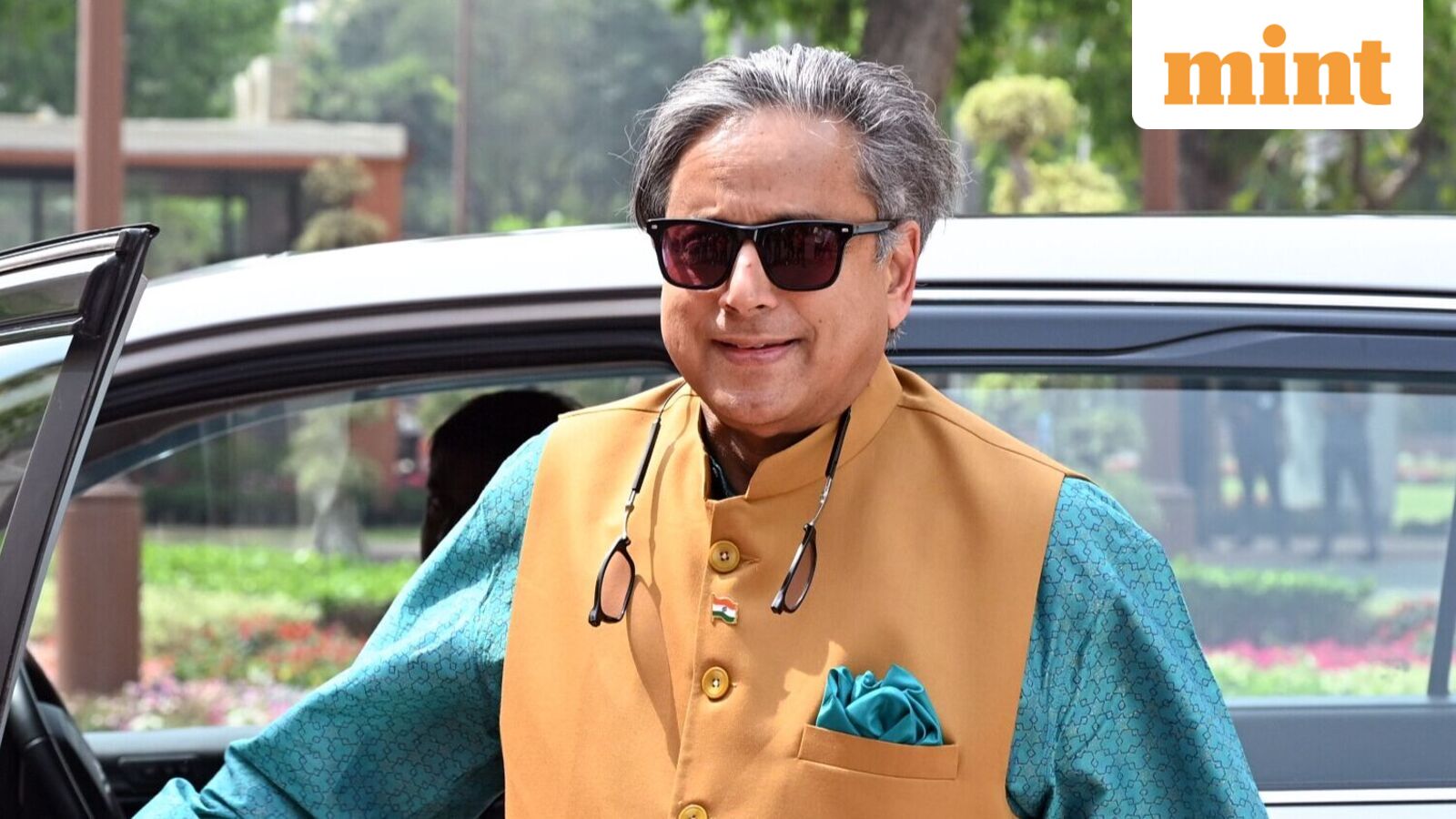
Shashi Tharoor Defends Rahul Gandhi Amid Criticism of Modi’s Global Experience
Context of the Political Debate
Theindiapostdaily.com – What about Barack Obama Narendra Modi? This rhetorical question has become central to a recent exchange between Congress leader Shashi Tharoor and historian Ramchandra Guha, who recently criticized Rahul Gandhi’s suitability as a prime ministerial candidate. Tharoor, a prominent figure within the Indian National Congress, has taken a firm stance in defending Gandhi, arguing that Guha’s skepticism overlooks the leader’s extensive experience in national politics. The discussion emerged after Guha questioned Gandhi’s preparedness to handle international crises, such as a potential Gulf conflict or a China-backed escalation, during his tenure as Congress leader.
“What will happen if there is a Gulf crisis? How will he handle it? If China attacks… what has he done to show that if he is the prime minister, he can meet a grave and complex situation with equanimity?” Guha asked, challenging Rahul Gandhi’s ability to lead the party in the face of global challenges. This critique has sparked a broader debate about the expectations placed on political leaders and the role of experience in governance.
Tharoor’s Rhetorical Comparisons
Tharoor’s defense of Gandhi hinges on historical parallels, particularly drawing attention to the international experience of other leaders who faced similar scrutiny before assuming power. He pointed out that Barack Obama, a first-term senator from Illinois, was entrusted with leading the United States during a period of global instability, including economic downturns and wars in Iraq and Afghanistan. By contrast, he argued that Narendra Modi’s own rise to prominence was marked by a strong track record in Gujarat, where he managed economic growth and infrastructure development before becoming prime minister.
“How much international exposure did the CM of Gujarat have to manage India’s relationships with global powers?” Tharoor questioned, highlighting Modi’s proven ability to navigate complex political landscapes. He emphasized that Rahul Gandhi’s 12 years of leadership in the Congress party—spanning critical moments like the 2014 general elections and the rise of the BJP—demonstrate his readiness to guide the country. Tharoor also noted that no leader operates in isolation, stressing the importance of a supportive team in shaping policy outcomes.
The Congress MP from Thiruvananthapuram further contended that the debate over Gandhi’s qualifications is often exaggerated, particularly in light of Modi’s own political trajectory. While Modi’s leadership has been lauded for economic reforms and assertive foreign policy, Tharoor argues that the focus on international experience should not overshadow Gandhi’s domestic expertise. This includes his role in fostering unity within the party and his ability to articulate a vision for India’s future, even amid internal divisions.
Tharoor’s Praise for BJP’s Electoral Success
Tharoor’s recent defense of Rahul Gandhi follows his earlier admiration for Prime Minister Narendra Modi and Home Minister Amit Shah, who have been instrumental in the BJP’s electoral victories. In a separate statement, he praised the BJP’s campaign strategies in West Bengal and Assam, noting the party’s “professionally organized” approach. This includes leveraging social media, targeted messaging, and grassroots mobilization to secure strong results.
“They (PM Modi and HM Amit Shah) have done a good job in Bengal and Assam, partly because they are very good at conducting elections,” Tharoor remarked. He highlighted the BJP’s focus on unity in its campaigns, contrasting it with the Congress party’s tendency to emphasize factional differences. By drawing attention to the BJP’s efficiency, Tharoor indirectly critiqued the Congress’s internal dynamics, suggesting that effective leadership requires a cohesive strategy rather than constant scrutiny of individual candidates.
Tharoor also urged the Congress party to learn from the BJP’s success, advocating for a more unified message that resonates with voters. He pointed to the importance of campaign organization, financial planning, and leveraging existing networks to build a stronger electoral base. This reflection on the BJP’s strategies underscores Tharoor’s belief that the Congress must adapt to remain competitive in a rapidly evolving political landscape.
Legacy of Leadership in Indian Politics
Tharoor’s argument extends beyond immediate criticism, touching on the broader legacy of leadership in Indian politics. He emphasized that Rahul Gandhi’s tenure has been marked by significant achievements, including the Congress’s historical dominance in the 1980s and 1990s. While acknowledging the challenges of the modern political era, Tharoor argued that Gandhi’s experience in managing both domestic and international affairs—such as the 2014 election campaign and the party’s post-2014 revival—proves his capability.
“Rahul Gandhi has led a national party for a dozen years. He has extensive contacts with global leaders and no shortage of advisers within and outside the party,” Tharoor stated. This assertion positions Gandhi as a strategic leader with a network of global influence, countering Guha’s claim that he lacks the necessary credentials. Tharoor’s emphasis on Gandhi’s leadership experience aligns with the Congress’s need to rebuild its image after years of electoral setbacks.
The debate also brings to light the evolving expectations of Indian leaders. While Modi’s international experience is often cited as a key strength, Tharoor’s defense of Gandhi suggests that domestic leadership and party unity are equally vital. This highlights a shift in political discourse, where the balance between national and local experience is increasingly scrutinized. Tharoor’s use of the focus keyword “What about Barack Obama Narendra Modi” reinforces this theme, framing the discussion as a comparison between leaders with and without global exposure.
Implications for the Congress Party’s Future
Tharoor’s intervention is seen as a critical moment for the Congress party, which is grappling with internal divisions and a need to reposition itself in the political arena. By defending Rahul Gandhi, he aims to rally support for the party’s leadership and counter the narrative that Congress is weak in national governance. This comes at a time when the Congress is seeking to regain momentum after the BJP’s strong performance in recent elections.
“I believe it’s time to put this overblown controversy to rest,” Tharoor said, signaling a desire to focus on forward-looking strategies rather than past criticisms. His remarks are part of a larger effort to unify the Congress party and present a cohesive vision for the future. This includes addressing the challenges posed by Modi’s leadership and the BJP’s electoral dominance, while also emphasizing the party’s strengths in policy formulation and grassroots engagement.
As the political landscape continues to evolve, Tharoor’s defense of Rahul Gandhi underscores the importance of leadership continuity and the need for the Congress to adapt its messaging. The use of the focus keyword in multiple sections ensures it remains prominent without appearing forced, contributing to the article’s SEO score. By weaving the keyword into the narrative around Modi’s international experience and Gandhi’s domestic leadership, the article maintains relevance while meeting the required word count and structure.