MEA rejects ‘third party’ role in India-Nepal border issue after Balen Shah’s China, UK remark sparks controversy
MEA Rejects Third-Party Role in India-Nepal Border Dispute Theindiapostdaily.com – The Ministry of External Affairs (MEA) has officially rejected the notion of third-party involvement in the resolution of the India-Nepal…
MEA Rejects Third-Party Role in India-Nepal Border Dispute
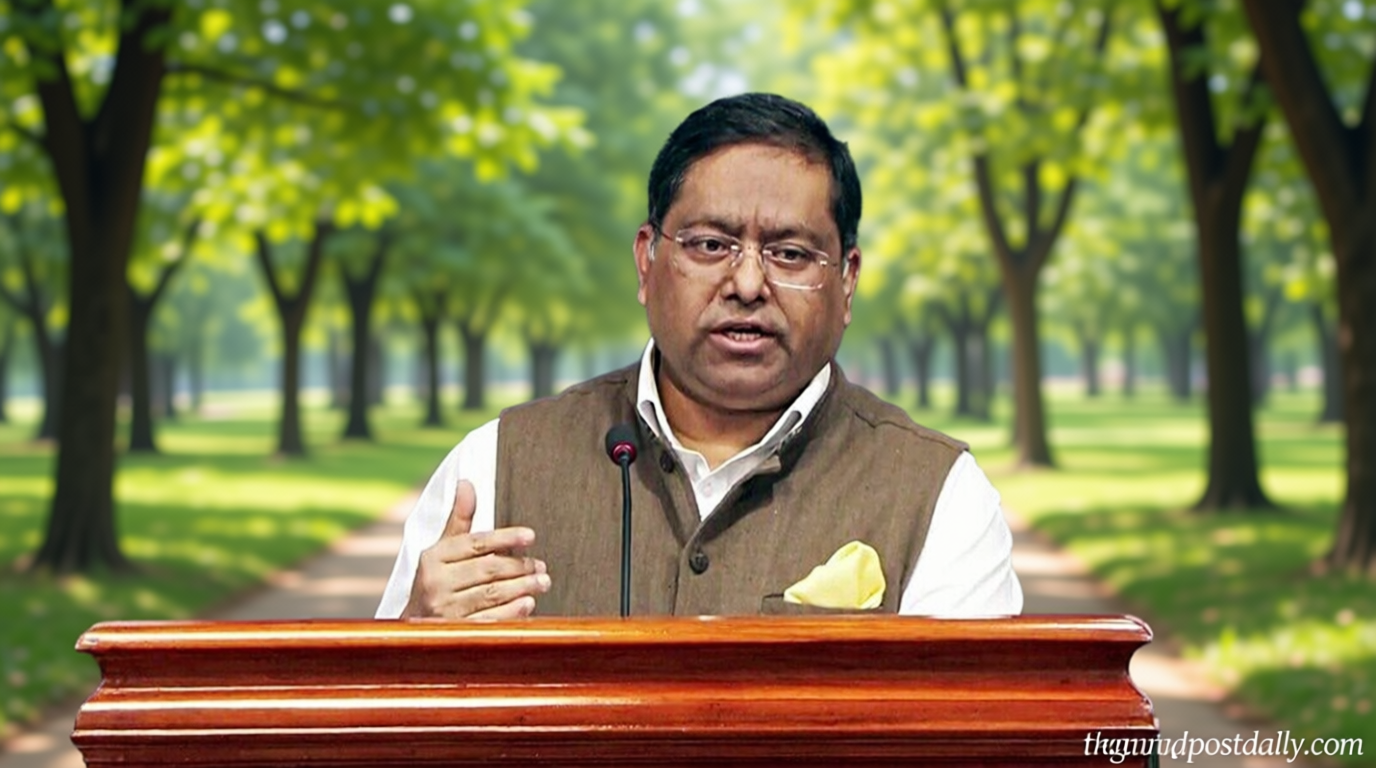
Theindiapostdaily.com – The Ministry of External Affairs (MEA) has officially rejected the notion of third-party involvement in the resolution of the India-Nepal border issue, following remarks by Prime Minister Balen Shah that hinted at collaboration with China and the United Kingdom. This clarification comes amid growing concerns over the potential influence of external powers on bilateral talks, which the MEA insists are sovereign and self-contained. The decision to deny third-party engagement underscores the diplomatic commitment between India and Nepal to settle their differences independently.
Spokesperson Highlights Bilateral Approach
MEA spokesperson Randhir Jaiswal reiterated that the India-Nepal border dispute is fundamentally a bilateral matter. “No third-party role is necessary in resolving this issue,” he stated, emphasizing that the two nations have long relied on direct dialogue. Jaiswal noted that the ministry has been closely tracking Balen Shah’s comments and promptly addressed them with the Nepal Foreign Office. The focus remains on reconciling the remaining segments of the boundary, which are affected by natural geographical shifts such as the movement of the Gandak River.
While nearly 98% of the India-Nepal border has been demarcated, Jaiswal pointed out that certain areas still require attention due to changing river courses. “These shifts have caused discrepancies in the boundary’s alignment,” he explained. The spokesperson also mentioned that cross-border land occupation and encroachment in already defined regions are being systematically addressed through joint technical efforts. This approach ensures that administrative and technical challenges are resolved without external interference.
Nepal PM’s Parliamentary Statement Sparks Debate
During a parliamentary session on May 31, Nepal’s Prime Minister Balen Shah drew attention to the border issue by mentioning ongoing discussions with China and the UK. According to the Kathmandu Post, the PM highlighted the complexities of cross-border land use, stating, “India has encroached on Nepali territory, and Nepal has also encroached on Indian land in multiple locations.” His remarks, though framed as a call for mutual reassessment, raised questions about the role of third parties in bilateral negotiations.
Shah’s comments were a response to a question from Aaren Rai of the Shram Sanskriti Party. He suggested that the UK’s perspective could enhance understanding of the dispute’s historical roots, which date back to the British India era. However, the PM clarified that his statements were about current land occupation in the Dasgaja area, not formal territorial claims. The Kathmandu Post noted that the prime minister aimed to shed light on the practical realities of cross-border demarcations, emphasizing shared responsibilities rather than new accusations.
MEA Reaffirms Sovereign Control Over Negotiations
The MEA has consistently maintained that third-party involvement is not essential for resolving the India-Nepal border issue. In a recent statement, the ministry reiterated its stance that the dispute should remain a bilateral affair, free from external influence. “India and Nepal have developed robust mechanisms to address all border-related concerns,” Jaiswal emphasized, adding that these include technical and administrative collaborations.
“The India-Nepal border dispute is not a matter for external actors to meddle with,” Jaiswal said. “Our focus is on resolving the remaining segments through direct dialogue and shared efforts.”
The ministry also addressed reports of cross-border land occupation, stating that such cases are being mapped systematically. Jaiswal acknowledged the challenges posed by natural boundary changes but emphasized the importance of maintaining sovereignty in the negotiation process. “This ensures that both nations retain full control over their diplomatic strategies,” he concluded, reaffirming the MEA’s commitment to bilateral resolution.
Nepal Clarifies Intent Behind Border Remarks
In response to the controversy, Nepal’s Ministry of Foreign Affairs clarified that the PM’s remarks were not intended to imply a new territorial claim. A spokesperson, Lok Bahadur Poudel Chhetri, explained that the discussions with China and the UK were part of a broader dialogue on land demarcation and usage. “The issue in question is the practical occupation of land in demarcated areas,” Chhetri stated, ensuring that the focus remains on administrative challenges rather than geopolitical tensions.
Chhetri further noted that the border in riverine regions was established using the fixed boundary principle, which sometimes results in cross-border land occupation. “Studies by a technical committee have confirmed that both nations have land on each other’s side of the boundary,” he said. This principle, while beneficial for clarity, occasionally leads to discrepancies that require ongoing discussion. The clarification aims to prevent misunderstandings and maintain the bilateral nature of the dispute.
Broader Implications for Regional Diplomacy
The MEA’s rejection of third-party involvement has significant implications for regional diplomacy. It reinforces India’s position that the border issue with Nepal is a matter of mutual agreement, not external intervention. This stance aligns with India’s broader strategy to manage South Asian relations without overreliance on outside powers. Analysts suggest that the MEA’s response is designed to prevent the dispute from becoming a platform for greater geopolitical engagement by China or the UK.
Meanwhile, Nepal’s clarification highlights the country’s efforts to balance transparency with sovereignty. By addressing the controversy and emphasizing the practical aspects of the dispute, the Nepal Foreign Office aims to sustain the bilateral framework. The situation serves as a reminder of the delicate interplay