Centre exempts E22, E25, E27 and E30 fuels from excise duty after approving higher ethanol-blend standards
Centre Exempts E22, E25, E27, and E30 Fuels from Excise Duty Theindiapostdaily.com – The Indian government has announced the excise duty exemption for petrol blended with 22%, 25%, 27%, and…
Centre Exempts E22, E25, E27, and E30 Fuels from Excise Duty
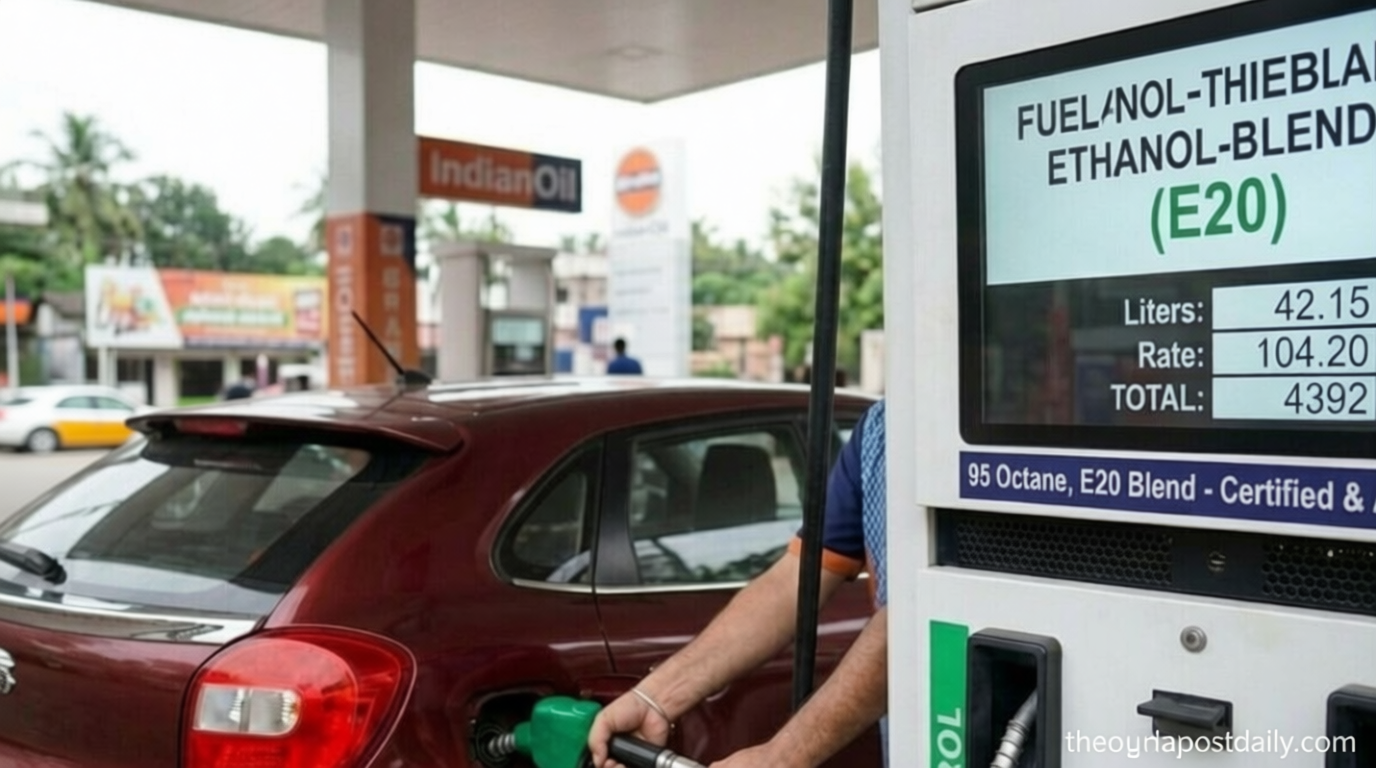
Theindiapostdaily.com – The Indian government has announced the excise duty exemption for petrol blended with 22%, 25%, 27%, and 30% ethanol, marking a significant step toward expanding the use of biofuels in the country. This policy change, approved by the Centre, aligns with its broader objective to reduce fossil fuel dependence and promote sustainable energy solutions. By removing excise duties on these higher ethanol blends, the government aims to incentivize their adoption, which could accelerate the transition to greener fuels and enhance energy security.
Policy Expansion and Regulatory Framework
Recent notifications issued by the Department of Revenue have updated central excise regulations to include ethanol-blended fuels with 22%, 25%, 27%, and 30% ethanol under the zero-duty exemption. These fuels must comply with Bureau of Indian Standards (BIS) guidelines specified in IS 19850, which set technical benchmarks for their production and distribution. The exemption covers all relevant excise duties and GST on ethanol, creating a favorable fiscal environment for both manufacturers and consumers. This shift reflects the government’s commitment to fostering innovation in fuel technology while addressing environmental and economic challenges.
The decision to exempt E22, E25, E27, and E30 fuels comes after years of incremental progress in ethanol-blending targets. India had previously achieved the E20 standard ahead of schedule, prompting discussions about further increases. The new policy not only supports the current E20 to E25 transition but also lays the groundwork for more aggressive blending goals in the future. By reducing the cost burden on ethanol-based fuels, the government encourages their widespread use, which could lower transportation costs and reduce the carbon footprint of the energy sector.
Technical and Industrial Implications
India’s ethanol-blending initiative has gained momentum, driven by advancements in production technology and a surplus of ethanol from sugarcane and grain-based distilleries. The approval of E22, E25, E27, and E30 standards by the Bureau of Indian Standards (BIS) marks a pivotal moment for the industry, enabling greater flexibility in fuel formulations. These blends, containing 78%, 75%, 73%, and 70% petrol respectively, with the remaining portion ethanol, are designed to meet both performance and sustainability requirements. The technical specifications ensure compatibility with existing vehicles and infrastructure, reducing barriers to adoption.
Oil marketing companies (OMCs) have played a crucial role in scaling up ethanol procurement, which has been instrumental in achieving the E20 target. The new exemption is expected to further boost ethanol utilization, addressing the current gap in production capacity. Analysts suggest that this policy could create a positive feedback loop, where increased demand for ethanol stimulates investment in domestic production and processing facilities. Additionally, the exemptions may help OMCs reduce their reliance on imported crude oil, contributing to the nation’s goal of energy self-sufficiency.
Economic and Environmental Benefits
The excise duty exemption on E22, E25, E27, and E30 fuels is poised to deliver substantial economic and environmental advantages. Economically, it reduces the cost of ethanol blends, making them more competitive with conventional petrol. This could lead to lower fuel prices for consumers, particularly in the long term, as ethanol production becomes more cost-effective. Environmentally, the policy supports the reduction of carbon emissions, as ethanol is a cleaner-burning alternative to fossil fuels. By promoting higher ethanol blends, the government aligns with global efforts to combat climate change and decrease reliance on finite petroleum resources.
Experts highlight that the exemption also fosters job creation in the biofuel sector, from sugarcane cultivation to ethanol processing and distribution. The initiative could attract investments in rural areas, where ethanol production is primarily concentrated, thereby boosting local economies. Moreover, the policy’s emphasis on advanced blends like E30 encourages innovation in fuel technology, positioning India as a leader in sustainable energy practices. As the nation moves toward higher ethanol blending, the focus on E22, E25, E27, and E30 fuels will be critical in achieving long-term energy and environmental objectives.
The government’s move to exempt E22, E25, E27, and E30 fuels from excise duty underscores its strategic approach to balancing economic growth with environmental responsibility. By creating a financial incentive for ethanol blends, the policy addresses the challenges of rising oil prices and supply chain vulnerabilities, such as those posed by geopolitical tensions in key oil regions. This decision also aims to streamline the transition to higher ethanol blends, ensuring that the market is ready to adopt these fuels without disruption.
As the implementation of E22, E25, E27, and E30 fuels progresses, the government will need to monitor their performance and address any logistical hurdles. The success of this policy will depend on consistent ethanol supply, infrastructure readiness, and consumer acceptance. Industry stakeholders are optimistic about the potential of these blends to reduce emissions and support energy independence, but they also emphasize the importance of clear guidelines and long-term planning to sustain the momentum. With these measures, India’s ethanol-blending strategy is set to evolve into a cornerstone of its energy policy.