Old Monk can’t be sold as rum, FSSAI tells Bombay High Court, as company submits revised labels
The Bombay High Court heard on Thursday that India's top food regulator considers Old Monk ineligible to carry the "rum" designation on its shelf label. The
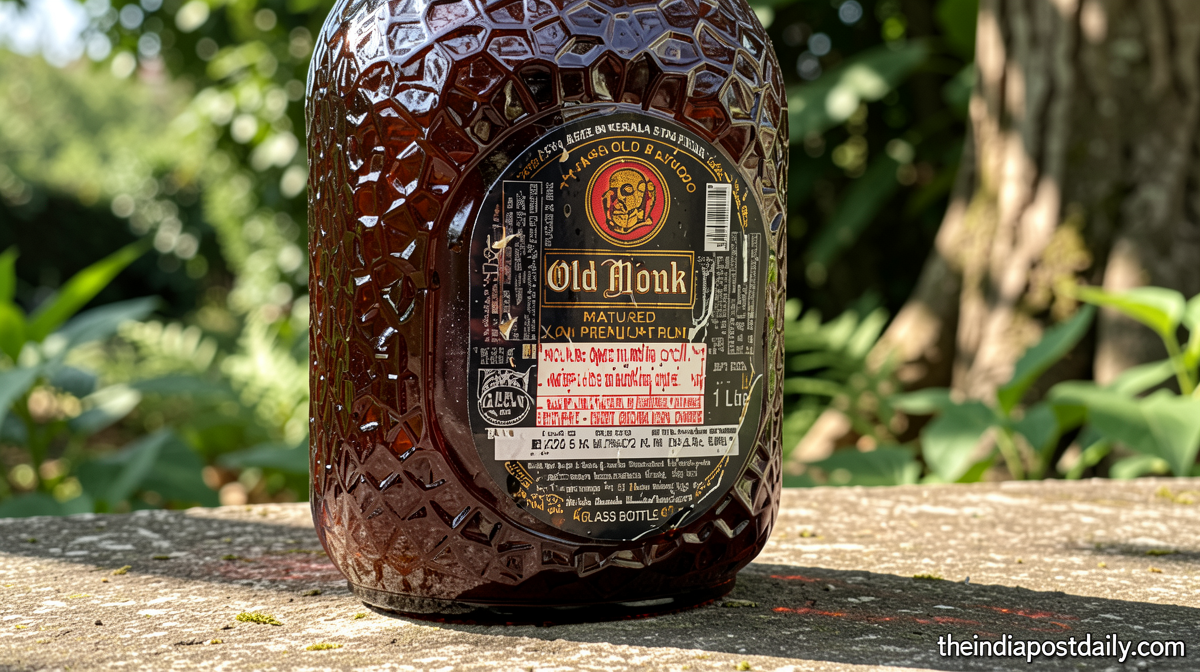
Old Monk Rum Faces Identity Crisis in Bombay High Court as Regulator Demands Product Reclassification
Theindiapostdaily.com – The Bombay High Court heard on Thursday that India’s top food regulator considers Old Monk ineligible to carry the “rum” designation on its shelf label. The Food Safety and Standards Authority of India (FSSAI) argued before the bench that the beverage, produced by Mohan Rocky Springwater, is constructed from a neutral spirit base combined with rum flavouring agents — a formulation the regulator says disqualifies it from being marketed simply as rum. In the regulator’s view, the product may lawfully be described only as a “rum-flavoured spirit,” a distinction that carries significant commercial and branding consequences for one of India’s most recognisable liquor brands.
“What is not permitted is to sell this product as rum,” FSSAI’s counsel told the court, stressing that the objection targets the very nature of the product rather than any particular wording on the packaging.
Label Overhaul Ordered, Approval Timeline Tightened
Old Monk’s legal team handed revised label designs to the court during the Thursday session. FSSAI, however, asked for additional time to scrutinise the new designs before granting approval. The matter is scheduled to return before the bench on 11 September.
The label dispute traces back to a Monday hearing in which the company signalled its willingness to strip the phrase “7 years old blended” from its packaging. A division bench comprising acting Chief Justice Ravindra V. Ghuge and Justice Gautam A. Ankhad then directed the manufacturer to table a corrected label by the following Thursday. The court simultaneously tasked the food regulator with specifying the exact textual and visual elements required on the packaging so that consumers can unambiguously distinguish the product from a traditionally aged rum.
The bench also pressed the state excise department to examine the amended label and fast-track its approval on an urgent basis, signalling judicial impatience with bureaucratic delay. In doing so, the justices flagged a consumer-protection concern: the “7 years old” claim could lead buyers to believe the spirit had undergone seven years of barrel maturation, when in fact the flavouring was applied to a neutral base.
The court further probed the manufacturer over certain fine-print text on the label, remarking that the typeface was
“so small that nobody can read [it].”
Financial Toll and Industry-Wide Ripple Effects
Senior counsel Navroz H. Seervai, appearing for the Old Monk producer, quantified the commercial damage at roughly ₹1 crore per day across the 120 days the sales ban has remained in force. The figure underscores how quickly a regulatory standoff can translate into substantial revenue loss for a single brand, let alone for the broader spirits and whisky segment.
The Old Monk episode is not an isolated incident. United Spirits, which operates under Diageo’s umbrella, faced a parallel ban on several of its whisky and rum lines. That company withdrew its court challenge on 24 August. Diageo, together with other major liquor manufacturers, subsequently agreed to comply with FSSAI directives by either removing the contested flavouring agents from their formulations or amending product labels. Industry sources familiar with the negotiations indicated that the label modifications would proceed without any change to the beverages’ underlying recipes — a compromise that preserves taste profiles while satisfying the regulator’s nomenclature requirements.
The Regulatory Logic Behind the Ban
The underlying dispute originates in laboratory analyses carried out by FSSAI, which detected external artificial or nature-identical flavouring substances in the affected products. The regulator’s position is that such additives effectively mask the natural organoleptic characteristics of the spirit, rendering the final beverage fundamentally different from what a traditionally produced rum or whisky would taste and smell like.
Acting on those findings, FSSAI issued sale prohibitions covering a wide swath of the market: specific variants of McDowell’s No. 1 Rum, Antiquity Blue Whisky, and Royal Challenge Whisky (all United Spirits products); select Old Monk rum variants (Mohan Rocky Springwater); and Bagpiper Deluxe Whisky alongside Old Cask Deluxe XXX Rum (Inbrew Beverages).
The regulator anchors its case in the Food Safety and Standards (Alcoholic Beverages) Regulations, 2018, which stipulate that standardized categories such as rum and whisky must retain their characteristic taste and aroma. Under that framework, the act of introducing a “rum flavour” compound into a product already labelled as rum — or a “whisky flavour” into a whisky — constitutes a misrepresentation of the standardized product. The practical upshot is that a beverage built on neutral spirit plus flavouring cannot occupy the same shelf space, at the same price point, as a spirit that has genuinely undergone the traditional production process for its category.
For consumers, the ruling’s long-term effect will be a clearer taxonomy on liquor shelves: products that are genuinely aged and distilled within a traditional framework will carry the category name, while those relying on flavouring to simulate that profile will bear a modified descriptor. The 11 September hearing will determine whether Old Monk’s revised labelling satisfies both the court’s consumer-clarity directive and FSSAI’s product-nature objection, or whether the standoff extends further into the autumn term.
Related Reading
Frequently Asked Questions
What is Old Monk can t be sold?
Old Monk can t be sold is the main topic of this guide. The article explains the context, practical details, and next steps readers should understand.
Why does Old Monk can t be sold matter?
Old Monk can t be sold matters because readers are looking for a useful answer, not just a short summary. Good content should match search intent and help them decide what to do next.