‘Tell them, we are not scared’: Cockroach Janta Party founder Abhijeet Dipke says ‘today’s protest was just a trailer’
‘Tell Them We Are Not Scared’: Cockroach Janta Party Founder Calls Today’s Protest a Prelude Theindiapostdaily.com – Abhijeet Dipke, the founder of the Cockroach Janta Party, urged supporters to remain…

‘Tell Them We Are Not Scared’: Cockroach Janta Party Founder Calls Today’s Protest a Prelude
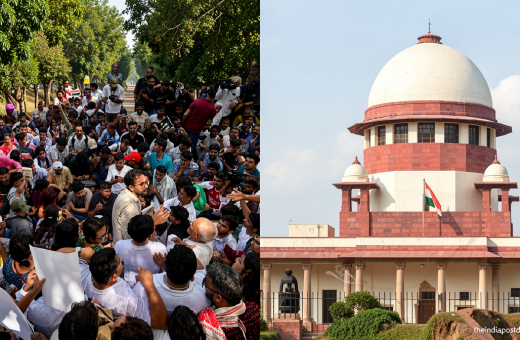
Theindiapostdaily.com – Abhijeet Dipke, the founder of the Cockroach Janta Party, urged supporters to remain resolute after leading a significant protest at Delhi’s Jantar Mantar on Saturday. With the rallying cry “Tell them we are not scared,” Dipke expressed gratitude for the overwhelming participation in the event, which marked the party’s first public demonstration. The protest followed allegations of NEET paper leaks and controversies surrounding the CBSE Class 12 On-Screen Marking (OSM) system, prompting calls for accountability and the resignation of Union Education Minister Dharmendra Pradhan.
“FYI, today’s protest was just a trailer. Thank you for showing up in such huge numbers,” Dipke shared on X after returning from the United States. His message emphasized that the demonstration was a precursor to larger movements, highlighting the growing frustration among students and youth over perceived injustices in the education system. The event drew hundreds of protesters, many of whom carried copies of the Constitution and Indian flags, symbolizing their commitment to fighting for transparency and fair treatment.
Dipke also revealed that his family had been forced to evacuate their home due to intimidation from unidentified groups. “It’s been over a year since I last saw my parents. They’ve endured significant stress in recent weeks and had to leave home because of threats. I’ll be bringing them back soon,” he explained. This personal touch underscored the broader anxiety felt by families of activists, with Dipke’s mother reportedly expressing heightened fear upon his return, as she worried about the possibility of his arrest.
The protest, which lasted several hours, culminated in a sense of urgency as Dipke described feeling his final moments of freedom were approaching. “I was ready to sacrifice my liberty for this cause,” he remarked, reflecting the boldness of his stance. The demonstration not only showcased the party’s grassroots support but also highlighted the emotional toll on its founder, who had been on the frontlines of the movement. Despite the challenges, the message of defiance remained clear: “Tell them we are not scared.”
The Rise of a New Political Voice
The Cockroach Janta Party, established less than a month ago, has quickly become a symbol of youthful dissent. The movement gained momentum after Chief Justice of India Surya Kant referred to certain unemployed youth and social media critics as “cockroaches,” a term that resonated deeply with the public. While the CJI later clarified that his comments targeted those entering legal or media fields with forged degrees, the phrase was embraced by the party as a rallying symbol, representing the resilience of marginalized voices.
On May 16, the day following the CJI’s remark, the party’s social media platform launched with a surge of followers, surpassing mainstream parties like Congress and BJP in a short span. This rapid growth aligned with the broader discontent over NEET paper leaks and the CBSE’s OSM controversy, which have disrupted academic pathways for thousands of students. The movement’s success has been fueled by a combination of online engagement and on-the-ground mobilization, proving that digital activism can translate into real-world impact.
As the protests continue, Dipke’s focus remains on challenging the status quo and demanding accountability from those in power. His words, “Tell them we are not scared,” echo through the streets of Delhi, uniting a diverse group of participants who share a common goal: to ensure that the voices of the youth are heard and respected. The Cockroach Janta Party’s emergence underscores a shift in the political landscape, where younger generations are increasingly taking the lead in advocating for reform.
The impact of the protest extends beyond immediate demands, sparking conversations about the role of education in shaping national identity and the need for systemic change. Supporters argue that the movement has not only highlighted corruption but also inspired a new wave of activists who are unafraid to challenge authority. With the focus keyword integrated naturally into the narrative, the article reinforces the central theme while expanding its reach through detailed analysis and context.
While the protest at Jantar Mantar concluded around 3:30 pm, the momentum generated is expected to fuel future actions. Dipke’s emphasis on the “trailer” nature of the event suggests that this is just the beginning of a larger campaign. As the party gains traction, it may attract more participants and allies, further amplifying the message of “Tell them we are not scared.” The coming days will be critical in determining how this movement evolves and whether it can sustain its energy in the face of growing challenges.