PIB debunks report claiming Centre asked ministries to avoid OpenAI, Anthropic cybersecurity models
PIB Debunks Report on Centre's Request to Avoid OpenAI and Anthropic Cybersecurity Models PIB debunks report claiming Centre asked - The Press Information
PIB Debunks Report on Centre’s Request to Avoid OpenAI and Anthropic Cybersecurity Models
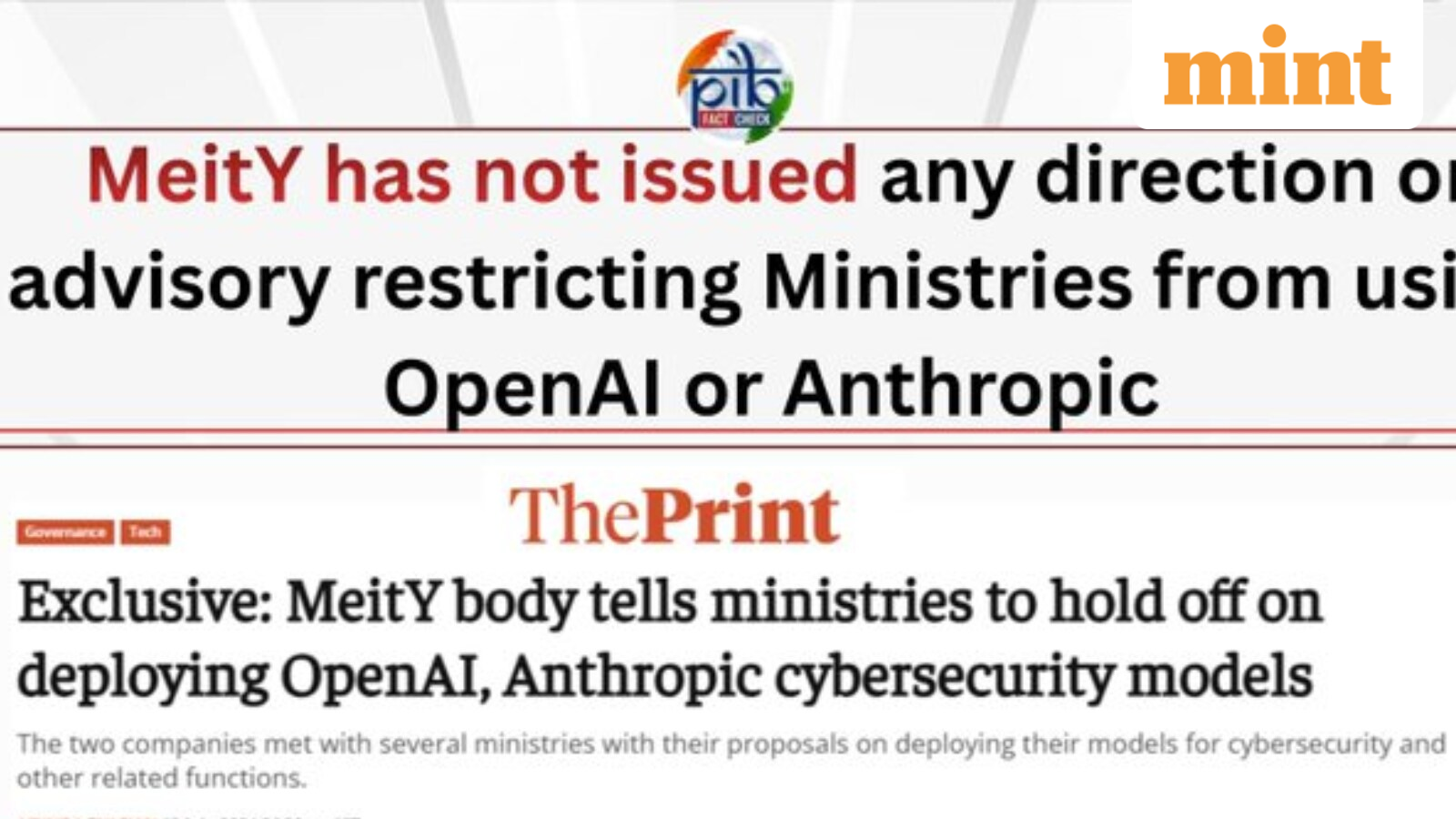
Theindiapostdaily.com – The Press Information Bureau (PIB) has refuted a recent report suggesting that the Centre requested government ministries to avoid using cybersecurity models from OpenAI and Anthropic. In a Fact Check statement on X, PIB clarified that the claim was false, stating no such directive had been issued. The report, which claimed that the Ministry of Electronics and Information Technology (MeitY) instructed ministries to delay the adoption of AI-driven cybersecurity tools, was labeled as “fake” by the official news agency. PIB emphasized that the decision to use or not use these models is typically made by individual ministries based on their operational needs and technical assessments.
Report’s Allegations and Context
The alleged report, published by a media outlet, claimed that an internal memo from MeitY had directed ministries to hold off on implementing AI models from OpenAI and Anthropic. According to the report, this memo was reportedly issued after discussions between the companies’ representatives and officials from several government departments. The claim suggested that the Centre was concerned about the potential risks these models might pose to national cybersecurity infrastructure. However, PIB stressed that there was no formal communication or directive issued to this effect.
“This claim is fake,” PIB Fact Check stated, emphasizing that MeitY had not issued any guidance prohibiting the use of the models. The agency noted that the report may have conflated internal discussions with official policy directives, leading to misunderstandings about the government’s stance on AI in cybersecurity. PIB also highlighted the importance of verifying information through reliable sources, urging the public to rely on official channels for accurate updates.
OpenAI and Anthropic’s AI Capabilities
OpenAI and Anthropic are among the leading AI research firms, known for developing sophisticated large language models (LLMs) like GPT-4 and Claude. These models are marketed for tasks ranging from data analysis to threat detection, with specific applications in cybersecurity. For instance, they can be used to identify software vulnerabilities, analyze code for potential exploits, and manage security threats in real-time. Their ability to process vast amounts of data and generate actionable insights makes them valuable tools for enhancing digital security frameworks.
The report highlighted that the models are classified as dual-use, meaning they can be employed for both defensive and offensive cyber operations. This duality raises questions about their adoption in government sectors, as they could potentially be used for surveillance or to execute targeted attacks if not properly regulated. Despite these concerns, PIB clarified that the Centre had not imposed any restrictions on the use of these models, leaving the decision to individual departments based on their specific requirements and risk assessments.
Government’s Response and Clarification
PIB’s response to the report was swift, with the agency releasing a detailed Fact Check statement to address the allegations. The statement confirmed that no formal directive was issued by MeitY to avoid OpenAI and Anthropic’s cybersecurity models. It also noted that the report may have misinterpreted internal consultations as official policy, which could have led to confusion among stakeholders. The agency further urged the public to cross-verify information with official government sources to avoid the spread of misinformation.
Additionally, PIB emphasized the role of its Fact Check unit in ensuring the accuracy of information disseminated to the public. This initiative is part of a broader effort to combat misinformation in the digital age, particularly in matters of national importance. By clarifying the claims surrounding AI models, PIB aims to maintain transparency and public trust in the government’s communication strategies. The agency also encouraged ministries to continue evaluating the benefits and risks of AI tools, ensuring that decisions are based on sound technical and strategic grounds.
Impact on Cybersecurity Strategy
The controversy sparked by the report has prompted a closer examination of how government ministries approach AI integration in their cybersecurity frameworks. While the Centre did not issue a blanket ban, the report’s claims have raised concerns about the potential influence of external factors on the adoption of cutting-edge technologies. Ministries may now be more cautious in their use of AI models, balancing innovation with security considerations. This could lead to a more deliberate and measured approach in implementing AI solutions, ensuring they align with the government’s broader digital security objectives.
Furthermore, the incident underscores the importance of clear communication between government agencies and the media. PIB’s clarification serves as a reminder that misinformation can quickly gain traction, especially in a landscape where AI is increasingly central to cybersecurity operations. By addressing the report promptly, PIB has helped to prevent unnecessary alarm and reaffirmed the Centre’s commitment to leveraging AI technologies for national security. The agency’s proactive stance also highlights the need for continuous monitoring and verification of information, particularly in the context of rapidly evolving AI capabilities.