‘No border too complex’: Nepal plans to resolve India disputes with ‘open mind,’ foreign minister Shishir Khanal says
‘No border too complex’: Nepal commits to resolving India disputes with open-minded diplomacy Theindiapostdaily.com – Nepal’s foreign minister, Shishir Khanal, has underscored the country’s determination to tackle long-standing border disagreements…
‘No border too complex’: Nepal commits to resolving India disputes with open-minded diplomacy
Theindiapostdaily.com – Nepal’s foreign minister, Shishir Khanal, has underscored the country’s determination to tackle long-standing border disagreements with India through open dialogue and pragmatic solutions. The statement, made during his recent visit to Delhi, highlights a shift in Nepal’s approach to bilateral relations, emphasizing collaboration over confrontation. Khanal’s remarks reflect the new administration’s intent to engage with India without letting historical tensions cloud the potential for mutual economic and political growth. By framing the border issues as manageable challenges, Nepal aims to foster a relationship rooted in clarity and shared progress.
A New Approach to Old Disputes
Speaking at the conclusion of his three-day diplomatic mission, Khanal reaffirmed Nepal’s commitment to resolving border disputes with an “open mind.” This comes as part of a broader strategy to align with India’s current trajectory of economic expansion and technological advancement. The minister’s comments echo Prime Minister Balendra Shah’s vision of moving beyond the legacy of past conflicts, which have often been influenced by geopolitical considerations. Khanal emphasized that Nepal is ready to embrace modern diplomacy, prioritizing solutions that benefit both nations without being constrained by historical grievances.
“No problem is too big, and no border is too intricate to be resolved through dialogue,” Khanal declared. His remarks highlight a departure from previous approaches that saw Nepal and India oscillate between cooperation and contention. By adopting a forward-looking perspective, the government aims to leverage its strategic location and economic aspirations to strengthen ties with its eastern neighbor.
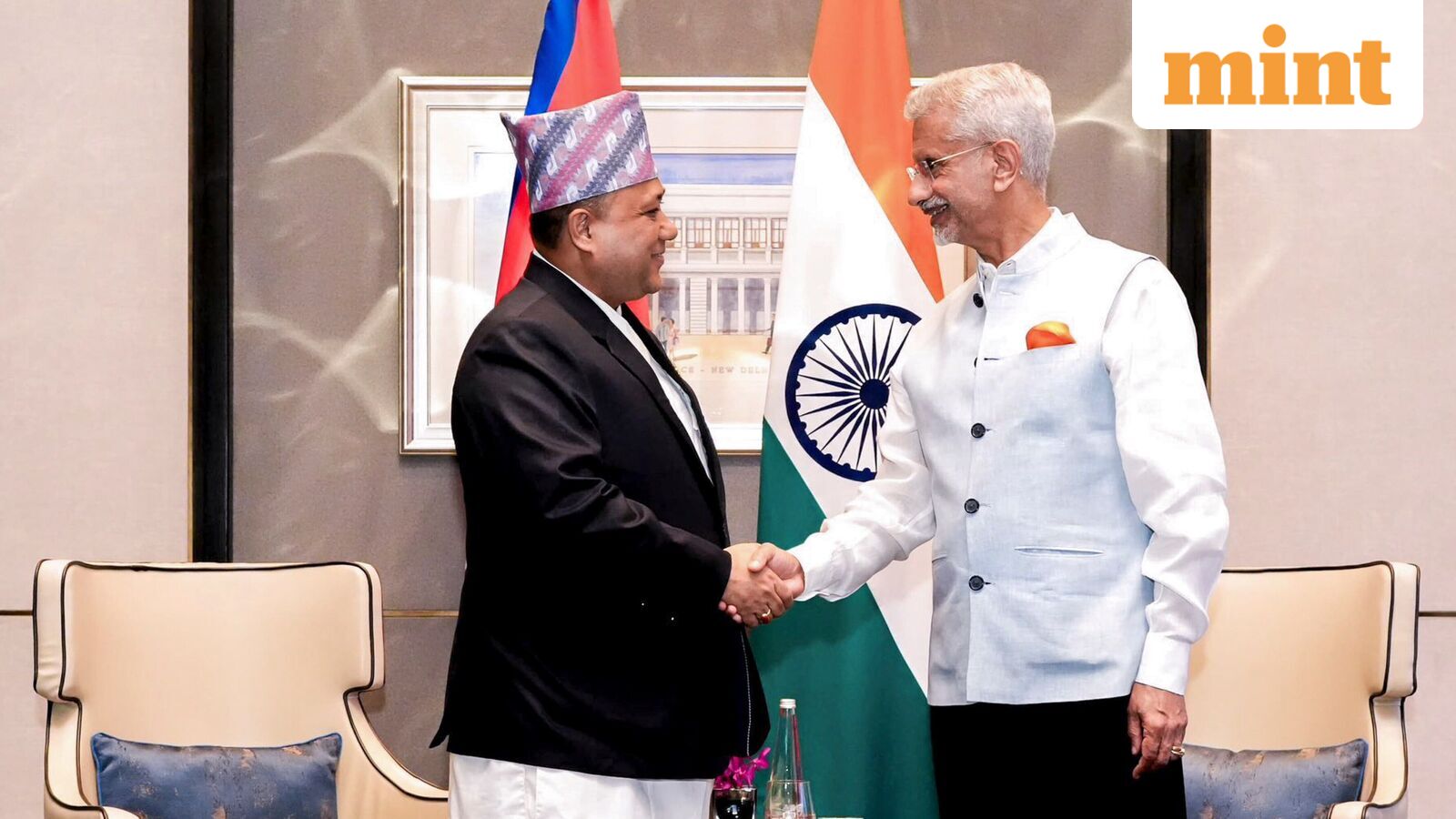
The foreign minister’s visit to Delhi marked a key milestone in Nepal’s efforts to recalibrate its relationship with India. During discussions with External Affairs Minister S Jaishankar, both sides explored ways to enhance economic integration, including expanding trade routes and streamlining cross-border infrastructure projects. Khanal expressed confidence in the potential of diplomatic engagement to bridge gaps, noting that Nepal’s role in the region is defined by its ability to contribute to India’s development while securing its own interests. This collaborative spirit is seen as essential for addressing issues such as the disputed areas of Kalapani, Lekhapani, and Limpiyadhura, which have long been points of contention.
Historical Context and Modern Ambitions
Border disputes between Nepal and India trace back to the 1950s, when the Indo-Nepal Boundary Agreement was signed to formalize the shared border. However, decades of political shifts and territorial claims have kept the issue unresolved. Khanal’s emphasis on “no border too complex” signals a renewed focus on finding a modern, practical resolution that accommodates both nations’ evolving needs. He argued that the current administration is keen to view India not through the lens of historical rivalry, but as a partner in regional development and technological innovation.
“Looking across the border, we see a nation on the rise—a global economic and technological leader,” Khanal said. This sentiment underscores Nepal’s aspiration to engage with India as a collaborator rather than a competitor. The minister highlighted the importance of aligning national interests with India’s growth ambitions, suggesting that the two countries can coexist as equal partners in a shared vision of prosperity.
Khanal’s remarks also emphasized Nepal’s role in promoting regional stability. He pointed to the country’s potential to act as a bridge between South Asian nations, particularly in trade and connectivity. By focusing on shared goals such as infrastructure development and energy cooperation, Nepal aims to position itself as a key player in India’s neighborhood. The minister stressed that resolving border issues is not just about territorial clarity but about building a foundation for sustained economic and political partnership.
Economic Integration as a Priority
The India-Nepal relationship has long been shaped by economic interdependence, with Nepal relying heavily on India for trade, energy, and transportation. Khanal’s vision for the future includes deepening this integration through initiatives that promote joint ventures and cross-border investments. He mentioned the potential for Nepal to benefit from India’s economic policies, such as its trade agreements and digital infrastructure projects, while also contributing its own resources and strategic advantages. This dual focus on mutual benefit is central to the government’s strategy for resolving disputes and strengthening ties.
“We approach India with a heart open to progress, eyes focused on clarity, and a singular aim: to transform Nepal’s economy,” Khanal added. His statement reflects the administration’s belief that economic collaboration can serve as a catalyst for political reconciliation. By addressing border issues in tandem with economic development, Nepal hopes to create a more resilient and prosperous future for both nations.
Khanal also called for greater transparency in the resolution process, urging both sides to prioritize facts and evidence over emotional or geopolitical narratives. He mentioned the importance of involving regional stakeholders, including the South Asian Association for Regional Cooperation (SAARC), in discussions about the disputed borders. This inclusive approach is seen as a way to ensure that the resolution process is fair and sustainable, reflecting Nepal’s commitment to a pragmatic and transparent diplomacy.