US stock market today: Dow, S&P 500, Nasdaq futures edge lower as Fed rate hike fears return
US Stock Market Today: Fed Rate Hike Fears Emerge Amid Market Volatility Market Reactions to Central Bank Uncertainty US stock market today witnessed a modest
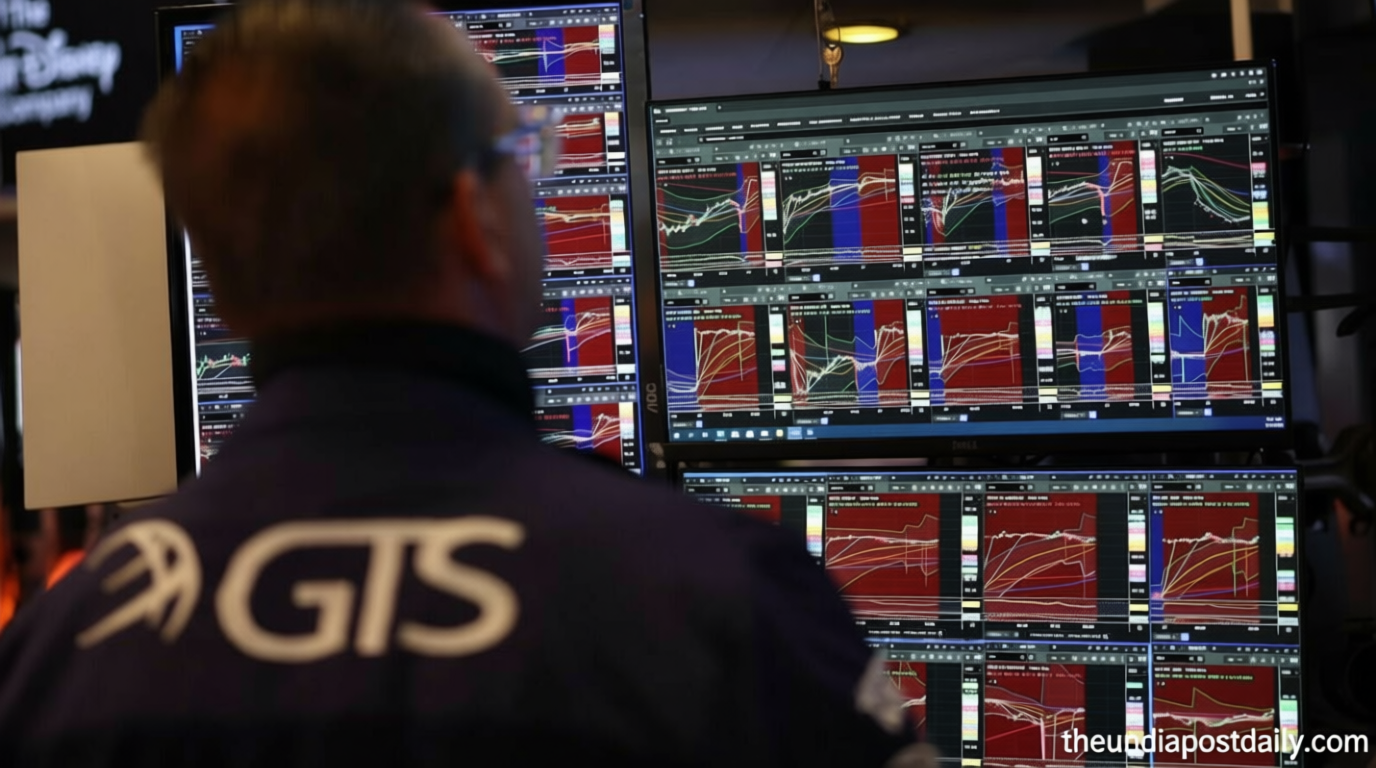
US Stock Market Today: Fed Rate Hike Fears Emerge Amid Market Volatility
Market Reactions to Central Bank Uncertainty
Theindiapostdaily.com – US stock market today witnessed a modest decline as investors grappled with renewed concerns over potential interest rate hikes by the Federal Reserve. On Wednesday, July 1, futures for the Dow Jones Industrial Average dipped 105 points, or 0.2%, while S&P 500 futures fell 0.2% and Nasdaq 100 futures declined 0.4%. This shift in sentiment came as traders anticipated fresh economic data and statements from key central bank figures, which could influence the trajectory of monetary policy in the coming months.
Performance of Major Indices and Sector Trends
Despite the recent dip, the US stock market today has shown resilience throughout the year. The S&P 500 has climbed 9.55% in the first half of 2026, while the Nasdaq 100 surged 20%, showcasing the tech sector’s strength. The Dow Jones Industrial Average also rose 8.9%, marking its most robust first-half performance since 2021. However, the latest movement signals that market participants are now more cautious, with tech stocks and other high-growth sectors facing pressure due to rising borrowing costs.
Analysts point to the Federal Reserve’s hawkish stance as a primary driver of this caution. Recent statements from Fed officials, particularly the new chair Kevin Warsh, have raised questions about the pace and timing of future rate increases. While the US stock market today has historically been driven by optimism around economic growth, the looming threat of tighter monetary policy has begun to temper that enthusiasm, especially in sectors sensitive to interest rate fluctuations.
Economic Indicators and Their Impact on Investor Behavior
US stock market today is also being shaped by mixed economic signals. Job openings in the US remained steady in May, indicating persistent labor demand, but consumer confidence improved in June, supported by declining gasoline prices. These conflicting data points have left investors divided, with some leaning toward growth-oriented investments and others favoring defensive sectors. The Federal Reserve closely monitors such metrics to gauge whether inflationary pressures or economic slowdowns will necessitate additional rate hikes.
Meanwhile, inflation data released earlier this week has added to the uncertainty. While core inflation has eased slightly, the broader Consumer Price Index (CPI) showed a modest increase, reinforcing the idea that the Fed may still need to raise rates to achieve its 2% target. This has led to a reevaluation of earnings expectations for companies, particularly those in the energy and technology sectors, which are heavily influenced by interest rates and global market dynamics.
Global Factors and Market Interconnectedness
The US stock market today is not isolated from global developments. Geopolitical tensions in the Middle East, particularly the ongoing conflict between Iran and Gulf nations, have kept investors on edge. This has indirectly impacted the oil market, which in turn affects the energy sector and broader market indices. Crude oil prices softened as shipping through the Strait of Hormuz resumed, but the 60-day ceasefire remains a focal point for uncertainty.
Goldman Sachs highlighted the potential for global oil markets to face oversupply as the conflict subsides and maritime routes stabilize. However, the instability in the region continues to cast a shadow over energy prices and, by extension, the US stock market today. Investors are closely watching for any further disruptions, which could ripple across markets and influence decisions on corporate spending and investment.