Zoho’s Sridhar Vembu meets 80-year-old Saito-san, gets impressed by leading Japanese car designer’s ‘modest workshop’
Zoho's Sridhar Vembu Meets 80-Year-Old Saito-san, Embraces Modest Japanese Workshop Wisdom Zoho s Sridhar Vembu meets 80 year - Zoho's Sridhar Vembu meets
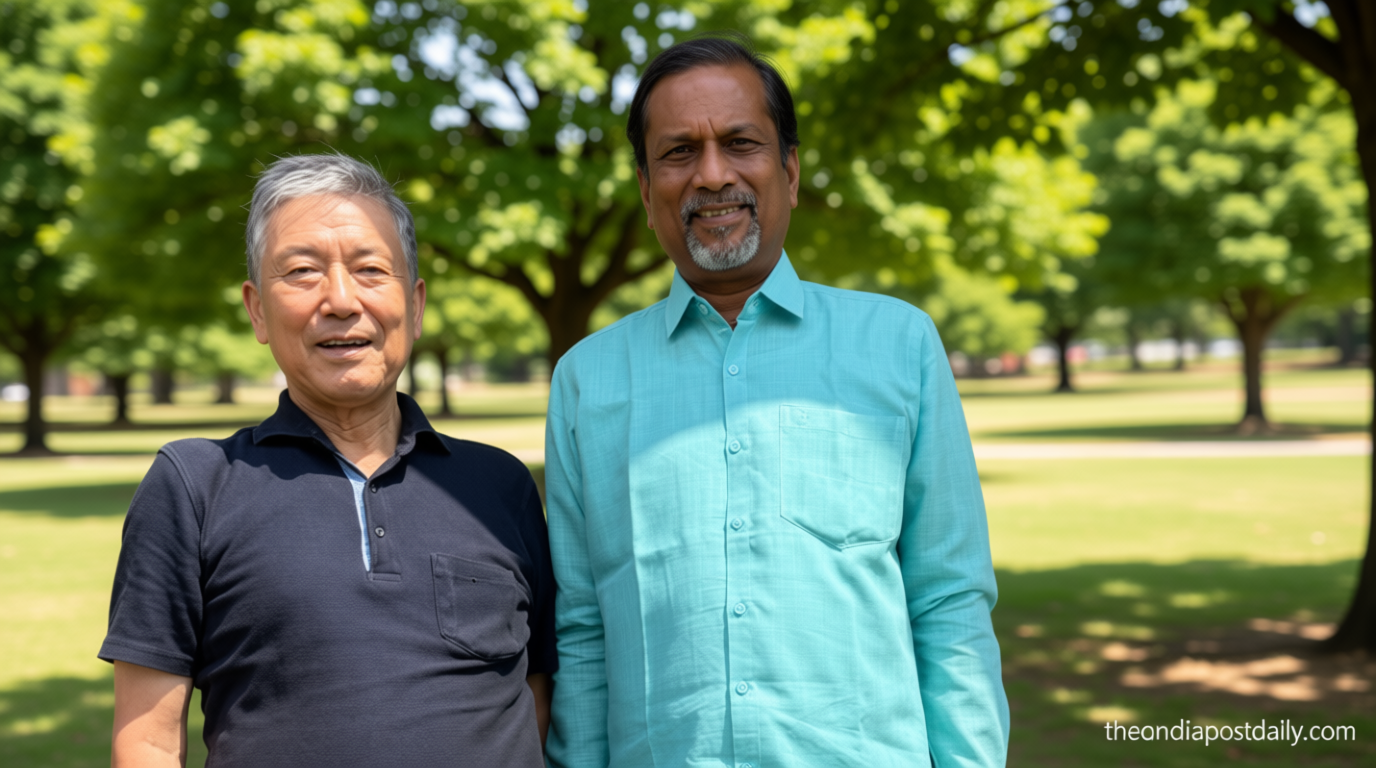
Zoho’s Sridhar Vembu Meets 80-Year-Old Saito-san, Embraces Modest Japanese Workshop Wisdom
Theindiapostdaily.com – Zoho’s Sridhar Vembu meets 80-year-old Saito-san, a pivotal moment that highlights the value of Japan’s craftsmanship-driven approach. During a recent visit to the legendary motor designer Morihiro Saito-san’s workshop, Vembu expressed admiration for the simplicity and precision of the space, which reflects the nation’s ethos of understated innovation. The founder of Zoho, Sridhar Vembu, took to social media to share his reflections, emphasizing how the modest workshop of an 80-year-old master exemplifies the spirit of Japanese engineering. This encounter underscores the importance of local ingenuity in shaping global industries.
Lessons from a Japanese Manufacturing Pioneer
Saito-san, who has spent decades refining motor designs, continues to work with unwavering dedication despite his age. Vembu described the workshop as a humble yet highly functional space, where innovation thrives without excess. The Zoho founder highlighted how Saito-san’s collaboration with a nearby prototype manufacturer showcases the seamless integration of craftsmanship and mass production in Japan. “His modest looking workshop is right next to a company that builds out those motors in prototype quantities and he works closely with them to get them built,” Vembu wrote, underscoring the symbiotic relationship between small-scale creativity and industrial efficiency.
“Last week, I was fortunate to visit the workshop of the leading motor designer in the world, Morihiro Saito-san,” Vembu shared. “His modest looking workshop is right next to a company that builds out those motors in prototype quantities and he works closely with them to get them built.”
Vembu’s admiration for Saito-san’s approach extends beyond the workshop itself. He pointed out that the designer’s age is a testament to Japan’s cultural emphasis on perseverance and quality over speed. “Saito-san is 80+ and still designing advanced motors, some of the most advanced in the world,” he added. “His dedication is a testament to how Japan maintains its global influence through cultural values.” This observation ties into the broader theme of how grassroots innovation fuels industrial strength, a lesson Vembu believes India should embrace.
The Power of ‘Pattarai’ in Local Innovation
The Tamil term “pattarai,” which Vembu used to describe Saito-san’s workshop, encapsulates the essence of localized, hands-on innovation. He argued that such small-scale spaces are vital for nurturing creativity and technical excellence. “We need to revive our ‘pattarai’ culture of building things—every village in India needs such workshops!” he asserted, drawing a direct link between Japan’s success and the potential for India’s manufacturing landscape. This idea resonates with global models like Germany’s Mittelstand, a term for small, family-owned enterprises that drive economic resilience. Vembu questioned why India lacks a similar ecosystem, suggesting it could bridge the gap by prioritizing community-based innovation.
“If we can learn to be disciplined and dedicated like the Japanese, we would be at a ‘véré’ level,” another user stated. “We have the knowledge and skills.”
Vembu’s post sparked a wave of public engagement, with many users agreeing on the importance of fostering such a culture. One admirer praised the Tamil term “pattarai,” where innovation takes root in everyday settings. Another highlighted Japan’s Mittelstand model, questioning its absence in India. “The greatest asset of Germany and Japan are (were?) these kind of small scale entrepreneurs,” a user wrote. “They have a word for it in German: Mittelstand. We need that in India. But you know why it is not there!” This discussion has amplified the relevance of Saito-san’s workshop as a symbol of sustainable industrial progress.
Reflections on Japanese Work Ethic and Craftsmanship
The visit to Saito-san’s workshop also offered a window into the Japanese work ethic, which values precision, patience, and lifelong dedication. Vembu likened his experience to an industrial pilgrimage, echoing his personal devotion to the Thoranamalai Murugan Temple. “When I saw him at work, I was moved to touch his feet,” he remarked, expressing profound respect for the designer’s unwavering commitment. This sentiment was echoed by a former student of Japan, who described the serene demeanor of craftsmen in their small machine shop, even while performing repetitive tasks. Their focus on quality, rather than quantity, has become a cornerstone of Japan’s industrial reputation.
“It is nice to know how Japanese entrepreneurs achieve so much with so little,” a user noted. “It would be interesting to understand how they keep themselves financially sound despite regular adversities in business.”
Vembu’s visit also shed light on the broader implications of Saito-san’s work. By studying the designer’s methods, India could gain insights into how to balance tradition with modernization in manufacturing. The Zoho founder’s post has since become a rallying point for discussions on the role of local innovation in global competition. “We have the knowledge and skills,” one user insisted, reinforcing the idea that India’s potential lies in its ability to cultivate similar modest yet impactful workshops.
India’s Path to Sustainable Manufacturing
The dialogue around Saito-san’s workshop has sparked a reevaluation of India’s manufacturing strategies. Vembu’s emphasis on the 80-year-old designer’s work highlights a critical need for India to prioritize localized, artisan-driven innovation. By emulating Japan’s model, where small workshops play a pivotal role in the nation’s industrial prowess, India could foster a more resilient and adaptable manufacturing sector. This approach would not only preserve traditional skills but also integrate them with contemporary technologies, creating a unique value proposition for global markets.
“The enduring spirit of craftsmanship is what makes Japan a global leader,” a commenter noted. “We need to rediscover that in our own communities.”
As the conversation around Saito-san’s modest workshop gains momentum, it serves as a reminder of the power of grassroots innovation. The Zoho founder’s reflections on the 80-year-old master’s dedication have resonated with many, inspiring a renewed focus on the importance of hands-on expertise in driving economic progress. By nurturing such spaces, India can cultivate a new generation of creators and problem-solvers, echoing the Japanese model that has stood the test of time.