India rejects ex-Japan minister’s ‘delay’ charge on Mumbai-Ahmedabad bullet train: ‘Considerable variance with facts’
India Dismisses Former Japanese Minister's Delay Claims on Mumbai-Ahmedabad Bullet Train India rejects ex Japan minister s delay - India rejects ex Japan
India Dismisses Former Japanese Minister’s Delay Claims on Mumbai-Ahmedabad Bullet Train
Theindiapostdaily.com – India rejects ex Japan minister’s assertion that delays in the high-speed Mumbai-Ahmedabad bullet train project are due to inefficiency, stating there is a considerable variance with facts. The Indian government has firmly defended the project’s progress, emphasizing that the current pace of development aligns with the shared goals of both nations. A statement from the Ministry of External Affairs (MEA) clarified that the project’s timeline remains intact, despite the criticisms raised by Hideki Makihara, Japan’s former Justice Minister, during international discussions.
Former Justice Minister’s Accusations
“The Shinkansen project in India is something I was involved with myself, but what stood out in international meetings and negotiations was the sheer recklessness of the Indian side, repeated over and over. They just don’t keep promises, no matter what. Even if they make a promise, they flip it right away,”
Hideki Makihara, Japan’s former Justice Minister and a key figure in the Indo-Japanese collaboration, has accused India of failing to meet its commitments in the bullet train project. His remarks, made during a recent diplomatic engagement, highlight concerns over the project’s delays and the perceived lack of reliability in New Delhi’s adherence to timelines. The Indian government has since responded, stressing that the challenges faced are not indicative of a systemic issue but rather part of the complex logistics involved in such a large-scale endeavor.
Project Scope and Financial Commitments
The Mumbai-Ahmedabad bullet train, a flagship project of India’s infrastructure development, is designed to connect two major cities with a high-speed rail network. The 508-kilometer line, which will operate at speeds of up to 300 km/h, is expected to significantly reduce travel time and boost economic activity along the route. Japan’s involvement in the project began in 2015 with a landmark agreement, under which the country committed to financing 81% of the estimated 976.3 billion rupees ($10.1 billion) cost and supplying Shinkansen technology for the E10 series trains.
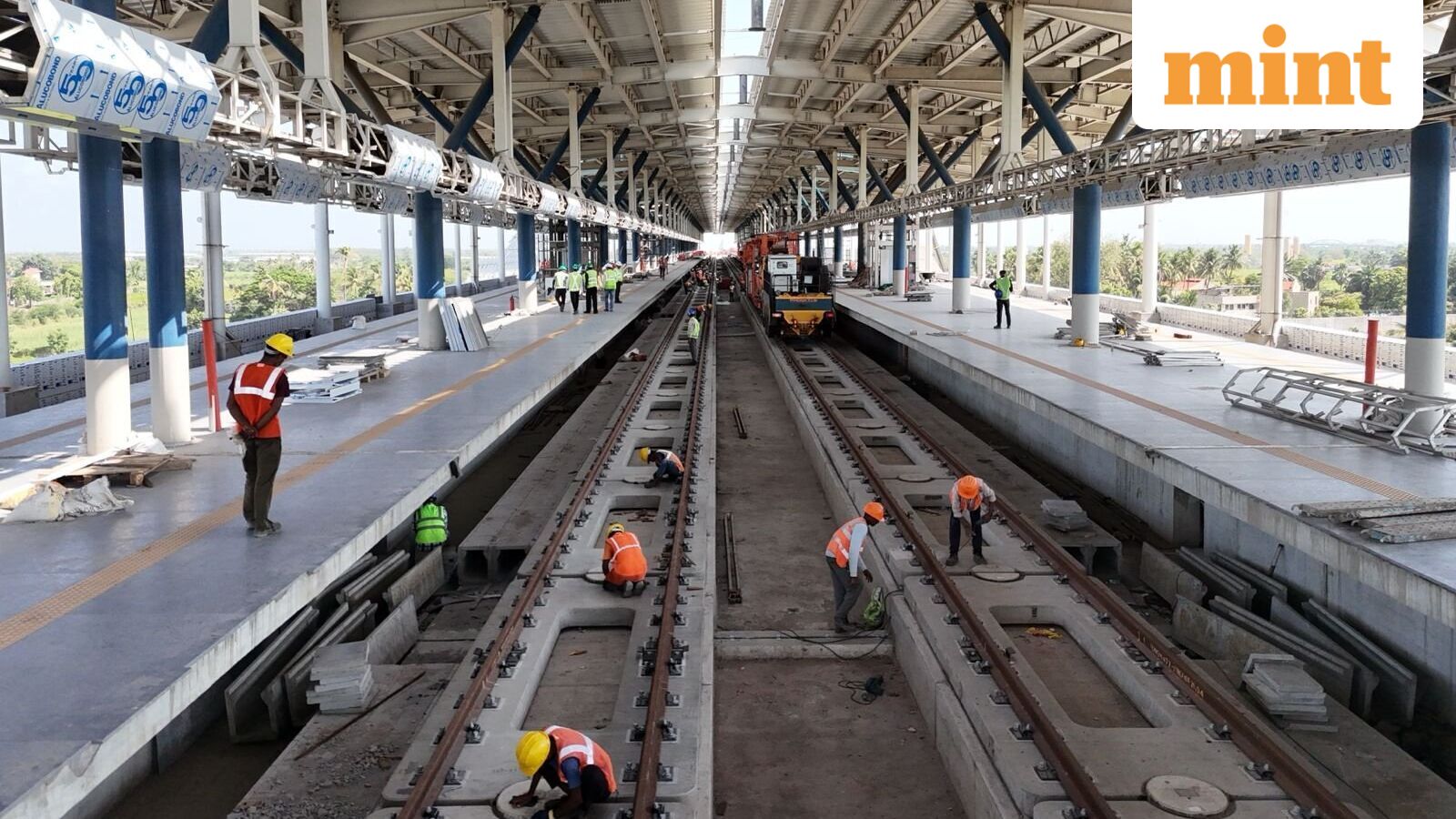
India rejects ex Japan minister’s claim that the delays are a result of poor planning, as the project has already seen substantial progress. The first phase, covering approximately 118 kilometers, is set to be completed by 2027, with the entire line projected to be operational by 2028. The Indian government has pointed out that the remaining delays are due to factors such as land acquisition and environmental clearances, which are common in large infrastructure projects.
MEA’s Defense of Project Momentum
MEA spokesperson Randhir Jaiswal reiterated that the project is moving forward as planned, with construction work well underway. “The first section will be opened in 2027 itself. Therefore, both sides agreed to start operations with the Indian high-speed train,” he emphasized. Jaiswal noted that critical components such as signaling equipment have been ordered and meet international standards, reinforcing that the project’s goals remain achievable.
India rejects ex Japan minister’s argument that the project is off track, as the government has consistently provided updates on its progress. The MEA highlighted that the collaboration with Japan has not only advanced the bullet train initiative but also strengthened bilateral ties. This includes ongoing discussions on technology transfer, training for Indian personnel, and the integration of Japanese expertise into the project’s management framework.
Phased Rollout and Future Plans
Union Railway Minister Ashwini Vaishnaw outlined the project’s phased approach, stating that the initial segment between Surat and Bilimore will begin construction next year. “Following that, we will proceed with Vapi to Surat, then Vapi to Ahmedabad, and eventually Ahmedabad to Mumbai,” the minister said. This step-by-step strategy aims to ensure that each phase is completed efficiently, minimizing risks and maximizing resource allocation.
India rejects ex Japan minister’s criticism of the delayed timelines, as the phased rollout allows for greater flexibility in addressing challenges. Vaishnaw also mentioned that the project’s completion will be a milestone in India’s quest for modern transportation solutions. The government has pledged continued support for the initiative, with a focus on meeting the technical and operational standards set by Japan’s Shinkansen system.
Japanese Prime Minister’s Diplomatic Engagement
Japanese Prime Minister Sanae Takaichi’s recent visit to India underscored the country’s commitment to the bullet train project. During the trip, both leaders reaffirmed their partnership, with Takaichi expressing confidence in India’s ability to deliver the project on time. The visit also aimed to strengthen economic and security ties, positioning Japan as a key strategic partner in India’s development agenda.
India rejects ex Japan minister’s concerns about delays, as the Japanese government has continued to provide technical and financial support. The project’s progress has been a point of discussion during several high-level meetings, with both sides emphasizing the importance of mutual trust and cooperation in achieving shared objectives.
With inputs from Bloomberg.