Govt relaxes curbs on LPG sales to commercial users as West Asia crisis eases
Govt. Lifts LPG Sales Limits for Commercial Users as West Asia Tensions Ease Theindiapostdaily.com – The Indian government has eased restrictions on commercial liquefied petroleum gas (LPG) distribution following a…
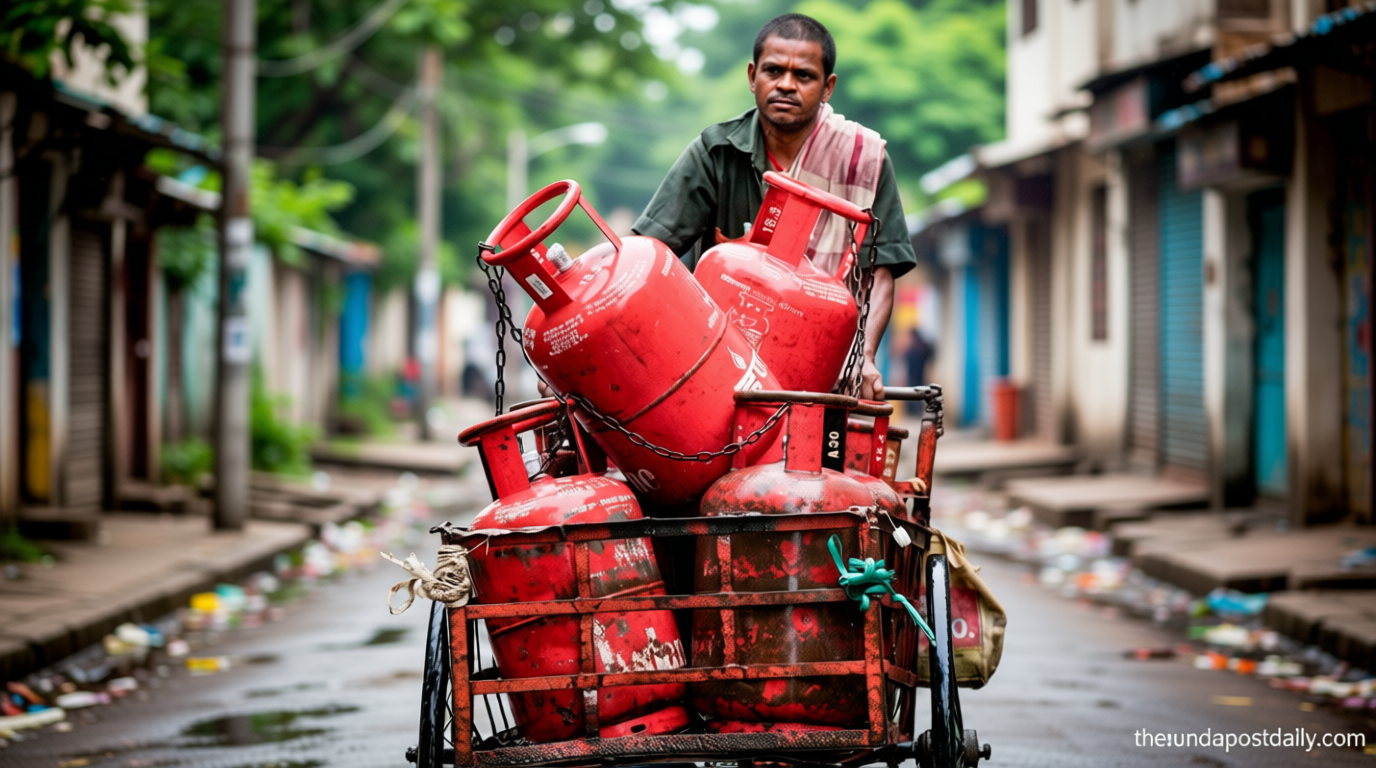
Govt. Lifts LPG Sales Limits for Commercial Users as West Asia Tensions Ease
Theindiapostdaily.com – The Indian government has eased restrictions on commercial liquefied petroleum gas (LPG) distribution following a reduction in supply disruptions linked to the West Asia crisis. This decision comes amid optimism surrounding a potential U.S.-Iran agreement, which could stabilize energy exports through the Strait of Hormuz. The adjustment aims to support industries reliant on LPG, such as hospitality, food services, and manufacturing, by restoring access to fuel at higher volumes.
According to a June 25 directive from oil secretary Neeraj Mittal to state and Union territory officials, commercial LPG allocations have been increased to 50% of pre-crisis levels. The letter explained that prior to the conflict, supplies were limited to prioritize domestic consumers during fuel shortages. Now, all sectoral limitations on non-domestic LPG have been lifted, returning supplies to earlier norms.
“During the supply crisis, commercial LPG was restricted to ensure uninterrupted domestic availability. We have now decided to remove these restrictions and reinstate pre-crisis supply levels,” the directive stated.
In March, the government had suspended LPG sales to commercial entities as the U.S.-Iran conflict escalated, disrupting fuel shipments via the Strait of Hormuz. This critical waterway accounts for roughly 20% of global oil trade. At the time, LPG supplies were reduced to about 80% of pre-war levels, with allocations managed by a committee of state-run oil marketing company (OMC) representatives.
Meanwhile, domestic LPG booking rules remain unchanged. Urban customers are still required to refill every 25 days, while rural users must wait 45 days between refills. These rules were introduced to manage demand during the crisis. To boost local production, the government had also mandated that C3 and C4 hydrocarbon streams be reserved solely for LPG manufacturing, diverting them from petrochemical applications.
C3 and C4 streams are light hydrocarbon gases separated during oil refining and natural gas processing. Their reallocation to LPG production was temporarily suspended to prioritize domestic needs. However, with improved local output and projected availability of imported cargo, the ministry has announced plans to reduce this diversion, allowing more flexibility for non-LPG uses while maintaining a minimum daily production of 40,000 tonnes.
The ministry emphasized that all industrial and commercial consumer data must remain in the oil marketing companies’ databases. A centralized system may be developed to track usage across the three OMCs—Indian Oil Corp Ltd, Bharat Petroleum Corp Ltd, and Hindustan Petroleum Corp Ltd. Additionally, customers transitioning to piped natural gas (PNG) will stay on that network, with the ministry urging OMCs to collaborate with city gas distribution entities to facilitate the shift.
India’s LPG supply chain faced severe strain due to the West Asia conflict. The country meets 65% of its 33-million-tonne annual demand through imports, spending nearly $11 billion annually. Before the crisis, 90% of these imports came from the region, creating a highly concentrated supply chain. However, within months, India diversified its sources, leading to a significant drop in West Asian shipments. By June, supplies to the world’s second-largest LPG importer had fallen below half pre-war levels.
As a result of the crisis, India has ramped up purchases from the U.S. The government intensified efforts to spread its import base, with the U.S. emerging as the top supplier in March, delivering 435,081 tonnes. This shift followed the closure of the Strait of Hormuz, which triggered a global energy crisis and forced emergency measures on fuel distribution. The U.S. continues to lead in LPG exports to India, underscoring the nation’s strategy to reduce dependence on regional suppliers.