India’s Ethanol Blended Petrol programme dates back to 2003: A timeline from E5 to E85
India's Ethanol Blended Petrol Initiative: A Historical Overview Theindiapostdaily.com – India's recent focus on E20 fuel for vehicles has sparked a range of opinions. While some express concerns about potential…
India’s Ethanol Blended Petrol Initiative: A Historical Overview
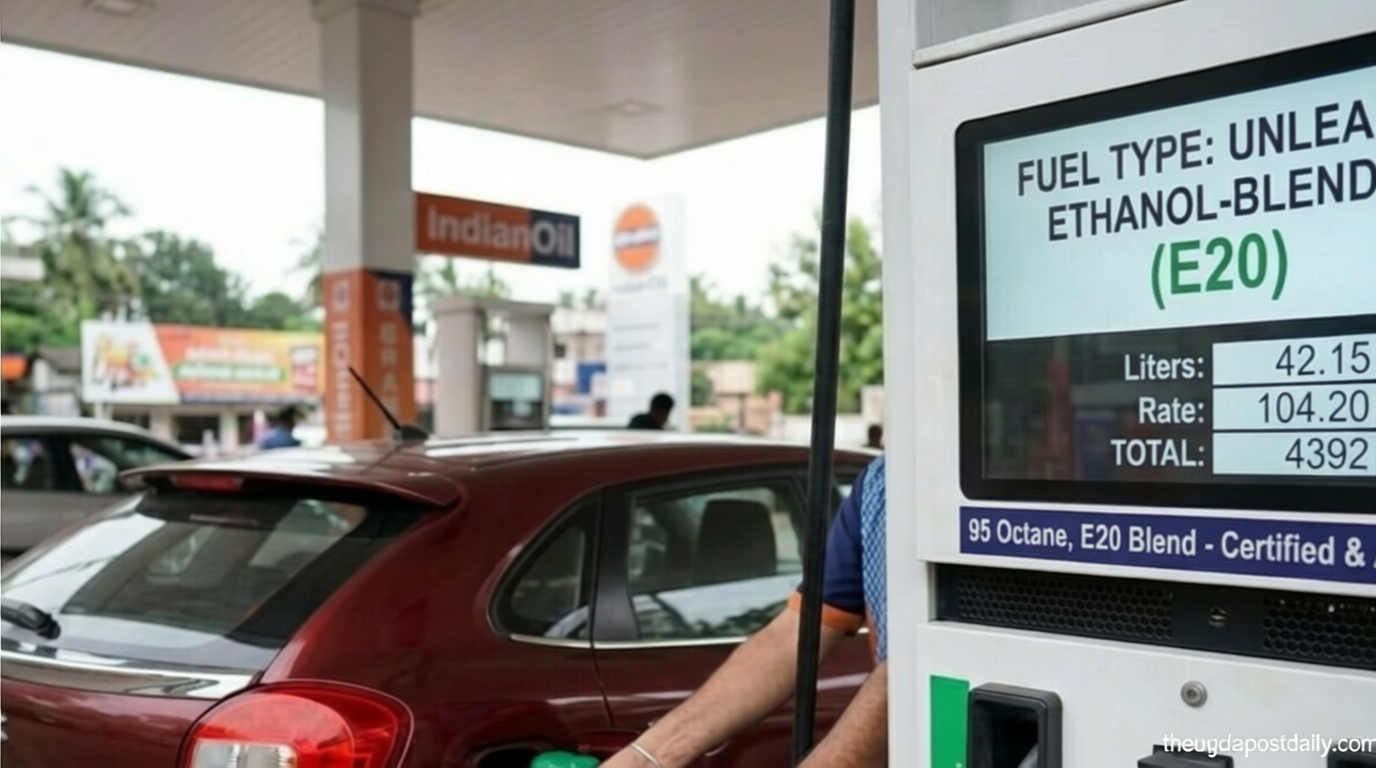
Theindiapostdaily.com – India’s recent focus on E20 fuel for vehicles has sparked a range of opinions. While some express concerns about potential engine issues or lower fuel efficiency, industry professionals have refuted these worries, emphasizing that E20 has undergone rigorous testing and is deemed safe for standard automotive use.
On June 5, 2025, the country introduced E85 fuel, a high-ethanol mixture suitable for flex-fuel vehicles. This fuel, composed of 80-85% ethanol and 14-19% petrol, offers a more concentrated ethanol alternative compared to E20, which blends 20% ethanol with 80% petrol. The discount of ₹20 per litre aimed to incentivize adoption among vehicle owners.
The Evolution of Ethanol Blending
The journey of ethanol integration into petrol began in 2001 with pilot projects. By 2003, the Ethanol Blended Petrol (EBP) Programme was officially launched, initially covering 5% ethanol blending in 20 states and four Union Territories. Despite its early start, challenges limited its growth, as noted in a government report: “Even though the programme started early, it faced multiple inherent challenges leading to slow adoption and growth. But the programme did not meet success.”
Significant progress came in 2022 when India surpassed its 10% ethanol blending target five months ahead of schedule. Oil minister Hardeep Singh Puri highlighted this achievement, stating, “By 2022, India achieved 10 percent blending, five months ahead of schedule.” He also revealed that the original 20% blending goal (E20) for 2030 was expedited to 2025, with a phased approach toward E25, E27, and E30.
Key Milestones in EBP Expansion
“Opened alternative route for ethanol production (2nd Generation including Petrochemicals), directed Oil PSEs to set up bio-refineries,”
the report stated in 2014, marking a pivotal shift in ethanol production strategies. That year, the government reintroduced an administered price mechanism for ethanol under the EBP Programme, aiming to stabilize supply and encourage long-term investment.
From 2014-15, administrative processes were streamlined, with simplified tendering and transportation frameworks. In May 2016, the IDR Act was amended to clarify responsibilities between central and state authorities for ethanol supply. The following years saw continued collaboration with stakeholders, including regular discussions to resolve programme-related issues.
By June 2018, a forward-looking National Policy on Biofuels was notified, engaging all relevant parties. The same month, an Interest Subvention Scheme was launched to boost ethanol production capacity, reducing costs for distillers while lowering GST on ethanol from 18% to 5%.
In 2018-19, new raw materials like B-heavy molasses and sugarcane juice were incorporated into ethanol production, alongside differentiated pricing based on feedstock. This period also marked the extension of the EBP Programme to mainland India, excluding the Island UTs of Andaman Nicobar and Lakshadweep, in April 2019.
Subsequent months saw additional measures, such as the introduction of new sugar and syrup sources for ethanol in September 2019. August 2020 introduced one-time supplier registrations with five-year demand visibility, while October 2020 further eased tender conditions through quarterly guarantees and reduced penalties. The National Biofuel Coordination Committee also approved the use of surplus rice and maize for ethanol production in November 2020.