Fake labels, real concerns: Canada checks import risks after Mumbai warehouse raid; new hurdle for India’s food exports?
A warehouse operation in Mumbai that produced counterfeit food labels bearing the names of major global brands has triggered a formal review by Canada's food
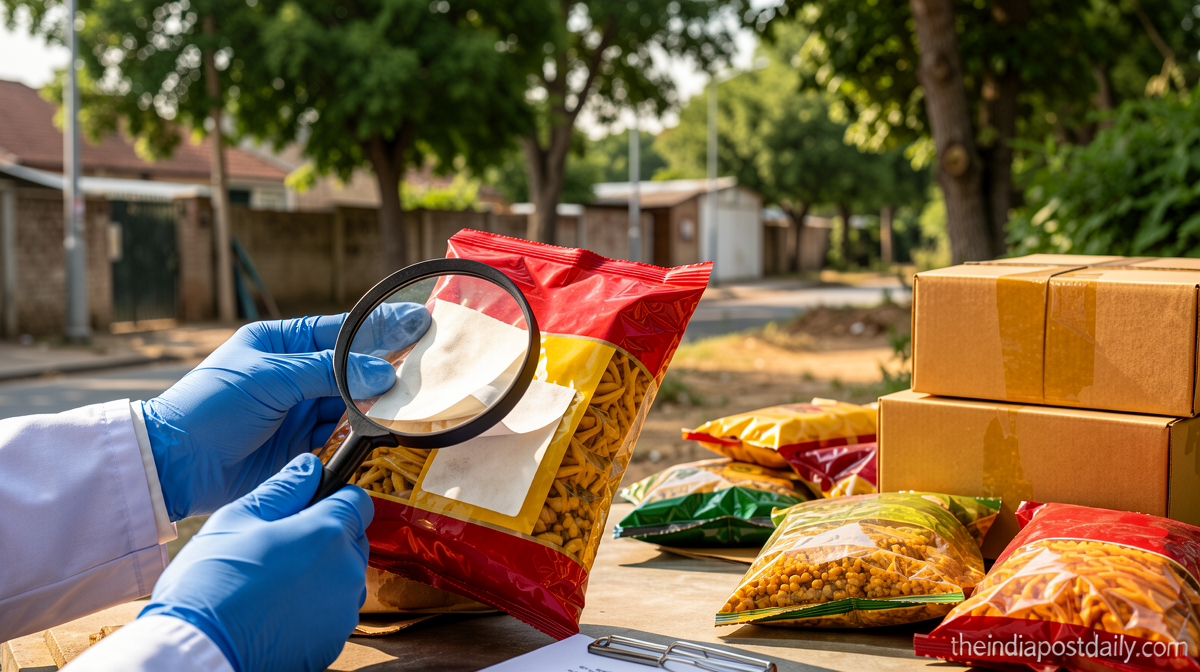
Canada Weighs Import Risks After Mumbai Warehouse Raid Exposes Counterfeit Food Labels
Theindiapostdaily.com – A warehouse operation in Mumbai that produced counterfeit food labels bearing the names of major global brands has triggered a formal review by Canada’s food regulator, adding a new layer of uncertainty to India’s growing food-export ambitions. The Canadian Food Inspection Agency (CFIA) confirmed it is monitoring the situation following last week’s raid, making it the first foreign regulatory body to publicly respond to the incident. Yet the agency stressed that it holds no evidence suggesting any of the tampered products actually crossed into Canadian territory.
The development lands at a sensitive moment for Indian food manufacturers and exporters, who have spent years working to build trust with overseas buyers. A single episode of label fraud at scale can cast a shadow over an entire country’s export pipeline, prompting importers to tighten documentation checks and demand additional certifications. The question now circulating among trade desks is whether this isolated operation signals a broader vulnerability in India’s export verification chain.
What the Raid Uncovered
Indian enforcement officials raided the warehouse and confiscated goods valued at nearly $80,000 (more than ₹75 lakh), along with printing machinery and chemical supplies used to alter packaging. Investigators determined that the equipment had been employed to overwrite expiry dates and rewrite nutritional panels, effectively preparing expired or near-expiry products for shipment abroad. Among the seized items were packages carrying the PepsiCo, Nestlé, Coca-Cola, and Unilever brand names.
None of those multinational companies has been named as a wrongdoer in the case. Investigators are directing their inquiry toward rogue exporters connected to the warehouse operation. Officials indicated that the warehouse owners had been acting on behalf of 19 relatively obscure export firms. Indian authorities stated that the relabelled items were either past their shelf life or close to it, meaning consumers abroad could have been served products well beyond their intended consumption window.
Which countries were meant to receive the goods remains officially unresolved. No destination list has been made public, and that gap sits at the centre of every downstream question about consumer safety and trade reputation.
Canada’s Formal Response
The CFIA issued a statement clarifying its position. The agency made clear it takes food fraud — including false date markings, inaccurate nutrition data, and misleading origin claims — as a serious regulatory matter. At the same time, it noted that no information in its possession indicates products tied to the Mumbai operation have entered Canada.
“At this time, the CFIA has no information indicating that products associated with this operation entered Canada.”
The agency added that it would continue monitoring developments. While the statement stops short of imposing new import restrictions, the very act of issuing a public comment signals that Canadian regulators are treating the episode as a potential risk vector worth watching. For Indian exporters shipping to North America, that attention translates into a practical reality: customs brokers and importers may request additional documentation, batch-traceability records, or third-party inspection certificates before clearing shipments.
The Kurkure Packet and Canadian Labeling Rules
One item photographed during the raid drew particular attention: a Kurkure snack packet — a product of PepsiCo’s Indian snack division — bearing fabricated nutritional information printed in both English and French. The bilingual format mirrors the requirement under Canadian food labelling regulations, which mandate that nutrition facts appear in both official languages. That resemblance fueled speculation that the packet was intended for the Canadian market, though officials cautioned that a label’s language pairing alone does not confirm a destination.
The detail nonetheless underscores how easily a counterfeit operation can mimic the compliance architecture of a specific importing country, making post-shipment detection more difficult once products are in the supply chain.
Brand Responses and Indian Regulatory Action
PepsiCo issued a statement distancing itself from the exporters named in media coverage. The company said it has no commercial relationship with those parties and does not support or endorse unauthorised exports of its products.
“Our snack food products manufactured in India are meant for sale in India, unless otherwise specifically authorised by us to be exported.”
On the domestic enforcement side, Maharashtra FDA Commissioner Tukaram Mundhe, who personally led the raid operation, confirmed that findings had been forwarded to the relevant authorities for further investigation into the exporters involved.
“We have written to concerned authorities about our findings, who will investigate details of the exporters involved,”
Mundhe made the remarks on 3 September. India’s commerce ministry, which oversees export policy and trade facilitation, did not respond to requests for comment at the time of reporting.
Broader Implications for India’s Food-Export Sector
India’s food and agricultural export sector has grown steadily over the past decade, with destinations spanning the Middle East, Southeast Asia, Africa, and North America. The country’s export verification framework relies on a combination of FSSAI licensing, customs documentation, and buyer-side inspection. A warehouse operation that can swap out expiry dates and nutrition panels at scale exposes a gap: the physical product leaving the port may not match the paperwork that accompanied it.
For importing countries, the episode raises the cost of trust. Even where no tainted product has actually arrived, the knowledge that a domestic operation could have produced them prompts regulators to recalibrate risk assessments. Canada’s decision to issue a public statement — rather than remain silent — suggests the CFIA views the scenario as credible enough to warrant visibility, even if no enforcement action follows.
For Indian exporters, the near-term practical effect may be a period of heightened scrutiny: tighter document verification, more frequent spot inspections, and possibly additional third-party audit requirements on shipments to markets that have flagged the issue. The longer-term question is whether the incident will be treated as an isolated rogue operation or as a symptom of systemic weaknesses in export-chain oversight. Until authorities publish the destination list and complete their investigation into the 19 exporters, that question will remain open — and with it, a degree of uncertainty that every Indian food exporter shipping abroad will feel in the coming weeks.
Related Reading
Frequently Asked Questions
What is Fake labels real concerns?
Fake labels real concerns is the main topic of this guide. The article explains the context, practical details, and next steps readers should understand.
Why does Fake labels real concerns matter?
Fake labels real concerns matters because readers are looking for a useful answer, not just a short summary. Good content should match search intent and help them decide what to do next.