India’s first private orbital rocket to launch on 18 July, Vikram-1 to carry ‘Diamond Lotus’, postcard from PM Modi
India’s first private orbital rocket, Vikram-1, is set to debut on July 18, marking a significant
India’s First Private Orbital Rocket Launches on July 18
Theindiapostdaily.com – India’s first private orbital rocket, Vikram-1, is set to debut on July 18, marking a significant milestone in the nation’s space endeavors. The launch will take place at 11:30 AM from the historic First Launch Pad at Sriharikota’s SDSC-SHAR facility in Andhra Pradesh. This event represents a breakthrough as Skyroot Aerospace, the company behind the rocket, aims to showcase its capabilities in satellite deployment through Mission Aagaman. The milestone highlights the growing role of private enterprises in India’s space industry, reducing reliance on government-led initiatives.
Payloads Reflecting Cultural and Scientific Legacy
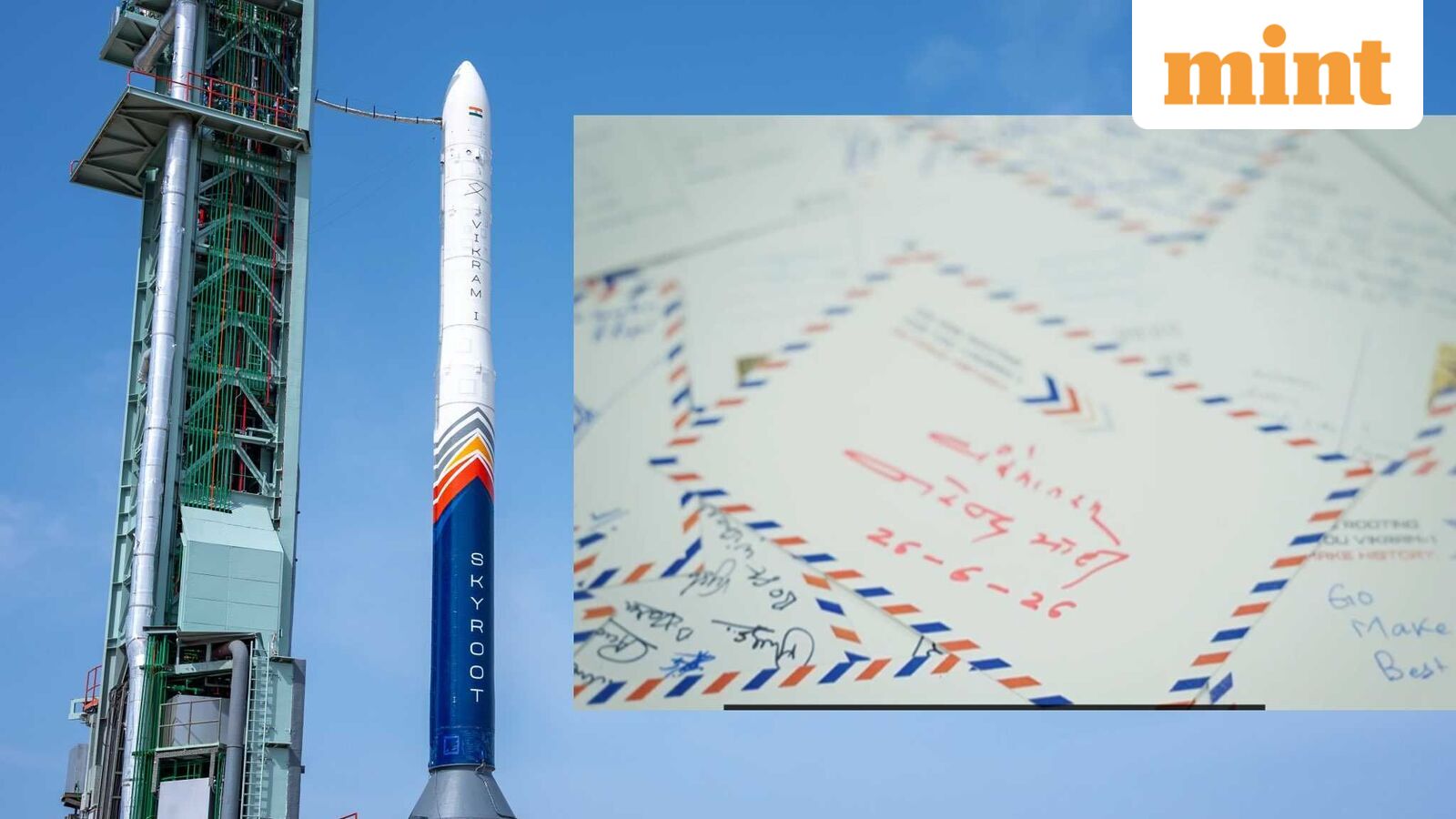
During its maiden flight, Vikram-1 will carry a unique collection of payloads, including a handwritten postcard from Prime Minister Narendra Modi inscribed with “Vande Mataram.” The rocket’s mission also includes symbolic artifacts and technological experiments, emphasizing both India’s cultural heritage and its aspirations in space innovation. Global contributors, such as team members and investors, have sent messages to accompany the payload, underscoring the collaborative nature of the launch. These items collectively symbolize a shared celebration of human ingenuity and the unification of diverse voices in space exploration.
“This mission is not just about launching a rocket, but about carrying the aspirations of a nation into space. It travels with messages from our team, investors, and well-wishers worldwide, making it a celebration of collective effort,” said Skyroot’s co-founder.
Among the payloads, a microart piece by Ajay Kumar Mattewada features an 18K gold rocket alongside tiny sculptures of Sir CV Raman, Dr. Vikram Sarabhai, and Dr. APJ Abdul Kalam. Additionally, a lab-grown “Diamond Lotus” artwork by Cosmos Diamonds and a satellite from Grahaa Space will be deployed. The inclusion of these items reflects Skyroot’s commitment to blending technology with cultural expression, creating a meaningful narrative around the launch.
Technical Advancements and Material Innovations
Vikram-1 is a three-stage orbital rocket with a liquid-fueled adjustment module, designed to carry up to 350 kg of payload into a 450-km Low Earth Orbit (LEO) at a 60-degree inclination. Its entirely carbon-composite construction is a first for India, significantly reducing weight while enhancing efficiency. The use of carbon fiber, which is five times lighter than the strongest steel, demonstrates Skyroot’s focus on lightweight materials and propulsion systems. These innovations position Vikram-1 as a competitive player in the global orbital launch market.
“The heritage of ISRO scientists and the robust manufacturing ecosystem they built have been instrumental in realizing this rocket. We’ve integrated 3D-printed rocket engines, which are metallic and highly efficient, into the design,” said Naga Bharath Daka, Skyroot’s co-founder and Chief Operating Officer. The company’s previous test rocket, Vikram-S, launched in 2022, laid the groundwork for this ambitious project, showcasing the evolution of private space technology in India.
“This launch vehicle is a culmination of years of research, design, and process innovation. It reflects our dedication to making India a leader in orbital launch capabilities,” added Chandana, founder and CEO of Skyroot Aerospace.
Industry Implications and Future Goals
The launch of Vikram-1 is expected to elevate India’s commercial space sector, providing private companies with a platform to deploy satellites independently. IN-SPACe Technical Director Rajesh Jothi noted that such small launch vehicles are rare globally, with only a few nations possessing similar capabilities. This development could open new avenues for satellite-based services, including communications, Earth observation, and scientific research, further diversifying India’s space economy.
Skyroot’s progress in developing Vikram-1 signals a shift toward more privatized space ventures in India. The company’s focus on innovation and cost-effective solutions aligns with the growing demand for affordable orbital launch services. By demonstrating its technical prowess, Skyroot aims to establish itself as a reliable partner for both domestic and international clients, contributing to India’s reputation as a hub for space technology.