US vs Iran over Strait of Hormuz: Who controls the world’s vital waterway nearly half a year into war?
The ongoing US vs Iran over Strait of Hormuz has become one of the most critical geopolitical flashpoints in the Middle East. As nearly six months of conflict
US vs Iran over Strait of Hormuz: Control Battle Deepens
Theindiapostdaily.com – The ongoing US vs Iran over Strait of Hormuz has become one of the most critical geopolitical flashpoints in the Middle East. As nearly six months of conflict continue, both nations remain locked in a fierce struggle for supremacy over this vital maritime corridor. While American leadership has proclaimed naval dominance, Tehran continues to assert its own authority over the waterway that channels roughly twenty percent of global oil supplies.
American Naval Blockade Takes Shape
President Donald Trump used his Truth Social platform to declare that United States forces now exercise complete command over the strategic passage. Describing the naval presence as a “WALL OF STEEL,” the president emphasized that Iran faces limited alternatives given the comprehensive blockade. Washington’s position remains firm despite Iranian objections to American claims of control.
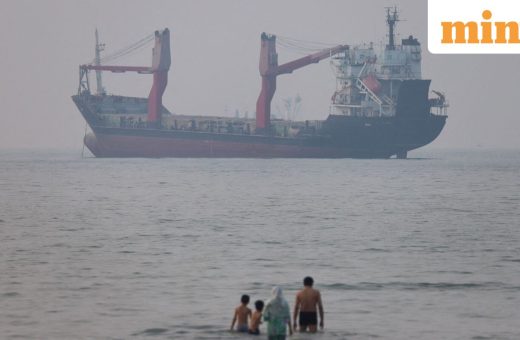
The blockade has effectively restricted maritime traffic to and from Iranian ports on both sides of the channel. This restriction has significantly reduced commercial activity, with only fourteen vessels crossing the strait on a recent Tuesday compared to approximately one hundred twenty ships that typically navigate the passage daily before hostilities began.
Tehran’s Counter-Claims
Iranian officials have been quick to challenge American assertions. Foreign Minister Abbas Araghchi took to social media platform X to criticize what he described as long-standing American intelligence failures. He pointed to the ongoing conflict as evidence of repeated miscalculations by Washington.
“The U.S. has long miscalculated due to intelligence failures. Case in point: The war on Iran. Now, an even bigger miscalculation on the Strait of Hormuz,” Araghchi stated.
Hossein Taeb, head of the Basij paramilitary forces linked to Iran’s Revolutionary Guards, reinforced Tehran’s position during a state television appearance. He emphasized that the Islamic republic maintains full operational control while ensuring national security throughout the waterway.
“Today, you see that the Strait of Hormuz is under the management and control of the Islamic republic, and our country continues on its path in complete security,” Taeb declared.
Commercial Impact and Future Restrictions
The maritime disruption has created uncertainty among shipping companies and vessel operators. According to CNN, which cited Carl Schuster, former director of the US Pacific Command’s Joint Intelligence Center, many commercial entities lack confidence that American forces can guarantee safe passage through contested waters.
Iranian parliamentarian Behnam Saeedi, serving on the National Security Commission, announced additional measures that could further restrict navigation. Under proposed rules, Israeli-flagged vessels would face complete exclusion regardless of whether the region is in wartime or peacetime. American military ships would encounter similar barriers to entry.
Tehran has also signaled intentions to implement a toll collection system for commercial vessels navigating through the passage, potentially adding economic pressure on international shipping lines.
Strategic Significance Remains Undiminished
The narrow channel connecting the Persian Gulf to the Indian Ocean continues to serve as a critical artery for global energy markets. Since hostilities commenced in late February, the waterway has remained predominantly obstructed, with the dispute over control standing as a primary obstacle to broader peace negotiations involving the United States, Israel, and Iran.
Frequently Asked Questions
What percentage of global oil passes through the Strait of Hormuz?
Approximately twenty percent of worldwide oil shipments transit through this strategic waterway, making it one of the most important maritime chokepoints for international energy markets.
How has daily vessel traffic changed since the conflict began?
Daily crossings have dropped from approximately one hundred twenty ships to as few as fourteen vessels, representing a dramatic reduction in commercial maritime activity through the channel.
What restrictions is Iran planning to implement?
Iranian officials have indicated plans to introduce a toll collection system for vessels using the passage and have announced potential exclusion of Israeli and American military vessels from the waterway.