US lawmaker Ro Khanna detained by Israeli settlers armed with US-made rifles in West Bank? What he said
US Lawmaker Ro Khanna Detained by Israeli Settlers in West Bank Theindiapostdaily.com – During a recent visit to the West Bank, US Congressman Ro Khanna, a prominent progressive voice in…
US Lawmaker Ro Khanna Detained by Israeli Settlers in West Bank
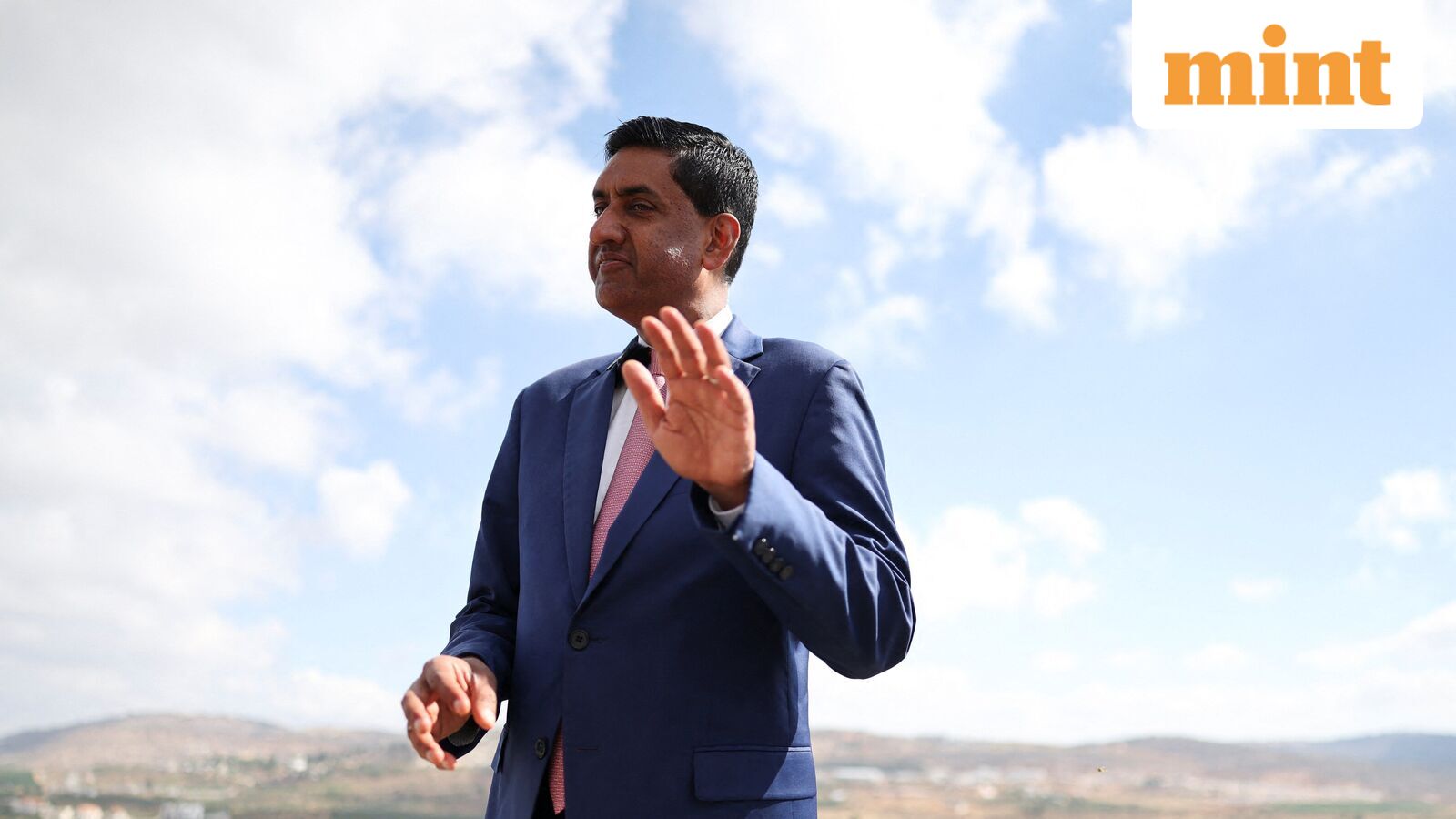
Theindiapostdaily.com – During a recent visit to the West Bank, US Congressman Ro Khanna, a prominent progressive voice in Congress, was detained by Israeli settlers armed with US-made rifles, according to his account. The incident, which occurred in the southern West Bank, has sparked debate about the role of American military aid in supporting the occupation and its impact on local communities. Khanna, who is running for president in 2028, described the event as a vivid example of the challenges faced by Palestinians under the current Israeli administration.
Details of the Detention Incident
Khanna’s aide, Cameron Kasky, confirmed that the delegation was briefly held by armed settlers near a Palestinian village, though the exact location was not immediately disclosed. The lawmakers were reportedly surrounded by settlers using M4 rifles, a model of weapon commonly exported by the United States. Khanna recounted that the settlers blocked the road and detained the group, calling for assistance from the Israeli military. “They called the IDF, and the IDF was on their side,” he stated, emphasizing the settlers’ apparent confidence in their support.
“These hoodlums come in with machine guns—M4, an American-made machine gun—and they detain us. They block off the road. And then they call the IDF, and the IDF is on their side, not on the side of the Americans,”
Khanna remarked, highlighting the perceived alignment between the settlers and the Israeli military. The group remained detained for over an hour before the US Embassy in Jerusalem intervened, allowing them to continue their journey. This event has intensified discussions about the United States’ role in regional conflicts and its relationship with Israeli policies.
Israeli and US Responses
The Israeli military responded to the incident, stating that troops were deployed after reports of settlers obstructing the delegation’s progress near Khirbet Zanuta, a small Palestinian hamlet. According to officials, the soldiers dispersed the settlers and enabled the vehicles to move freely. However, Khanna’s account suggests that the settlers acted independently, leveraging their access to US-supplied weapons to assert control over the area.
Khanna’s experience has underscored the growing divide within the Democratic Party over support for Israel. Recent polls indicate that Democratic voters’ approval of Israel has plummeted from 59% in 2018 to 22% in May 2023, reflecting increased scrutiny of the country’s actions in the West Bank. Some lawmakers have faced primary challenges from left-wing candidates who oppose the $3.8 billion annual military aid package, which funds equipment like M4 rifles and missile interceptors used in conflicts.
“If you’re unwilling to speak up for Palestinian human rights, if you’re unwilling to speak up against the genocide in Gaza, the apartheid in the West Bank, then you are morally compromised,”
Khanna asserted, criticizing the Democratic Party’s stance on the region. His comments come as the party grapples with balancing its traditional alliance with Israel against rising public support for Palestinian causes. The incident also raises questions about the effectiveness of diplomatic channels in protecting American officials during visits to the area.
Political and Human Rights Implications
The detention of Ro Khanna by Israeli settlers has drawn attention to the broader issue of human rights in the West Bank. Palestinian communities in the region have long been subjected to periodic violence, including home demolitions and displacement. Khanna’s visit to a village that had been destroyed by settlers added a personal dimension to the criticism, as he directly confronted the situation on the ground. His presence, backed by US diplomatic resources, symbolizes the ongoing tension between American political figures and the realities of occupation.
Khanna’s campaign for the 2028 presidential election has increasingly focused on issues related to Palestine, positioning him as a potential leader for progressive change. The incident serves as a key moment in his political narrative, reinforcing his commitment to advocating for Palestinian rights. Meanwhile, the Israeli government has defended its actions, asserting that the settlers were exercising self-defense in a volatile region. The use of US-made weapons by settlers has further complicated the debate, as it ties American military exports to the conflict’s escalation.
As the situation continues to unfold, the incident has become a focal point for discussions about US foreign policy and its alignment with Israeli interests. Khanna’s account of the event, combined with the broader context of declining Democratic support for Israel, highlights the need for a more nuanced approach to the region’s complex challenges. The event also underscores the importance of on-the-ground experiences in shaping political perspectives and public opinion.