US-Iran war: Two oil supertankers targeted by unknown projectiles in the Strait of Hormuz, Marisks reports
The moment Washington and Tehran resumed direct military exchanges after a month of relative silence, the waters of the Strait of Hormuz turned dangerous
Supertankers Hit by Projectiles as US–Iran Hostilities Reignite Over the Strait of Hormuz
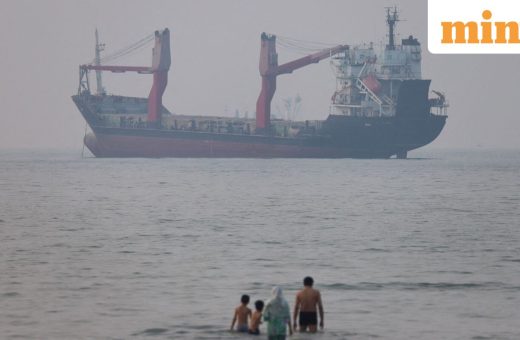
Theindiapostdaily.com – The moment Washington and Tehran resumed direct military exchanges after a month of relative silence, the waters of the Strait of Hormuz turned dangerous again. Within hours of the renewed gunfire between the two powers, two oil supertankers were struck by unidentified projectiles in rapid succession while transiting one of the world’s most consequential petroleum corridors, maritime security consultancy Marisks confirmed on Tuesday local time. The timing underscores how quickly a flare-up in the broader conflict can translate into tangible risk for commercial shipping that depends on the strait’s narrow passage.
Two Vessels Targeted in Quick Succession
The first vessel affected was the Sidr, a crude-oil carrier managed by Saudi Arabia’s state shipping arm, Bahri. It came under fire in waters northeast of Khasab, a port city on Oman’s Musandam Peninsula. The second, the Senegal Prosperity, a Liberia-flagged tanker operated by South Korea’s Sinokor Shipping, took three separate projectile impacts while travelling east of Oman. Both ships were in the process of exiting the Persian Gulf at the time of the attacks, meaning they had already completed the inward leg of their voyages and were heading toward open ocean when the projectiles struck.
Marisks, which monitors maritime incidents and advises shipping lines on routing decisions, issued its alert shortly after the strikes. The consultancy did not specify the type of projectile involved, nor did it attribute the attacks to any particular state or non-state actor. The ambiguity of the ordnance—described only as “unknown projectiles”—leaves open the question of whether the weapons were launched from shore, from a small craft, or from an aerial platform.
UKMTO Confirms Outbound Transit Strike
Hours before Marisks’ alert, the United Kingdom Maritime Trade Operations (UKMTO), the British agency that tracks and publicises incidents affecting commercial vessels in international waters, logged a separate but closely related event. The agency posted on X that a tanker had been hit while completing an outbound passage through the strait.
“A tanker has reported being struck by 3 unknown projectiles whilst completing an outbound transit of the Strait of Hormuz.”
UKMTO placed the incident 17 nautical miles—roughly 31 kilometres—east of Khasab and noted that no crew injuries or environmental contamination had been reported at the time of its bulletin. The agency did not name the vessel in its initial post.
Vanguard Tech Identifies the Senegal Prosperity
Maritime intelligence firm Vanguard Tech subsequently identified the UKMTO-logged tanker as the Senegal Prosperity, linking the two reports into a single incident. According to Vanguard, the three rockets struck the ship’s port side, its engine room, and a ballast tank, severing the vessel’s communications systems. The company added that all crew members were accounted for and safe.
“The rockets impacted the vessel’s port side, engine room and ballast tank, resulting in a loss of communications.”
Why the Strait Matters
The Strait of Hormuz is the sole maritime outlet for oil and liquefied natural gas produced in the Persian Gulf basin. Roughly one-fifth of the world’s daily petroleum consumption transits this corridor, which at its narrowest point measures only about 33 kilometres from the Iranian coast to the Omani Musandam Peninsula. For decades, the strait has been a flashpoint: Iranian forces have periodically exercised with fast-attack craft, mines, and shore-based missiles in the waterway, and several tanker incidents have occurred since the 1980s. The current episode, however, is notable for its coincidence with active US–Iran combat operations, raising the prospect that the strait could become a sustained theatre of risk rather than a brief spike of danger.
Implications for Shipping and Markets
When supertankers—vessels of roughly 200,000 to 300,000 deadweight tons—take projectile damage in a confined waterway, the operational consequences extend well beyond the individual ships. War-risk insurance premiums for Gulf transits are likely to climb, and charterers may reroute cargoes through longer, costlier alternatives such as the Saudi East–West Pipeline or the UAE’s Habshan–Fujairah line, both of which have limited capacity relative to the volumes normally moved through Hormuz. Freight rates on the spot market for crude and refined products out of the Gulf can spike within a single trading session when tanker availability tightens.
For the broader US–Iran confrontation, the tanker strikes add a maritime dimension to what had been an air-and-missile exchange. They also introduce a variable that complicates diplomatic de-escalation: if commercial shipping continues to come under fire, the economic cost of the conflict spreads from the two belligerents to every nation importing Gulf energy, potentially widening the coalition of states with a stake in ending hostilities.
As of the latest available information, neither the Sidr nor the Senegal Prosperity had reported a hull breach severe enough to require an emergency tow, and no oil spill had been confirmed. Both vessels’ crews remained safe. The question now facing shipping insurers, flag-state authorities, and the two governments at war is whether the projectile strikes represent a one-off escalation or the opening move in a sustained campaign against Gulf maritime traffic.
Related Reading
Frequently Asked Questions
What is US Iran war?
US Iran war is the main topic of this guide. The article explains the context, practical details, and next steps readers should understand.
Why does US Iran war matter?
US Iran war matters because readers are looking for a useful answer, not just a short summary. Good content should match search intent and help them decide what to do next.