US-Iran deal: World leaders react to historic peace agreement, await reopening of Strait of Hormuz
The US-Iran deal has emerged as a pivotal moment in international diplomacy, marking the end of a four-month
US-Iran Deal: World Leaders Celebrate Historic Peace Agreement
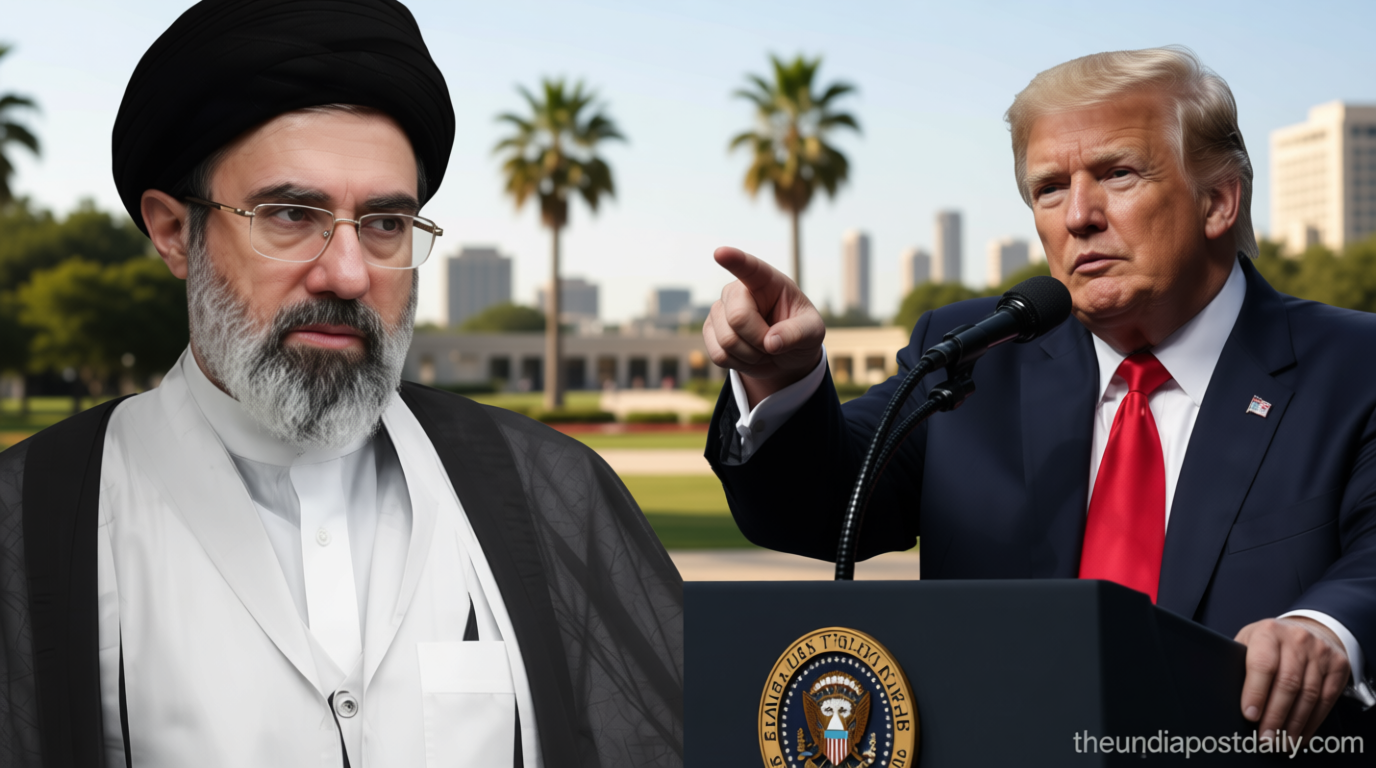
Theindiapostdaily.com – The US-Iran deal has emerged as a pivotal moment in international diplomacy, marking the end of a four-month conflict that began in late February 2026. After months of tense negotiations, the United States and Iran finalized a landmark agreement on 14 June, with the formal signing scheduled for 19 June in Switzerland. This accord not only halts hostilities but also sets the stage for the reopening of the strategic Strait of Hormuz, a critical waterway for global trade.
Global Reactions to the US-Iran Deal
India, a key regional player, swiftly endorsed the US-Iran deal, emphasizing its potential to stabilize the Middle East. During a press conference in New Delhi, India’s foreign ministry spokesperson Randhir Jaiswal noted that the agreement could serve as a model for peace efforts elsewhere, including in Ukraine. “India welcomes all steps towards peace and regional stability,” he stated, highlighting the deal’s significance for uninterrupted maritime traffic through the Strait of Hormuz.
“This agreement represents a major stride toward lasting peace and economic growth in the region,” Jaiswal added, expressing hope that the deal would inspire further diplomatic progress.
Regional and International Implications
German Chancellor Friedrich Merz hailed the US-Iran deal as a diplomatic breakthrough, crediting the collaborative efforts of all parties involved. “This pact marks a turning point for West Asia,” he said, underscoring its potential to bolster security and trade. Similarly, French President Emmanuel Macron called for the immediate reopening of the Strait of Hormuz, stating that the deal must ensure unimpeded access for international shipping.
“The US-Iran deal must translate into the urgent and unconditional reopening of the Strait of Hormuz,” Macron emphasized, noting the waterway’s role in global commerce.
UK Prime Minister Keir Starmer praised the agreement’s role in ending the conflict, acknowledging the mediators from Pakistan, Qatar, and other nations. “The US-Iran deal is a crucial step toward lasting stability,” he said, while reaffirming the UK’s commitment to preventing Iran from acquiring nuclear weapons.
Deal Structure and Key Provisions
The US-Iran deal outlines a comprehensive framework for peace, including an immediate ceasefire and a 60-day technical negotiation phase. The agreement, announced on 14 June, addresses Iran’s nuclear program, sanctions relief, and the reconstruction of war-affected zones. Notably, up to $24 billion in Iranian assets may be released, with half available before formal talks begin.
“This deal ensures a permanent halt to military operations and sets the foundation for long-term cooperation between the U.S. and Iran,” said a statement from the White House, confirming the terms of the accord.
Strategic Reopening of the Strait of Hormuz
The reopening of the Strait of Hormuz is a central goal of the US-Iran deal, which aims to restore critical maritime access. The agreement stipulates that Iran will lift its restrictions on the waterway without tolls, while the U.S. will lift its naval blockade on Iranian ports. This move is expected to alleviate supply chain pressures and stabilize global energy markets.
“The US-Iran deal paves the way for the Strait of Hormuz to resume its role as a lifeline for international trade,” remarked an analysis by maritime experts, noting the economic ramifications of the deal’s success.
Pathways to Sustained Peace
As the US-Iran deal enters its next phase, leaders are focusing on its long-term impact. Turkey’s President Recep Tayyip Erdogan expressed optimism, stating that the agreement could foster a new era of stability. “This development is a welcome step for peace in our region,” he said, praising the role of Pakistan, Qatar, and Saudi Arabia in mediating the talks.
While the deal is a major achievement, its success will depend on continued cooperation and adherence to its terms. The US-Iran deal is seen as a template for resolving other regional disputes, offering a blueprint for diplomatic engagement in an increasingly volatile geopolitical landscape.