US and Iran announce peace deal to reopen Strait of Hormuz
US and Iran announce peace deal to reopen Strait of Hormuz Theindiapostdaily.com – Following months of intense negotiations, the United States and Iran have reached a significant agreement, marking a…
US and Iran announce peace deal to reopen Strait of Hormuz
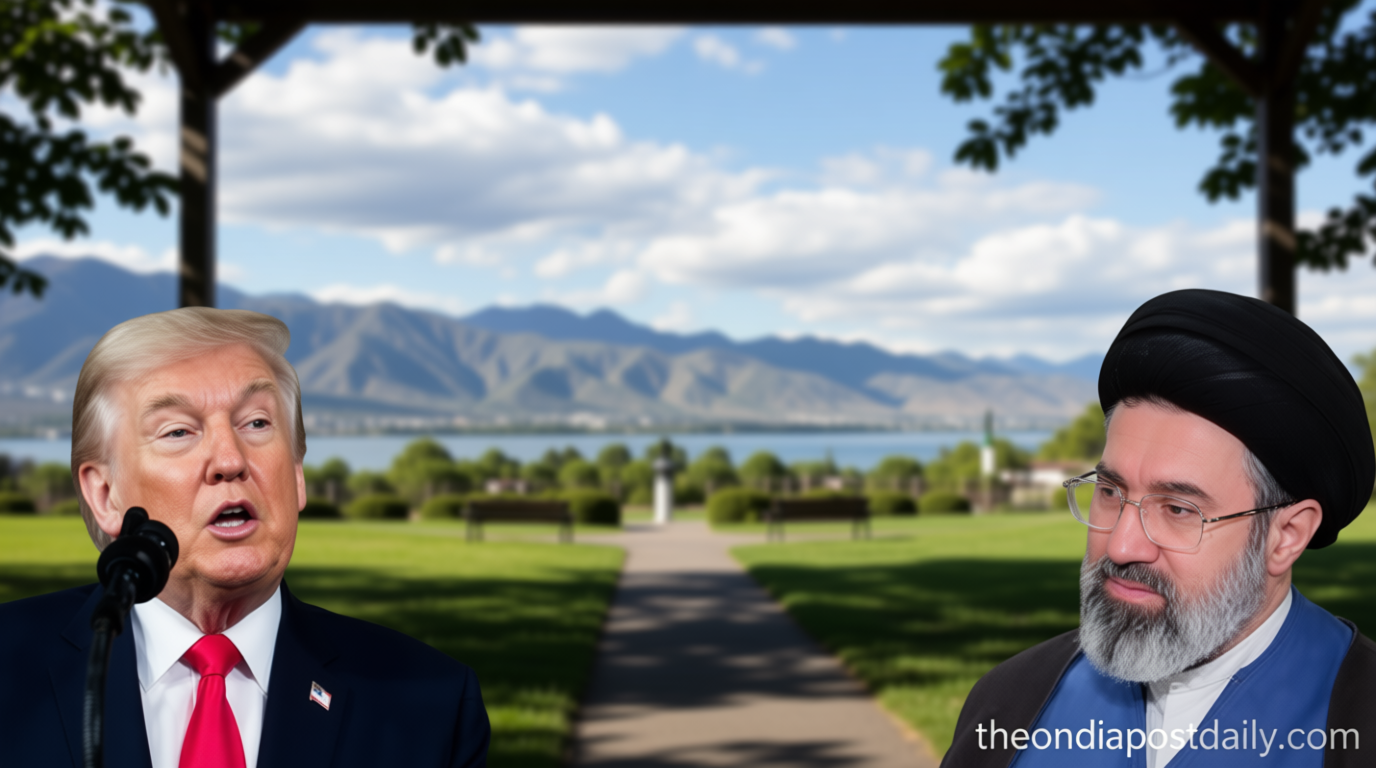
Theindiapostdaily.com – Following months of intense negotiations, the United States and Iran have reached a significant agreement, marking a pivotal step in their ongoing diplomatic efforts. The **US and Iran announce peace** deal is set to restore access to the strategically vital Strait of Hormuz, which has been a focal point of geopolitical tension for years. This development comes amid concerns over disruptions to global energy markets and the risk of renewed military conflict. US President Donald Trump took to social media to highlight the breakthrough, stating,
“The Deal with the Islamic Republic of Iran is now complete. I hereby fully authorize the toll free opening of the Strait of Hormuz and, simultaneously herewith, authorize the immediate removal of the United States Naval blockade.”
The announcement signals a shift in the US-Iran relationship, though its long-term implications remain to be seen.
Deal’s Key Provisions and Immediate Reactions
The **US and Iran announce peace** deal was initially disclosed by Pakistani Prime Minister Shehbaz Sharif, who shared the news ahead of official confirmation by both nations. While the agreement has been hailed as a success, some analysts view it as a strategic concession by the US, with Iranian state media emphasizing the change in power dynamics. The deal involves a mutual commitment to cease hostilities and maintain the flow of oil through the Strait of Hormuz, a critical artery for global energy supplies. In exchange, Iran will receive relief from certain sanctions, though the terms of this relief remain under scrutiny. The agreement’s swift announcement has already led to a drop in oil prices, with Brent crude falling over 4% and West Texas Intermediate experiencing a similar decline.
Although both parties claim the deal represents a win, lingering doubts persist. Israel’s government, which has been a vocal critic of Iran’s nuclear program, has not yet fully endorsed the agreement, citing fears of Iranian aggression. Meanwhile, US domestic hardliners argue that the **US and Iran announce peace** deal overlooks key issues such as Iran’s nuclear ambitions and its missile capabilities. The timing of the agreement, coinciding with Trump’s 80th birthday, has added a symbolic dimension to the political maneuvering. Despite these concerns, the agreement has been praised by some as a pragmatic step toward stability in the region.
Strategic Implications of the Agreement
The deal’s primary goal is to ensure the uninterrupted passage of maritime traffic through the Strait of Hormuz, a waterway that carries approximately one-third of the world’s oil supply. By removing the naval blockade, the US aims to prevent further disruptions to global energy markets, which had seen volatility due to Iran’s actions. The agreement also includes a commitment from both nations to avoid attacks on each other’s vessels, a measure designed to reduce the risk of escalation. Iran, in turn, has agreed to a phased easing of sanctions, which could provide much-needed economic relief for its oil exports.
Experts note that the **US and Iran announce peace** deal is not just a political victory but a test of long-term cooperation. While the immediate benefits are clear, the sustainability of the agreement depends on Iran’s adherence to its commitments. The deal also opens the door for renewed discussions on Iran’s nuclear program, which has been a cornerstone of US-Iran tensions for over a decade. However, the lack of a detailed public release of the deal’s text has raised questions about transparency and the depth of the compromise. As the agreement moves forward, the international community will be watching closely to assess its impact on regional stability and global trade.
The **US and Iran announce peace** deal has already begun to influence financial markets, with investors reacting positively to the reduced risk of conflict. The drop in oil prices reflects confidence in the stability of supply chains, though analysts caution that this may be temporary. The agreement also has implications for the broader geopolitical landscape, as it may encourage other nations to seek diplomatic solutions to their disputes. For the US, the deal offers a way to ease tensions without fully committing to a comprehensive settlement. For Iran, it provides an opportunity to regain access to international markets and reduce economic pressure. As the deal takes effect, its success will hinge on the ability of both sides to uphold their promises and maintain cooperation.
Broader Geopolitical Impact
The **US and Iran announce peace** deal has the potential to reshape the balance of power in the Middle East. By securing access to the Strait of Hormuz, the US has demonstrated its commitment to protecting global energy interests, while Iran has managed to alleviate some of its economic burdens. This could lead to a broader realignment of alliances, with countries in the region reassessing their strategies in light of the agreement. However, the deal’s impact may be limited if Iran continues to pursue its own interests, such as expanding its nuclear capabilities or regional influence.
Historically, the Strait of Hormuz has been a flashpoint for conflict, with tensions flaring between the US and Iran over control of the waterway. The current agreement aims to prevent such escalations by establishing a framework for cooperation. Nevertheless, the deal’s effectiveness will depend on the enforcement of its terms and the willingness of both nations to engage in further dialogue. The **US and Iran announce peace** deal serves as a reminder of the complex interplay between diplomacy and military strategy in the region. As the world watches, the outcome of this agreement could set a precedent for future negotiations between the two nations.