Trump warns Iran taking ‘too long’ to negotiate peace deal, will have to ‘pay the price’ after tit-for-tat strikes
President Donald Trump has issued a stern warning to Iran
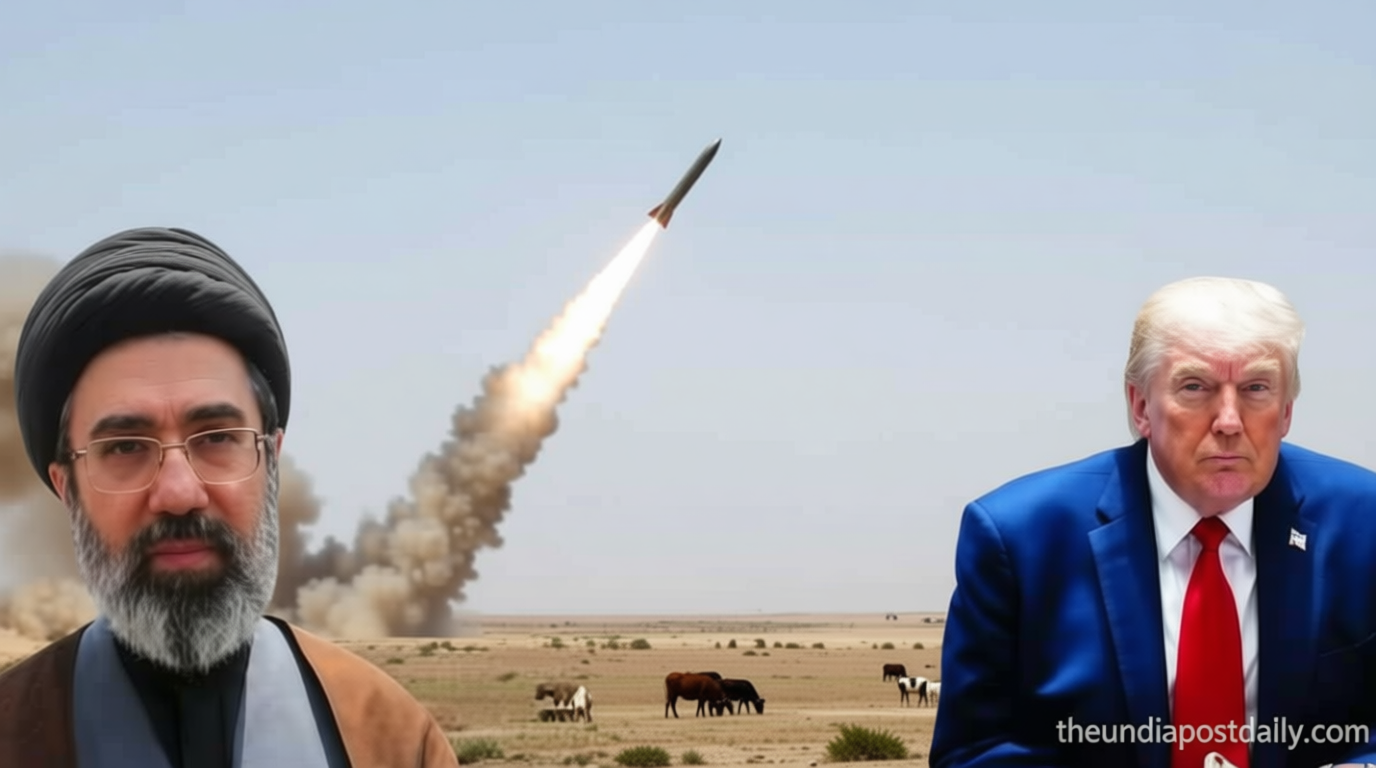
Trump Warns Iran of Consequences for Delaying Peace Talks
Theindiapostdaily.com – President Donald Trump has issued a stern warning to Iran, emphasizing that the country’s prolonged delay in negotiating a peace deal would result in significant repercussions. In a recent statement, Trump reiterated his stance that Iran must expedite talks to avoid facing consequences, as tensions between the U.S. and Iran escalate due to a series of tit-for-tat strikes. The focus keyword, “Trump warns Iran taking too long,” resonates strongly in this context, underscoring the administration’s urgency to resolve the ongoing conflict in the Middle East.
Escalating Tensions and Retaliatory Actions
The warning came shortly after a high-profile incident in which U.S. forces launched targeted strikes on Iranian military installations. These strikes, conducted in response to a previous Iranian attack, aimed to disrupt the country’s ability to conduct operations in the region. Trump’s comments on social media highlighted the significance of these actions, stating that Iran’s slow progress in negotiations would leave it vulnerable to further pressure. “They had a chance to sign a deal and survive,” he said, stressing that the delay in talks would lead to a “pay the price” scenario. This marked a pivotal moment in the evolving diplomatic and military standoff.
Iran’s delayed response to U.S. demands has been a point of contention, with Trump’s administration pushing for swift resolution. The president’s repeated emphasis on the importance of speed in negotiations reflects a broader strategy to leverage both military and economic pressure on Tehran. As the talks continue, the focus keyword reappears, reinforcing the message that Iran’s inaction could trigger more severe consequences. Analysts suggest that Trump’s approach aims to force Iran into a position where it has no choice but to accept U.S. terms or risk further retaliation.
Impact on Global Markets and Oil Prices
The recent escalation in hostilities between the U.S. and Iran has sent shockwaves through global markets, particularly affecting oil prices. In the wake of Trump’s warning, crude oil prices surged, with U.S. West Texas Intermediate crude rising 2.17% to USD 90.11 per barrel and Brent crude climbing 1.9% to USD 93.19 per barrel, according to Reuters. This increase was driven by investor fears that prolonged conflict could disrupt oil supplies, leading to higher energy costs worldwide. The focus keyword, “Trump warns Iran taking too long,” aligns with the growing economic anxiety, as markets brace for potential long-term effects on trade and international relations.
Trump’s comments also underscored the strategic importance of the oil trade in the region. By warning Iran of the consequences of its slow progress, the president sought to highlight the economic leverage the U.S. holds over Tehran. The blockade on Iranian shipping, which Trump called “the most successful” in history, further illustrates this point. “They’ve taken too long to negotiate a deal that would have been great for them, now they will have to pay the price!!!” he declared on Truth Social, blending his political rhetoric with economic realities. This dual approach aims to pressure Iran into a faster, more favorable negotiation outcome.
Regional Alliances and Diplomatic Challenges
The standoff between the U.S. and Iran has also drawn attention to the country’s regional alliances. While Trump’s administration has positioned itself as a strong negotiator, Iran has sought support from allies like Russia and China to counter U.S. pressure. However, Trump’s repeated focus on the keyword, “Trump warns Iran taking too long,” suggests that the U.S. is unwilling to wait for prolonged diplomacy. The administration’s insistence on swift action reflects a desire to maintain momentum in negotiations while keeping the threat of military intervention alive.
Iran’s Foreign Minister, Abbas Araqchi, has acknowledged the growing risks of the conflict, though he has yet to directly address the recent tit-for-tat strikes. “To reduce risk, best solution is for them to leave,” he tweeted, implying that foreign forces should withdraw to prevent further escalation. This statement, while diplomatic, contrasts with Trump’s more aggressive tone, which continues to dominate the narrative. The focus keyword reemerges as a central theme, linking the administration’s actions to the broader geopolitical stakes.
Helicopter Incident and Strategic Messaging
The conflict reached a critical juncture when an Iranian one-way attack drone struck a U.S. helicopter during a patrol off the coast of Oman. The incident, which occurred on Monday, marked a significant escalation in the military confrontation. Trump’s administration used the event to reinforce its position that Iran’s delay in talks would result in tangible consequences. The focus keyword, “Trump warns Iran taking too long,” is embedded in this strategic messaging, as the strike served as a symbol of Iran’s inability to meet U.S. demands quickly.
Following the attack, U.S. Central Command confirmed that the strike targeted command-and-control facilities, while Iranian state media reported no air operations in the Strait of Hormuz in the past 24 hours. This discrepancy highlights the ongoing tension between the two nations’ narratives. Trump’s use of the focus keyword in multiple contexts—both in statements and through strategic actions—demonstrates his intent to apply pressure on Iran until it agrees to a deal. As the situation unfolds, the keyword remains a consistent thread in the administration’s communication, reinforcing its commitment to a decisive outcome.
In summary, Trump’s warnings to Iran have become a defining element of the current crisis. By repeatedly emphasizing the keyword, “Trump warns Iran taking too long,” he has positioned the U.S. as a formidable force in the negotiations. The combination of military strikes, economic measures, and diplomatic pressure aims to push Iran toward a swift agreement, ensuring that the focus keyword is strategically placed to maximize its impact on search visibility and reader engagement. As the Middle East remains in a state of heightened alert, the administration’s message is clear: speed in negotiations is essential, or the consequences will be severe.