Taiwan’s US arms pipeline is slowing: What we know so far about F-16 fighter jets, $14 billion deal and T-Dome
Taiwan’s US arms pipeline is under renewed scrutiny as deliveries of 66 F-16 Block 70 fighter jets face delays and a proposed US weapons package worth about
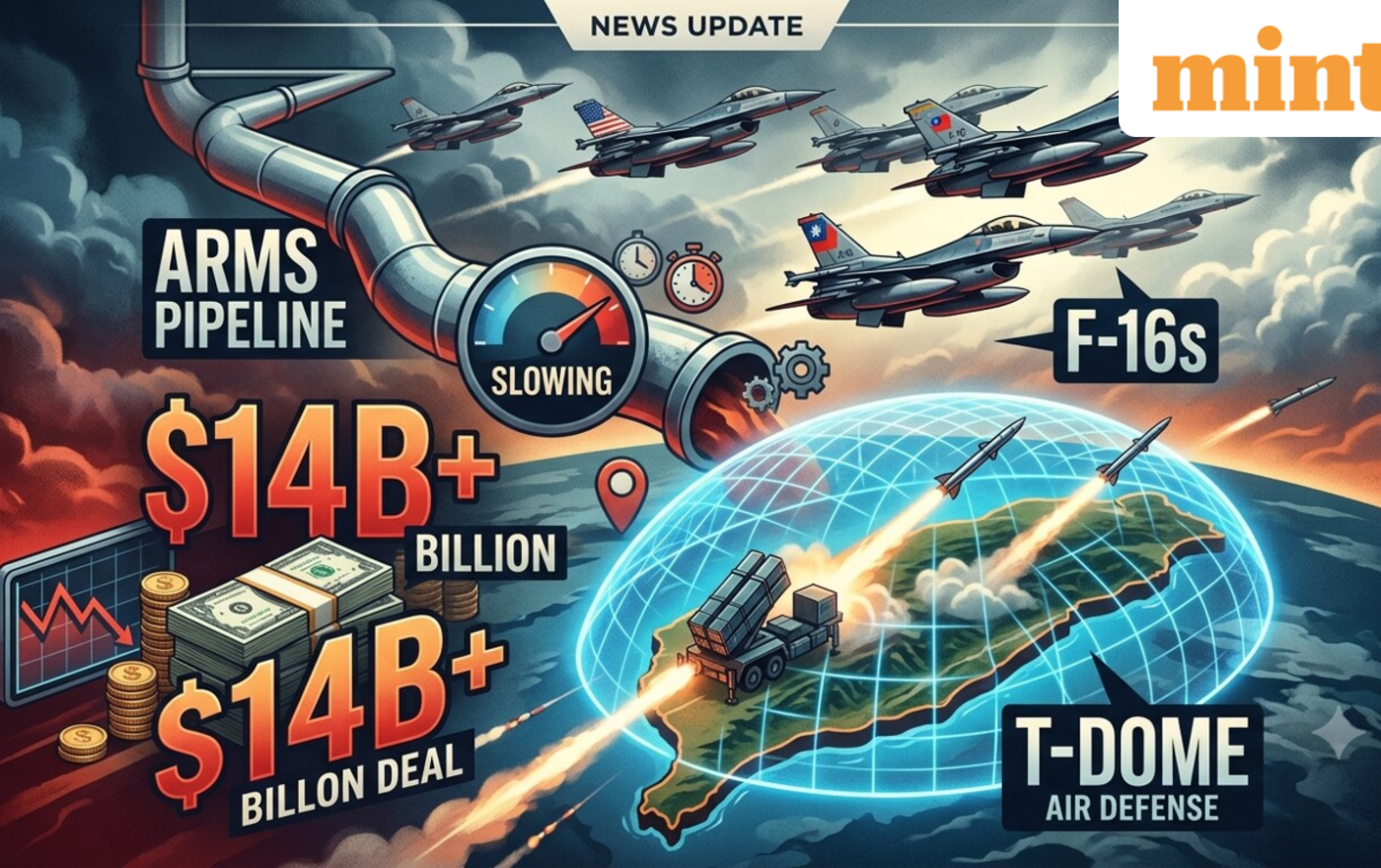
Taiwan’s US Arms Pipeline Faces Fresh Delivery Delays
Theindiapostdaily.com – Taiwan’s US arms pipeline is under renewed scrutiny as deliveries of 66 F-16 Block 70 fighter jets face delays and a proposed US weapons package worth about US$14 billion remains unresolved. The developments affect Taiwan’s wider effort to strengthen air power and integrate layered air-defence systems.
Taipei says it remains in contact with Washington and has been told there is no change in US policy towards Taiwan. However, delayed production and pending decisions show how supply constraints and strategic priorities can affect even major defence programmes.
F-16 Fighters Have Yet to Reach Taiwan
Taiwan ordered 66 F-16V fighter jets from Lockheed Martin in 2019. The Block 70 aircraft are intended to expand and modernise the island’s fighter fleet through updated avionics and other capabilities.
The first two aircraft, numbered 6727 and 6728, departed the United States and arrived in Hawaii. They were expected to continue across the Pacific towards Taiwan, but that onward journey had not taken place.
Observers reported signs that the aircraft had prepared to leave Joint Base Pearl Harbor-Hickam before returning to the apron rather than flying onward to Guam. No public explanation has confirmed why the transfer was interrupted.
Defence Minister Wellington Koo did not give Reuters a revised delivery date. He said production had reached a stage at which delivery could occur and referred to compensation arrangements connected with delays. Lockheed Martin did not immediately comment.
Production Pressures Have Affected the Programme
The F-16 schedule has been affected by Lockheed Martin’s relocation of production from Fort Worth, Texas, to Greenville, South Carolina. The shift disrupted the planned pace of work on Taiwan’s order.
Covid-19-era supply-chain disruption, supplier difficulties and changes to US assembly schedules also contributed to the slowdown. Taiwan’s defence ministry previously identified these issues as factors affecting delivery.
Lockheed Martin expanded work to two shifts, with employees working up to 20 hours per day to increase output. Despite those efforts, Taiwan said in November 2025 that delivery of the full 66-aircraft order had been pushed back.
The consequences extend beyond the arrival of individual jets. Taiwan must coordinate pilot training, maintenance, spare parts, personnel and operational integration, meaning a revised timetable can affect the broader modernisation programme.
US$14 Billion Weapons Proposal Remains on Hold
A separate proposed US arms package estimated at US$14 billion has also been held in abeyance since President Donald Trump met Chinese President Xi Jinping in May. The status of that proposal adds another uncertainty to Taiwan’s US arms pipeline.
The package is expected to include hundreds of Patriot Advanced Capability-3 Missile Segment Enhancement interceptors, known as PAC-3 MSE missiles, as well as nine National Advanced Surface-to-Air Missile System units, or NASAMS. It could also include the Integrated Battle Command System, known as IBCS.
PAC-3 MSE interceptors are designed to counter high-threat targets, including ballistic and cruise missiles. NASAMS can be used against aircraft, drones and cruise missiles, while related sensors could improve Taiwan’s ability to detect and track incoming threats.
IBCS is designed to link air-defence assets into a coordinated network. Connecting sensors, launchers and command systems could allow information to be shared across multiple layers of defence rather than treating each asset as a separate system.
T-Dome Would Link Air-Defence Capabilities
The proposed package is closely connected to Taiwan’s planned T-Dome concept, which seeks to bring existing and future air-defence assets into a more unified framework. Its purpose is not simply to add missiles or launchers, but to improve how systems identify threats, exchange data and respond.
Taiwan already operates or is pursuing several relevant capabilities, including PAC-3 missiles, NASAMS and the domestically made Tien Kung III missile. A more integrated network could help connect these systems as Taiwan develops its air-defence planning.
Delays in Taiwan’s US arms pipeline do not mean the underlying programmes have been cancelled, but they can reshape planning for training, readiness and the deployment of new capabilities.
FAQ: Taiwan’s US Arms Pipeline
How many new F-16s has Taiwan ordered?
Taiwan ordered 66 F-16 Block 70, or F-16V, fighter jets from Lockheed Martin in 2019.
Why are the F-16 deliveries delayed?
Factors cited include the relocation of Lockheed Martin’s production line, supply-chain disruption during the Covid-19 era, supplier issues and adjustments to US assembly schedules.
What could be included in the US$14 billion proposal?
The proposed package could include PAC-3 MSE interceptors, nine NASAMS units and IBCS, a system intended to coordinate air-defence assets.
What is Taiwan’s T-Dome plan?
T-Dome is Taiwan’s planned framework for linking current and future air-defence systems so they can detect threats, share information and respond in a more coordinated way.