Strait of Hormuz vessel crossings fall as US-Iran attacks intensify and Houthi blockade threats disrupt shipping: Report
Commercial shipping through the Strait of Hormuz vessel crossings experienced a notable slowdown at the beginning of this week. Escalating military exchanges
Strait of Hormuz vessel crossings fall: el crossings decline amid regional tensions Theindiapostdaily.com – Commercial shipping through the Strait of
Strait of Hormuz vessel crossings decline amid regional tensions
Theindiapostdaily.com – Commercial shipping through the Strait of Hormuz vessel crossings experienced a notable slowdown at the beginning of this week. Escalating military exchanges between the United States and Iran, combined with new threats from Yemen’s Iran-backed Houthi rebels, have prompted ship operators to exercise greater caution. According to shipping analytics firm Kpler, only four commodity vessels transited the strategic waterway on Monday, representing a decrease from the seven vessels recorded the previous day.
Reduced traffic signals growing security concerns
The four vessels that managed to navigate the Strait of Hormuz vessel crossings on Monday included two tankers departing the region and two entering. Among the outbound ships, one carried petrochemicals while the other sailed empty. The inbound vessels consisted of a bitumen tanker and an oil tanker. Notably, no very large crude carriers (VLCCs) or liquefied natural gas (LNG) tankers were observed passing through during this period, highlighting mounting concerns over security conditions in one of the world’s most critical energy corridors.
Industry analysts suggest that the reduced number of Strait of Hormuz vessel crossings reflects a broader trend of caution among maritime operators. With tensions rising in the region, many shipping companies have opted to delay or reroute certain voyages until the security situation stabilizes. This cautious approach has resulted in fewer vessels attempting to navigate the narrow waterway during peak hours.
Houthi blockade expansion raises Red Sea fears
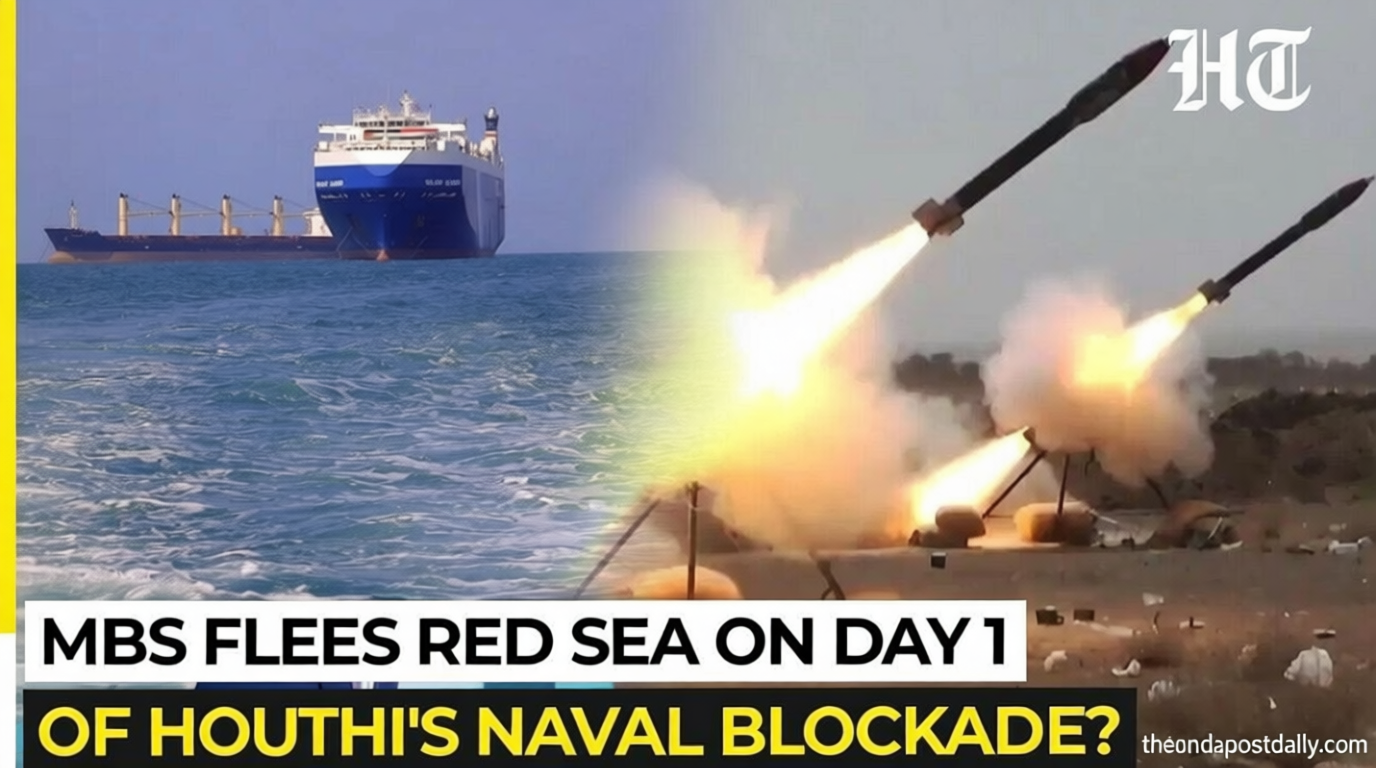
Shipping risks intensified considerably after Yemen’s Iran-aligned Houthi rebels announced on Monday, July 20, that they were implementing a naval blockade on Saudi Arabia. The rebels threatened to target vessels connected to Saudi ports, marking a significant escalation in their campaign against regional adversaries. This development has raised concerns that security disruptions could spread beyond the Strait of Hormuz vessel crossings to affect the Red Sea shipping lanes as well.
The Houthi announcement signals a potential expansion of maritime threats that could impact global energy supply chains across multiple strategic waterways.
Experts warn that the combination of tensions in both the Strait of Hormuz vessel crossings and the Red Sea creates a challenging environment for international shipping. The dual threats mean that vessels may face security risks in multiple locations simultaneously, potentially increasing insurance costs and transit times for commercial operators.
Tanker attacks highlight escalating dangers
On Tuesday, July 21, the United Kingdom Maritime Trade Operations (UKMTO) agency confirmed receiving multiple reports that a tanker had been struck by an unknown projectile while transiting the Strait of Hormuz vessel crossings. This incident adds to a growing list of maritime security concerns in the region and underscores the vulnerability of commercial shipping to both targeted and random attacks.
In a separate development, Greek shipping company Dynacom Tankers reported that two of its managed vessels were hit by projectiles of unknown origin on Monday while sailing off the coast of Oman. The company also disclosed that a third tanker was struck by a drone at Russia’s Novorossiysk CPC terminal in the Black Sea. These incidents collectively demonstrate that maritime threats are not confined to a single geographic area.
The cumulative effect of these attacks on commercial vessels has heightened awareness of the risks facing global shipping. As the US-Iran conflict continues to intensify, key maritime trade routes and global energy supplies remain under pressure. Industry stakeholders are closely monitoring developments, particularly regarding the Strait of Hormuz vessel crossings, as any further escalation could have significant implications for worldwide oil and gas markets.
(With Reuters inputs)
Related SEO Topics
- Home
- Artikel terkait Strait of Hormuz vessel crossings fall
- Gates Foundation external review finds no evidence of payments to Jeffrey Epstein
- Viral video shows Vijeta Dahiya being confronted over ‘burger break’ row: ‘Tumhare liye dande khaaye’
- Congress surprised its own MPs, Centre with protest at 7 Lok Kalyan Marg | Report explains how
- Quote of the day by Steve Jobs: ‘My job is not to be easy on people…’
Frequently Asked Questions
What is Strait of Hormuz vessel crossings fall?
Strait of Hormuz vessel crossings fall is the main topic covered in this article, with practical context to help readers understand the subject clearly.
Why does Strait of Hormuz vessel crossings fall matter?
Strait of Hormuz vessel crossings fall matters because it helps readers compare options, avoid common mistakes, and make a more informed decision.
How should readers use this Strait of Hormuz vessel crossings fall guide?
Use the key points, examples, and related links in this page as a starting point, then review the latest details before making a final decision.