SpaceX Falcon 9 second stage rocket hits the Moon after drifting in space since 2025; NASA tracking impact
A discarded SpaceX Falcon 9 second stage rocket likely collided with the Moon early Wednesday, August 5, concluding an 18-month voyage through space. The
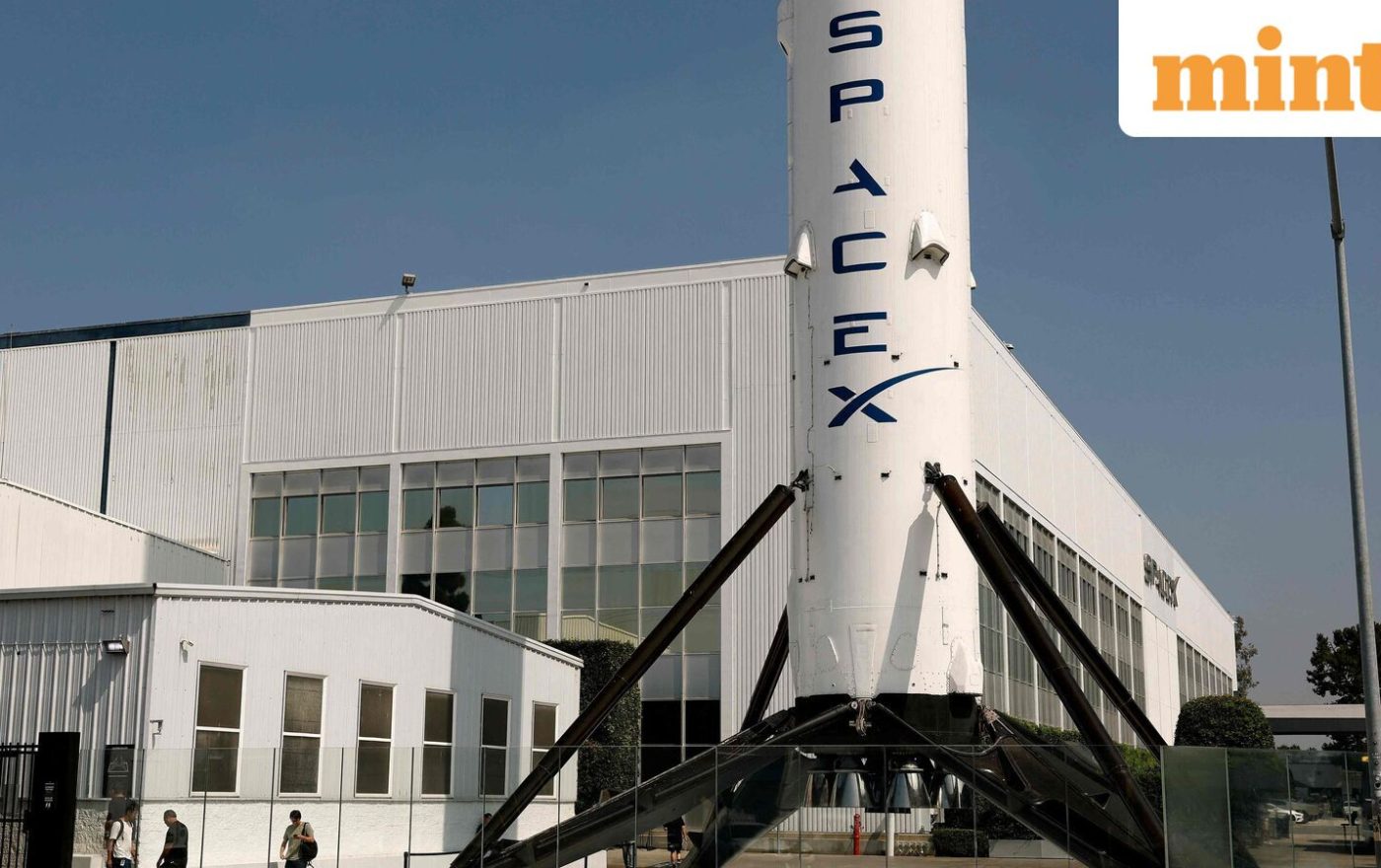
SpaceX Falcon 9 Second Stage Hits Moon After 2025 Drift
Theindiapostdaily.com – A discarded SpaceX Falcon 9 second stage rocket likely collided with the Moon early Wednesday, August 5, concluding an 18-month voyage through space. The upper stage had been drifting since its departure following a lunar mission in January 2025. While the impact presents no risk to Earth or upcoming lunar missions, scientists are watching closely, as such collisions are uncommon and offer valuable insights into both lunar geology and the growing issue of space debris.
What Crashed Into the Moon?
The object was the SpaceX Falcon 9 second stage that launched spacecraft for Firefly Aerospace and ispace toward the Moon on January 15, 2025. After delivering its payload, the roughly 4-tonne, school bus-sized rocket stage remained in space. Unlike most SpaceX Falcon 9 second stage units that re-enter Earth’s atmosphere or are guided into the ocean, this one stayed in orbit because the lunar mission required more energy than missions closer to Earth. Once the stage exhausted its fuel, it could no longer be controlled.
When and Where Did It Hit?
Astronomers predicted the rocket body would strike the Moon at around 2:35 a.m. ET (0635 GMT/12:05 p.m. IST) on Wednesday. The impact was expected to occur in the Moon’s northern hemisphere near Einstein Crater, close to Bell Crater, on the Earth-facing side of the lunar surface. At the time of impact, the object was travelling at approximately 5,400 mph (8,690 km/h).
Why Did It Hit the Moon?
The collision was not intentional. After the launch, the rocket stage drifted through space for more than a year, repeatedly passing near the Moon before gravity and solar forces gradually altered its orbit. Julianna Scheiman, SpaceX’s Director of NASA Science and Dragon Programs, explained that the combined effects of solar activity and gravitational forces eventually placed the rocket on a collision course with the Moon. Earlier this year, astronomers determined that its orbit would inevitably intersect with the lunar surface.
Why Were Scientists Interested?
Although the collision itself was not considered significant, scientists viewed it as a rare opportunity to observe a fresh impact crater and study the material blasted from beneath the Moon’s surface. The impact was expected to create a plume of lunar dust and debris, potentially illuminated by sunlight. Researchers hoped observations could provide new insights into the composition of the Moon’s surface and subsurface, how impact craters form, and the behavior of lunar dust following high-speed collisions. Astronomer Bill Gray, who first predicted the impact, described the event as having “probably minor” scientific value but said researchers could still learn from it.
Was Anyone Able to Watch It Live?
No. Although scientists hoped telescopes might detect the dust plume, no spacecraft orbiting the Moon was expected to be in position to capture the impact live. Instead, NASA’s Lunar Reconnaissance Orbiter (LRO) and South Korea’s Pathfinder Lunar Orbiter planned to photograph the impact site after the collision. Scientists are expected to analyze those images over the coming days to confirm the exact impact location and assess the size of the crater.
What Did NASA Say?
NASA confirmed it had been tracking the rocket stage before impact. The agency said it plans to use observations from the event to improve methods for tracking objects in space and understanding how discarded hardware behaves after missions end. NASA also noted that while the impact was unplanned, directing spacecraft or rocket stages to crash into the Moon at the end of their missions is sometimes an accepted disposal strategy.
“Although unplanned in this instance, disposing of upper stages on the lunar surface is a technically accepted and safe method and, in some cases, can be the only practical option for missions in low lunar orbit,” NASA said.
The agency added that controlled lunar impacts provide predictable end-of-life outcomes for spacecraft that cannot safely return to Earth.
Is There Any Danger to Earth?
No. The rocket stage posed no threat to Earth or people. NASA Administrator Jared Isaacman downplayed concerns, saying such impacts are extremely uncommon and noting that the Moon has experienced countless collisions throughout its history.
“First, it’s very infrequent to have things like the Falcon 9 second stage crash into the Moon,” Isaacman said. “Second, it’s not a big deal right now. The Moon has clearly seen better days.”
Frequently Asked Questions
When did the SpaceX Falcon 9 second stage hit the Moon?
The impact occurred early Wednesday, August 5, at approximately 2:35 a.m. ET (0635 GMT/12:05 p.m. IST).
Where on the Moon did the impact occur?
The rocket struck the Moon’s northern hemisphere near Einstein Crater, close to Bell Crater, on the Earth-facing side.
How fast was the rocket travelling when it hit?
The object was travelling at roughly 5,400 mph (8,690 km/h) when it reached the Moon.
Was the impact intentional?
No, the impact was not intentional. The rocket stage drifted through space for more than a year before gravitational and solar forces placed it on a collision course with the Moon.
Will scientists be able to see the impact crater?
Yes. NASA’s Lunar Reconnaissance Orbiter (LRO) and South Korea’s Pathfinder Lunar Orbiter planned to photograph the impact site after the collision to confirm the exact location and assess the crater size.