South Korea’s ex-President Yoon Suk Yeol sentenced to 30 years over alleged North Korea drone operation
South Korea's Ex-President Yoon Suk Yeol Gets 30-Year Sentence for North Korea Drone Allegations South Korea s ex President Yoon - South Korea's ex-President
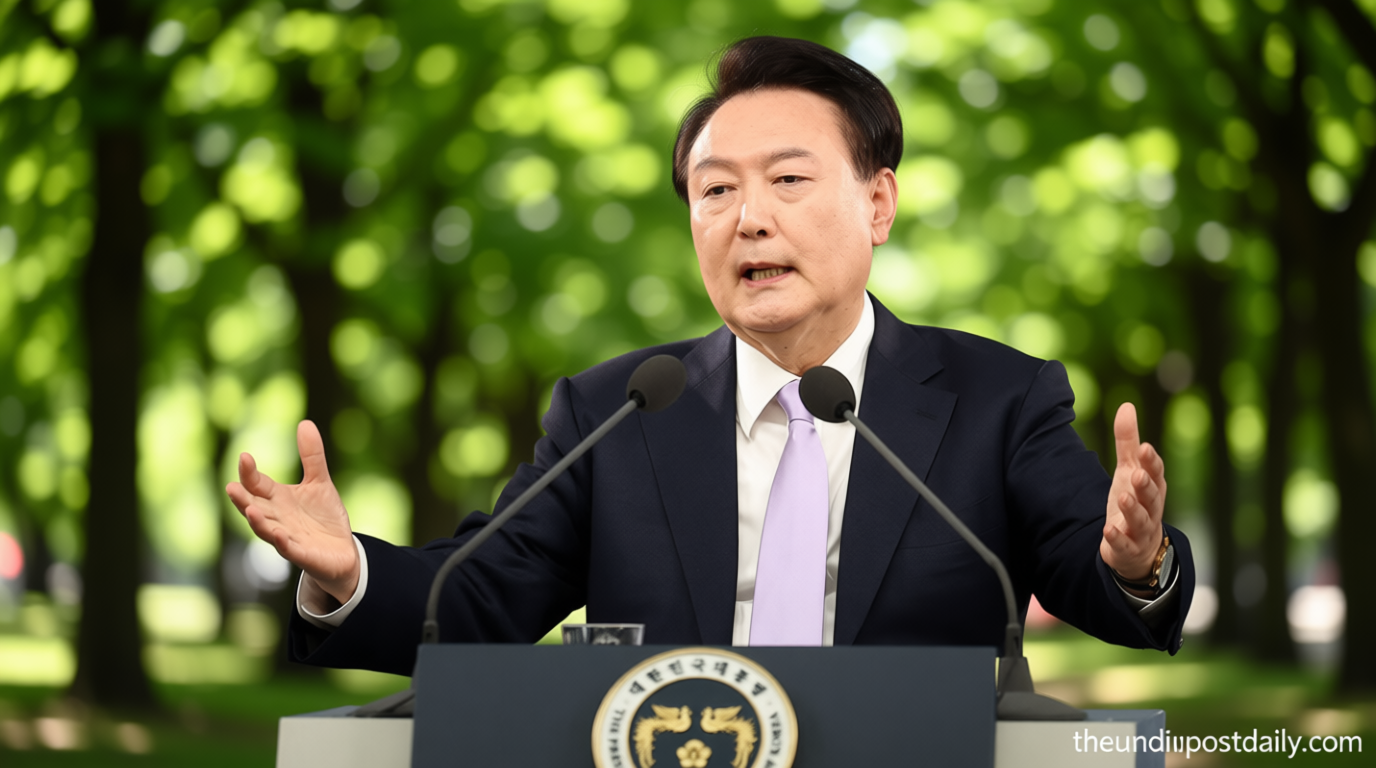
South Korea’s Ex-President Yoon Suk Yeol Gets 30-Year Sentence for North Korea Drone Allegations
Theindiapostdaily.com – South Korea’s ex-President Yoon Suk Yeol has been sentenced to 30 years in prison for his alleged involvement in North Korea drone operations in 2024, marking a significant escalation in the legal challenges facing the former leader. The ruling, delivered by the Seoul Central District Court, centers on claims that Yoon orchestrated the flights to provoke North Korea and justify the imposition of martial law in December 2024. His former defense minister, Kim Yong Hyun, was also convicted and received a 25-year sentence for complicity in the plan.
Background of the Allegations
The drone operation, reportedly conducted in October 2024, involved the deployment of unmanned aerial vehicles over Pyongyang to deliver propaganda leaflets. North Korea accused Seoul of using the flights as a covert military maneuver to destabilize inter-Korean relations. While the defense ministry initially denied the claims, it later acknowledged the possibility of such actions, citing heightened tensions on the Korean peninsula. Yoon’s legal team has consistently maintained that the drone missions were a strategic response to North Korea’s earlier aggressive acts, including the release of trash-filled balloons carrying anti-South Korean materials.
Legal Proceedings and Political Implications
The case against Yoon Suk Yeol was part of a broader investigation into the circumstances surrounding his brief martial law declaration. Prosecutors argued that the ex-President exploited the drone incidents to consolidate power, labeling opposition lawmakers as “anti-state” actors and accusing them of being aligned with North Korea. This narrative was used to justify the imposition of martial law, which was enacted on December 3, 2024, during a televised address where Yoon cited budget disputes and the impeachment of senior officials as key triggers. The ruling has reignited debates about the balance between national security and democratic governance in South Korea.
“The drone operation was not an act of aggression but a necessary step to protect South Korea’s sovereignty in the face of North Korean threats,” asserted Yoon’s defense attorneys during the trial. They emphasized that the ex-President’s actions were aimed at countering Pyongyang’s provocative behavior, which they argue had intensified in recent months. The prosecution, led by Special Prosecutor Cho Eun-suk, countered that Yoon’s plan was premeditated and designed to escalate tensions for political gain.
Rebellion Case and Judicial Rulings
The 30-year sentence for drone-related charges follows a separate conviction in the rebellion case, where Yoon was initially handed a life sentence in December 2024 for his role in the martial law declaration. This latest ruling is the second major verdict in the same case, reflecting the court’s determination that Yoon’s leadership was instrumental in escalating the conflict. The judgment underscores the severity of the charges, which include conspiracy, military disobedience, and abuse of authority. Yoon’s allies and supporters have criticized the rulings as politically motivated, arguing they reflect a broader effort to undermine his administration’s legacy.
Public Reaction and Political Fallout
The sentencing has sparked widespread public reaction, with some citizens supporting the court’s decision as a necessary measure to hold Yoon accountable for his actions. Others, however, view it as an overreach by the judiciary, accusing it of targeting the ex-President’s political opponents. The ruling has also raised questions about the independence of the legal system in South Korea, particularly in cases involving high-profile figures. As the ex-President faces multiple criminal proceedings, his removal from office in July 2025 has left a power vacuum, with his former party and allies scrambling to reposition themselves in the political landscape.
Broader Context of Inter-Korean Relations
The drone operation and subsequent legal actions highlight the precarious state of inter-Korean relations in 2024. North Korea has long accused South Korea of supporting U.S. military interventions and economic sanctions, which it claims have harmed its interests. Yoon’s administration, known for its pro-American stance, faced criticism from within its own party for prioritizing alliance with the U.S. over diplomatic engagement with Pyongyang. The 30-year sentence serves as a symbolic acknowledgment of the alleged breach in the bilateral relationship, while also reinforcing the government’s commitment to national security in the face of perceived threats.
South Korea’s ex-President Yoon Suk Yeol’s sentencing has been met with mixed reactions from political analysts. Some argue that the verdict strengthens the rule of law and deters future acts of defiance against democratic institutions. Others suggest that the court’s decision could be influenced by the political climate, which has seen a shift toward more authoritarian governance. The ex-President’s legal team is expected to file appeals, potentially prolonging the case and keeping the issue in the public eye. As the legal battles continue, the broader implications for South Korea’s political and military strategies will be closely watched by both domestic and international observers.