Russia Hits Kyiv’s UNESCO Site Hours After Putin-Trump Call
Russia Hits Kyiv’s UNESCO Site Hours After Putin-Trump Call Theindiapostdaily.com – Hours after a high-level conversation between Vladimir Putin and Donald Trump, Russia launched a missile strike that damaged Kyiv’s…
Russia Hits Kyiv’s UNESCO Site Hours After Putin-Trump Call
Theindiapostdaily.com – Hours after a high-level conversation between Vladimir Putin and Donald Trump, Russia launched a missile strike that damaged Kyiv’s UNESCO-listed Orthodox cathedral, sparking international concern over the preservation of cultural heritage. The attack, which occurred in the early hours of Sunday, resulted in four confirmed fatalities and over 30 injuries, with several apartment buildings in the capital engulfed in flames. This incident has intensified scrutiny of Moscow’s military strategy, particularly its targeting of historically significant sites in Ukraine.
Targeted Attack on Kyiv’s UNESCO Heritage
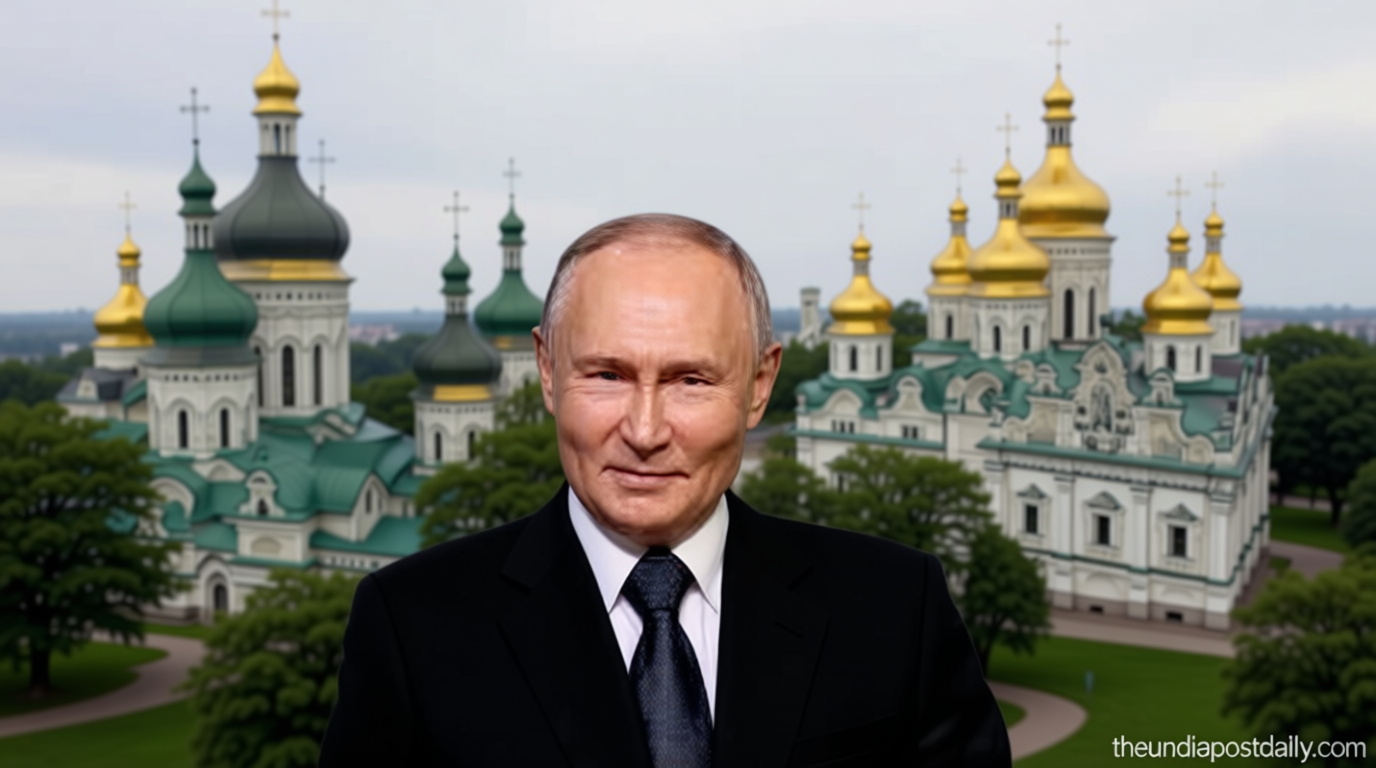
The strike targeted the Kyiv-Pechersk Lavra, a UNESCO World Heritage site located on the high bank of the River Dnipro, just kilometers from the Presidential Palace. This 1,000-year-old complex, once home to a monastery and underground caves, is a cornerstone of Kyiv’s religious and cultural identity. The attack, which hit the cathedral’s dome and spread to a nearby art center, has drawn sharp criticism from Ukrainian officials and global leaders alike. Ukrainian Foreign Minister Andrii Sybiha described the assault as a “Russian terrorist act,” emphasizing the growing threat to Ukraine’s cultural legacy.
“This strike is the equivalent of bombing Notre Dame,” remarked Jean-Noel Barrot, France’s Foreign Minister, highlighting the symbolic loss of a revered site. The destruction of the Lavra, a UNESCO-recognized monument, underscores the broader conflict between preserving history and advancing military objectives in the ongoing war.
Experts note that the attack is part of a pattern of deliberate targeting by Russian forces, who have increasingly prioritized symbolic locations over purely strategic military targets. The Kyiv-Pechersk Lavra, which has been a UNESCO site since 1990, represents centuries of Orthodox Christian history and architecture. Its damage has not only disrupted local communities but also fueled debates about the role of cultural landmarks in wartime propaganda and the moral implications of their destruction.
Missile Claims and International Response
Russian officials claimed the attack was caused by an “expired” US-made Patriot missile launched by Ukrainian air defenses. However, they failed to provide concrete evidence to support this assertion. The incident prompted an immediate reaction from the European Union, with Kaja Kallas, the EU’s top diplomat, condemning the strike as a “war crime.” Several EU foreign ministers called for additional sanctions against Moscow, citing the attack as a clear violation of international law.
Meanwhile, the Ukrainian Air Force revealed that 20 out of 70 missiles fired by Russia during the night were not intercepted, raising questions about the effectiveness of current defense systems. Yuriy Ihnat, a spokesperson for the Air Force command, noted that munitions shortages have hindered the Patriot systems’ ability to counter advanced Russian ballistic missiles like the Iskander-M. This has left Kyiv and other cities vulnerable to repeated strikes, even as leaders like Zelenskyy continue to seek support from G7 nations.
Broader Implications for the War
Amid the escalating conflict, the attack on Kyiv’s UNESCO site has become a focal point for discussions on the war’s cultural and strategic dimensions. The destruction of such landmarks has drawn comparisons to historical atrocities, with some analysts arguing that it reflects a broader Russian campaign to erase Ukrainian heritage. This approach not only demoralizes the population but also aligns with Moscow’s goal of framing the war as a defense of Russian-speaking territories in Ukraine.
As the war continues, the Kremlin and US have been prioritizing talks with Iran, leaving negotiations between Kyiv and Moscow in a state of uncertainty. However, the recent strikes have reignited debates about the pace of the conflict and the need for stronger international support for Ukraine. The attack on the Lavra, while a significant blow, also serves as a reminder of the ongoing challenges faced by the country in protecting its historical and religious sites.
Ukraine’s strategy to disrupt Russia’s supply lines has included targeting key infrastructure, such as the chemical plant in the Tula region and the oil facility in Yaroslavl. These strikes aim to weaken Moscow’s economic and military capabilities, but the damage to Kyiv’s UNESCO site highlights the unintended consequences of such actions. As the war enters its second year, the balance between military necessity and cultural preservation remains a critical issue for global observers and policymakers.