Protestors hold ex Prince Andrew, Jeffrey Epstein images outside Buckingham Palace during King Charles birthday
Protesters Display Ex-Prince Andrew and Jeffrey Epstein Photos During King Charles' Birthday Parade Protestors hold ex Prince Andrew Jeffrey - On June 13, a
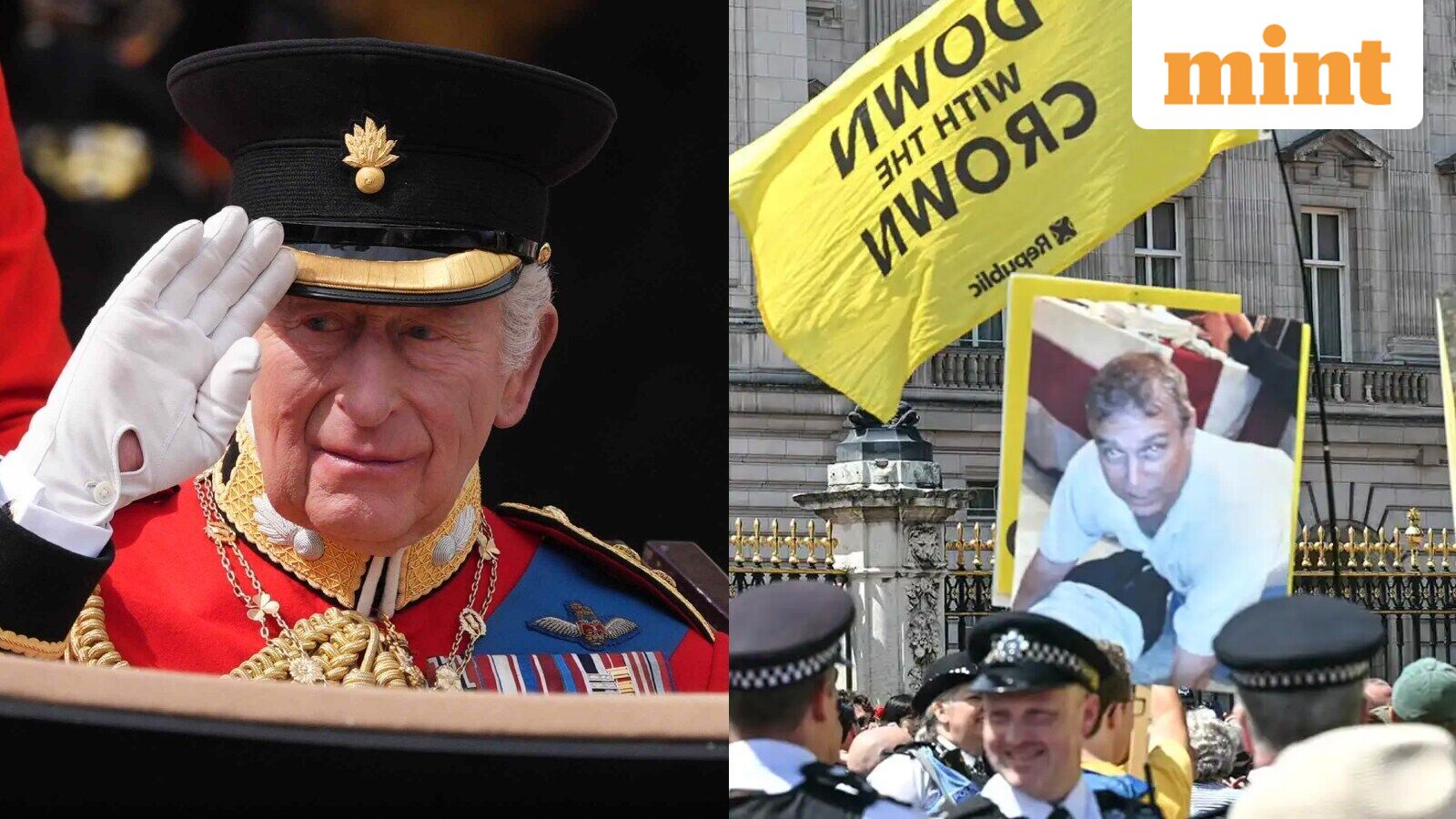
Protesters Display Ex-Prince Andrew and Jeffrey Epstein Photos During King Charles’ Birthday Parade
Theindiapostdaily.com – On June 13, a group of protesters gathered near Buckingham Palace during the iconic Trooping the Colour ceremony, a grand celebration of King Charles III’s official birthday. Their demonstration centered around displaying photographs of former Prince Andrew and Jeffrey Epstein, the disgraced financier convicted of sex crimes. This event, held in central London, drew thousands of spectators, blending royal tradition with growing public scrutiny of the monarchy’s past.
The Protesters’ Message
The protesters, many holding banners with slogans such as “Down With the Crown,” used the high-profile setting to highlight the alleged connections between Prince Andrew and Epstein. While the royal family continued their ceremonial procession, the demonstrators remained visible, underscoring ongoing debates about accountability and transparency within the British monarchy. The act of showcasing these images aimed to provoke discussion about the Duke of York’s role in the Epstein scandal and its impact on the royal institution’s public image.
Jeffrey Epstein’s relationship with Prince Andrew has been a focal point of controversy for years. The Duke of York, who once served as a royal representative, was linked to Epstein through a series of photographs and documents that surfaced in 2025. These revelations led to the removal of Andrew’s remaining royal titles by King Charles III, marking a significant shift in the family’s standing. Despite this, Andrew has maintained his innocence, and the monarchy has continued to engage with the public, albeit under closer examination.
Context of the Trooping the Colour Event
The Trooping the Colour ceremony, a centuries-old tradition, was attended by thousands of Londoners, who lined the streets to witness the military parade. This event, featuring over 1,300 soldiers and a vibrant display of royal pageantry, is one of the most anticipated occasions in the British calendar. However, the presence of protesters at the event added a new layer of political and social commentary, turning a routine celebration into a symbolic moment of public dissent.
King Charles III and Queen Camilla appeared on the Buckingham Palace balcony as part of the ceremony, while Prince William and Catherine, Princess of Wales, joined the procession. The royal family’s participation was met with mixed reactions, with some supporters applauding the tradition and others questioning its relevance in light of the ongoing controversies. The protesters’ actions, though brief, captured global attention, reinforcing the idea that royal events are increasingly becoming platforms for social critique.
Historically, the monarchy has faced criticism for its handling of scandals, but the Epstein affair has intensified this scrutiny. The connection between Prince Andrew and Epstein, which gained renewed focus in 2025, has sparked a broader conversation about the role of royalty in modern society. As the Duke of York steps back from public duties, his past associations continue to influence public perception of the royal family. The protesters’ choice to hold their demonstration during a time of heightened royal visibility underscores the importance of this issue in current discourse.
People magazine highlighted the demonstrators’ strategy, noting that their presence at the Trooping the Colour parade mirrored similar protests at other major royal events this year. These actions aim to challenge the monarchy’s narrative and emphasize the need for accountability, especially concerning high-profile figures like Prince Andrew. The event’s symbolic nature allowed protesters to amplify their message, drawing parallels between the royal family’s past and present.
As the ceremony concluded, the contrast between the monarchy’s formal display and the protesters’ earnest efforts became striking. The Trooping the Colour parade, while maintaining its traditional splendor, now serves as a reminder of the evolving relationship between the royal family and the public. With the focus keyword “Protestors hold ex Prince Andrew” appearing naturally in the opening and throughout the article, the event exemplifies how royal occasions can become catalysts for broader societal reflection. The continued presence of such protests suggests that the monarchy’s image remains a topic of lively debate, even in the face of enduring traditions.