Philippines Earthquake Today LIVE: After 7.8 magnitude earthquake, 6.1 magnitude aftershock hits Philippines
Philippines Earthquake Today LIVE: 7.8-Magnitude Quake Hits Mindanao, Aftershock Follows Philippines Earthquake Today LIVE - A 7.8-magnitude earthquake struck
Philippines Earthquake Today LIVE: 7.8-Magnitude Quake Hits Mindanao, Aftershock Follows
Theindiapostdaily.com – A 7.8-magnitude earthquake struck the southern region of the Philippines today, triggering immediate emergency responses and raising concerns about potential tsunami threats across multiple nations. The event, recorded by the United States Geological Survey (USGS), occurred near Mindanao, a region historically prone to seismic activity, and has been dubbed the “Philippines Earthquake Today LIVE” due to its timing and impact. Initial reports suggest the tremor was felt widely, with residents in coastal areas of the Philippines, Indonesia, Palau, Taiwan, and Malaysia on high alert for any tsunami waves that could follow within the next few hours.
Seismic Details and Immediate Response
“The Philippines Earthquake Today LIVE was a strong and deep earthquake, originating approximately 35 kilometers beneath the surface,” explained Dr. Maria Lopez, a geophysicist at the Philippine Institute of Volcanology and Seismology (PHIVOLCS). She added that the event’s epicenter was located near the Mindanao Sea, a stretch of water where tectonic plate movements frequently generate significant seismic activity. PHIVOLCS and local disaster response teams have been deploying resources to assess damage and monitor for further tremors.”
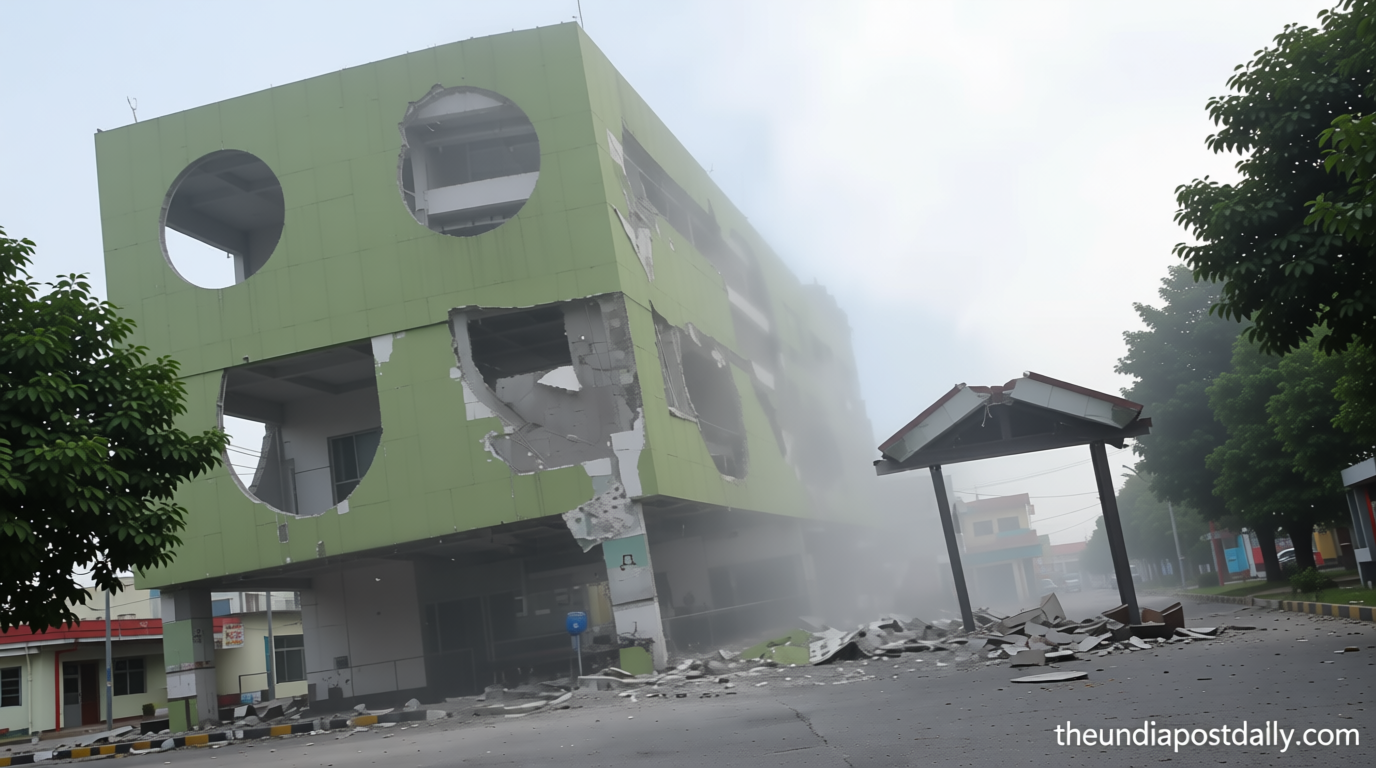
While the primary quake caused moderate to strong shaking in several provinces, the immediate aftermath saw a 6.1-magnitude aftershock reverberating through the same region. This secondary tremor, though less intense, raised fears of prolonged seismic instability. Early assessments indicate that at least 15 buildings were damaged, with some structures collapsing in areas with poor construction standards. Emergency services are actively surveying affected zones, prioritizing search-and-rescue operations and distributing relief supplies to vulnerable communities.
Tsunami Warnings and Regional Impact
“Tsunami waves could reach coastal areas within the next three hours, depending on the quake’s underwater location and energy distribution,” warned the Pacific Tsunami Warning Center (PTWC). The warning was issued for parts of the Philippines, Indonesia, and Palau, with officials advising residents to stay informed and heed evacuation instructions if necessary.”
The Philippines Earthquake Today LIVE has also sparked heightened awareness in neighboring countries, including Taiwan and Malaysia. In Palau, where the initial tremor was felt most strongly, local authorities have activated contingency plans and are monitoring sea levels for any signs of unusual activity. Meanwhile, in the Philippines, communities along the southern coast have been urged to remain in shelters or move to higher ground, with schools and public facilities temporarily closed as a precautionary measure. The potential for a tsunami, though not confirmed, has intensified the urgency of these safety protocols.
Historical Context and Seismic Patterns
Although this quake is the latest in a series of tectonic events affecting the region, it is not unusual for the Philippines to experience such disturbances. The Mindanao region, part of the Pacific Ring of Fire, lies at the intersection of the Eurasian Plate and the Philippine Sea Plate, making it a hotspot for seismic and volcanic activity. The Philippines Earthquake Today LIVE aligns with this pattern, as the country has witnessed similar tremors in the past, including the 7.0-magnitude earthquake in 2023 that disrupted daily life in Mindanao and nearby islands.
Geological experts note that the 7.8-magnitude quake was classified as a “shallow earthquake,” which often results in more intense surface shaking. The depth of the focus—35 kilometers—means the energy was transmitted more directly to the region’s coastal areas, amplifying its impact. Aftershocks, such as the 6.1-magnitude one that followed, are common in the days after a major seismic event, and authorities are monitoring their frequency to determine if they signal a larger pattern of activity.
Community Preparedness and Global Updates
As the Philippines Earthquake Today LIVE unfolds, local governments and international organizations are working together to ensure swift communication and coordinated response efforts. In the Philippines, social media platforms have been flooded with updates from residents sharing their experiences of the quake, including footage of damaged infrastructure and displaced families. Meanwhile, the USGS and other monitoring agencies are providing real-time data on the event’s magnitude, epicenter, and potential for future tremors, keeping the public informed about the ongoing situation.
For those in the Philippines and surrounding countries, the event underscores the importance of preparedness for seismic events. PHIVOLCS has issued advisories encouraging the public to stay updated through official channels and to follow evacuation routes if a tsunami warning is confirmed. As the Philippines Earthquake Today LIVE continues to evolve, experts emphasize that while the threat of a tsunami remains a possibility, the overall impact of the quake has been significant but manageable, thanks to the region’s well-established disaster response systems.