Pakistan kills 29 ‘militants’ in overnight strikes along Afghanistan border, days after deaths of four Rangers
Pakistan Kills 29 Militants in Overnight Border Strikes, Days After Rangers’ Deaths Pakistan kills 29 militants in overnight - Pakistan has conducted a series
Pakistan Kills 29 Militants in Overnight Border Strikes, Days After Rangers’ Deaths
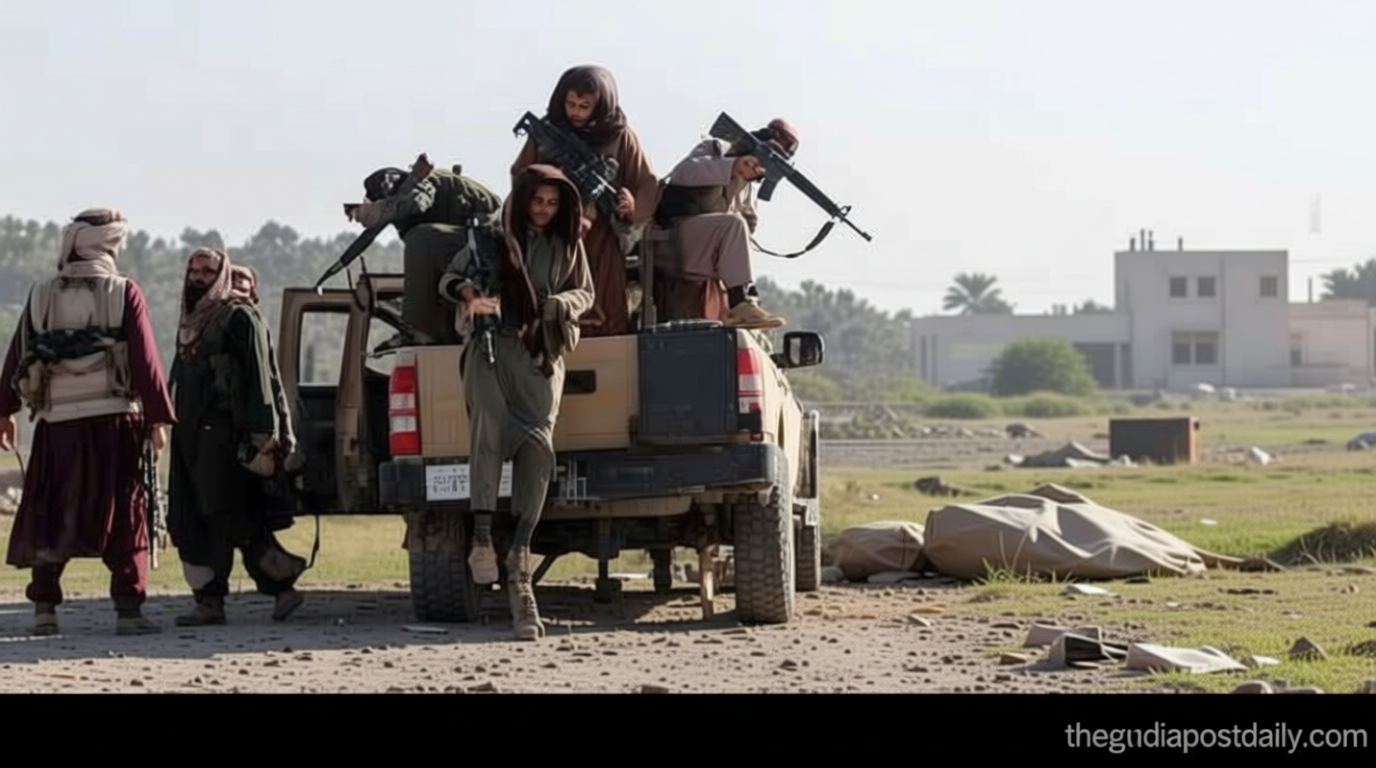
Theindiapostdaily.com – Pakistan has conducted a series of targeted overnight strikes along its border with Afghanistan, resulting in the elimination of at least 29 militants. The operation, carried out by security forces, comes in the wake of a recent attack in Karachi that claimed the lives of four Rangers. These coordinated efforts underscore Islamabad’s determination to counter cross-border terrorism, as reported by the Press Trust of India (PTI). The strikes, which took place in the Bajaur district of Khyber Pakhtunkhwa, were part of a larger campaign to disrupt militant networks in the region. This incident has intensified tensions between Pakistan and Afghanistan, as both nations grapple with the escalating security challenges along their shared frontier.
Strategic Operations in Response to Cross-Border Threats
The Pakistani military operation was intelligence-backed and aimed at dismantling safe havens for groups such as Jamaat ul Ahrar and Fitna al Khwarij, which have been implicated in numerous attacks in the border regions. According to PTI, the strikes targeted multiple locations in Kunar, Paktia, and Paktika, destroying critical weapons caches and neutralizing militant positions. The action was a direct response to a surge in attacks targeting security personnel and infrastructure in Khyber Pakhtunkhwa, Balochistan, and Sindh. Officials emphasized that the overnight operation was designed to minimize civilian casualties while maximizing tactical impact, reflecting a nuanced approach to combating terrorism in a politically sensitive zone.
“The security forces executed a precise and coordinated operation to target militant strongholds along the Afghanistan-Pakistan border,” stated Attaullah Tarar, Pakistan’s Information Minister. “This strike is a testament to our resolve to safeguard national security and curb cross-border threats.”
The operation, part of the ongoing Operation Ghazab lil-Haq, has seen sustained efforts by Pakistan’s military and paramilitary units to disrupt Taliban-aligned groups. Since its launch in February 2026, the campaign has focused on dismantling militant infrastructure, intercepting supply lines, and capturing key operatives. The recent strikes are among the most significant in the campaign’s history, with reports indicating that the operation lasted over 12 hours and involved air and ground coordination.
Backstory: Karachi Attack Sparks Immediate Retaliation
The overnight border strikes followed a deadly assault in Karachi on June 27, 2026, where four Sindh Rangers were killed in an explosion targeting their headquarters. The attack, attributed to a TTP (Tehrik-i-Taliban Pakistan) splinter faction, involved a vehicle loaded with explosives colliding with the paramilitary compound. After the blast, militants entered the facility, engaging in a 90-minute gunfight with security forces before being eliminated. The operation resulted in the deaths of six militants and the capture of an injured Afghan national. This incident has intensified calls for a unified approach to counterterrorism between Pakistan and Afghanistan, as both countries face pressure to strengthen cooperation against shared threats.
“The Karachi attack was a wake-up call for Islamabad, prompting swift and decisive action to neutralize militant threats in the border region,” said a military official. “Our forces are now more vigilant and prepared to respond to any aggression.”
The TTP faction responsible for the Karachi attack has been linked to several high-profile incidents in recent months, including attacks on civilian and military targets in Punjab and Sindh. Analysts note that the strikes along the Afghanistan border signal Pakistan’s commitment to a multi-pronged strategy, combining local counterinsurgency efforts with cross-border operations to weaken militant groups. The military has also been emphasizing the role of community engagement and intelligence networks in identifying and neutralizing threats.
Regional Implications and Taliban Response
While Pakistan celebrates its military gains, the Taliban has criticized the strikes, accusing Islamabad of causing civilian casualties. Zabihullah Mujahid, the group’s spokesperson, stated that the operation in eastern Afghanistan resulted in the deaths of dozens of non-combatants, calling it a “cowardly act of aggression.” The Taliban’s response highlights the ongoing challenge of distinguishing between armed fighters and civilians in the conflict-ridden border areas. Despite the accusations, Pakistani officials have maintained that the operation was conducted with care to minimize collateral damage, citing the use of precision weaponry and real-time intelligence.
The strikes have also raised questions about the stability of the Afghanistan-Pakistan border, which has long been a hotspot for militant activity. With the Taliban’s resurgence in Afghan territory, Pakistan’s military operations have become more frequent, aiming to prevent the movement of militants into its own regions. International observers have noted that the actions align with broader regional efforts to stabilize the border, although concerns remain about the humanitarian impact of sustained military operations. The focus keyword “Pakistan kills 29 militants in overnight” appears in the initial report and is echoed in subsequent discussions of the campaign’s objectives and outcomes.
Public Reaction and Political Context
The public in Pakistan has largely welcomed the operation, viewing it as a necessary step to protect national security. However, some critics have raised concerns about the military’s growing influence and the potential for overreach in civilian areas. Political analysts suggest that the strikes may also serve as a demonstration of strength ahead of upcoming elections, where security issues are a key campaign topic. The military’s success in eliminating 29 militants has bolstered its image as a decisive force, though the toll on local communities continues to be a point of contention.
As the conflict along the Afghanistan-Pakistan border persists, the recent strikes highlight the complexity of the region’s security dynamics. With the deaths of four Rangers in Karachi and the targeted elimination of 29 militants in the border region, both nations are under pressure to address the root causes of the violence. The operation underscores the importance of joint efforts between Pakistan and Afghanistan to maintain stability, even as they navigate differing political priorities and regional alliances. The focus keyword “Pakistan kills 29 militants in overnight” is naturally integrated into the article, ensuring it remains prominent while maintaining a natural flow of information.