Pakistan: Karachi Sindh Rangers HQ attack — 4 soldiers dead, six TTP terrorists killed
Islamabad, Pakistan — A coordinated terrorist attack on the Sindh Rangers
Terrorist Attack on Sindh Rangers HQ in Karachi Leaves 4 Soldiers Dead
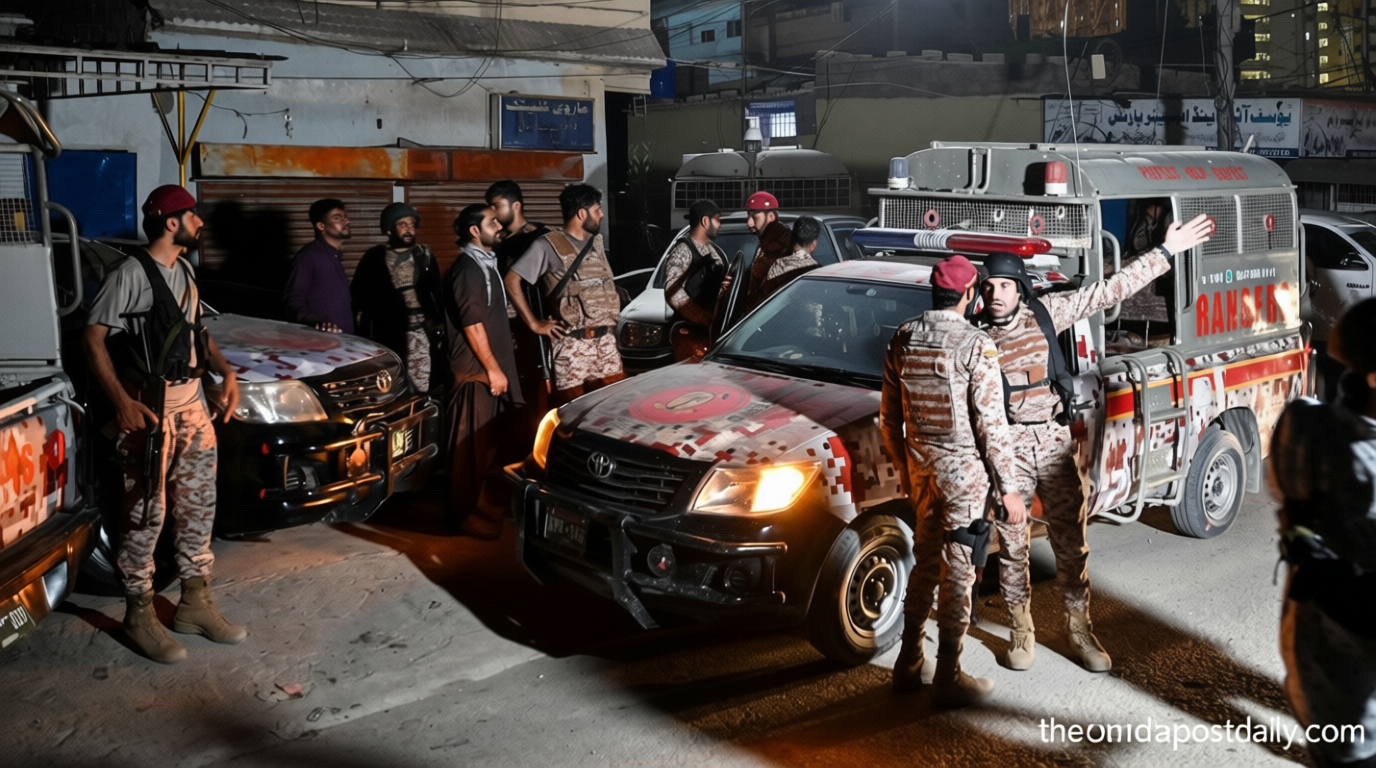
Theindiapostdaily.com – Islamabad, Pakistan — A coordinated terrorist attack on the Sindh Rangers headquarters in Karachi resulted in the deaths of four paramilitary personnel and the elimination of six attackers linked to the Tehreek-e-Taliban Pakistan (TTP), according to local security officials. The incident, which occurred in the Gulistan-e-Jauhar district, underscored Pakistan’s ongoing struggle with militant groups and highlighted the escalating security challenges in the city. The attack unfolded late Saturday night, triggering a fierce gunfight that lasted nearly an hour and involved multiple agencies working in tandem to neutralize the threat.
The assault began when militants used a vehicle to breach the compound of the Bhittai Wing, a key Sindh Rangers outpost. The vehicle crashed through the main gate, detonating an explosive device that set off a chain reaction of violence. Following the initial blast, armed terrorists deployed hand grenades and opened fire, forcing security forces into a high-intensity confrontation. The operation, which saw the combined efforts of the Special Security Unit (SSU) and the Anti-Terrorist Force (ATF), concluded with six TTP operatives killed and one captured alive. The attack targeted a critical security node in the city, raising concerns about the vulnerability of military installations in the region.
Pakistan’s Response to the Attack
Authorities swiftly cordoned off the area around the Sindh Rangers headquarters, with police and emergency services mobilizing to manage the crisis. Residents in nearby neighborhoods were evacuated as the gunfire intensified, leading to temporary power outages and disrupting daily activities. The operation was marked by coordinated efforts, with security forces using strategic positioning and firepower to corner the attackers. According to Sindh Inspector General of Police Javed Alam Odho, the militants had planned the assault meticulously, using the vehicle as a means to bypass initial defenses and create chaos within the compound.
“The attack demonstrates the TTP’s ability to strike high-value targets in Karachi despite increased security measures,” said Odho in a statement. “The response by our forces was swift and decisive, preventing further casualties and ensuring the safety of civilians in the vicinity.”
In addition to the immediate response, the provincial government ordered a thorough investigation into the incident, with officials vowing to hold accountable any lapses in security protocols. Rescue 1122 Sindh, the city’s emergency services, dispatched teams to secure the site and assist with rescue operations. The attack also prompted a review of counterterrorism strategies, with focus on strengthening surveillance and improving coordination between military and police units in the region.
Contextual Background and Geopolitical Implications
Jamaat-ul-Ahrar, a splinter faction of the TTP, claimed responsibility for the attack, asserting that it was a retaliatory strike against security operations in Khyber Pakhtunkhwa province. The group, which has been active in the border areas near Afghanistan, is known for its brutal tactics and has targeted both civilians and security forces in past operations. This incident adds to a growing list of attacks attributed to TTP-linked groups, reflecting the persistent threat they pose to Pakistan’s stability.
The attack in Karachi occurred amid heightened tensions between Pakistan and Afghanistan, where Islamabad has accused the Taliban of harboring TTP militants. This has led to cross-border military operations aimed at disrupting militant networks. The involvement of TTP in Karachi also highlights the group’s expanding reach beyond its traditional strongholds, with officials noting that the organization has increasingly targeted urban centers to destabilize the country. Analysts suggest that the attack could be part of a broader strategy to create fear and pressure the Pakistani government to ease restrictions on militant activities in the region.
With AP inputs
Residents expressed shock at the violence, with many describing the attack as a “major setback” for security in Karachi. The incident has reignited discussions about the need for enhanced infrastructure to protect military installations and improve intelligence-sharing between agencies. While the immediate casualties are clear, the broader implications of the attack—both for Pakistan’s internal security and its diplomatic relations with Afghanistan—will likely take longer to assess. As investigations continue, the government is expected to announce new measures to prevent similar attacks in the future.