North Korea’s Kim Jong Un hosts Chinese President Xi Jinping, weeks after hosting Russia’s Putin
North Korea's Kim Jong Un recently hosted Chinese President Xi Jinping
North Korea’s Kim Jong Un Hosts Chinese President Xi Jinping, Strengthening Strategic Ties
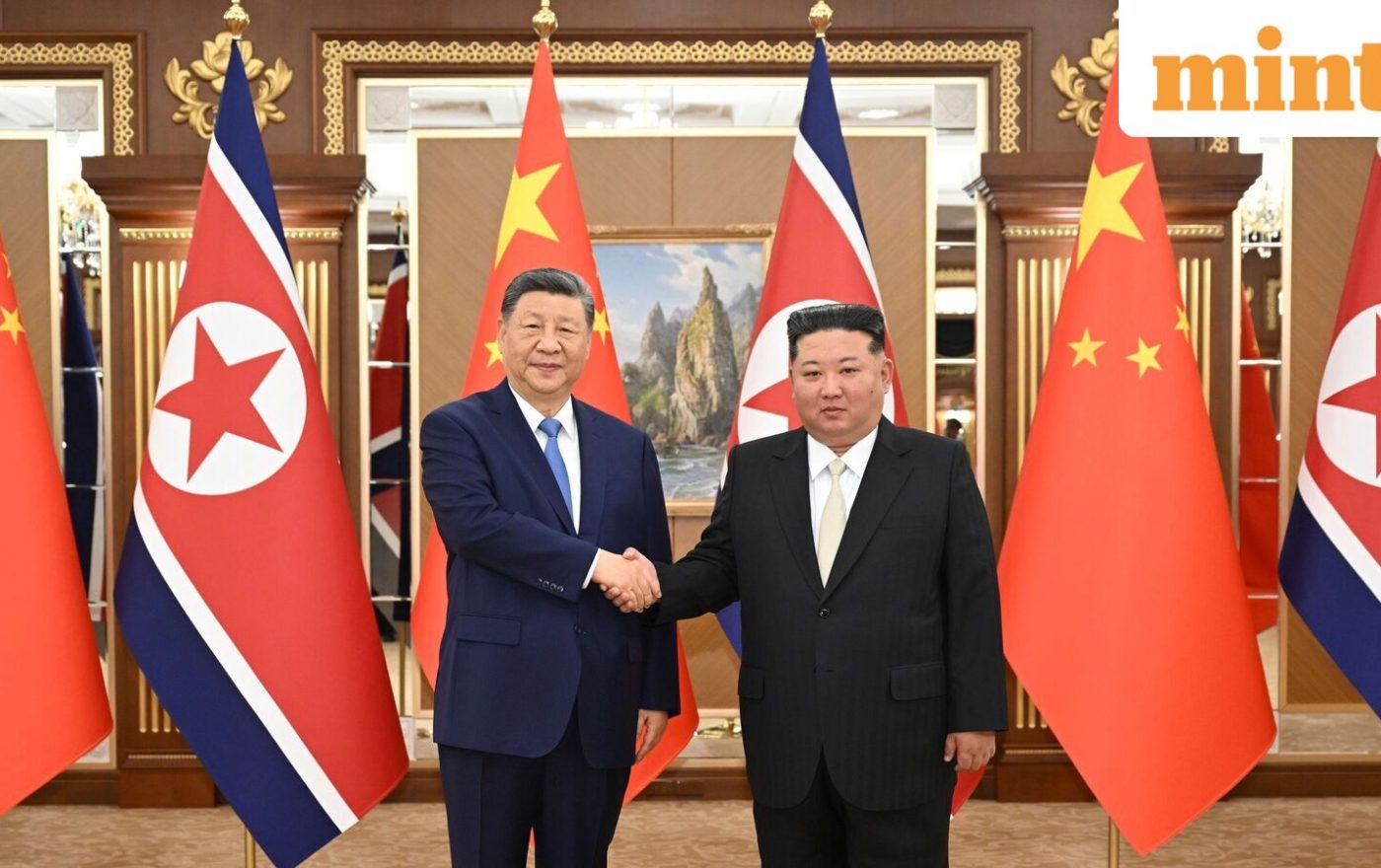
Theindiapostdaily.com – North Korea’s Kim Jong Un recently hosted Chinese President Xi Jinping, reinforcing the leader’s expanding diplomatic reach. This meeting, occurring just weeks after Kim extended a warm welcome to Russian President Vladimir Putin, underscores Kim’s strategic recalibration in global alliances. The summit, held in Pyongyang, highlights the significance of North Korea’s Kim Jong Un in navigating complex international relations, particularly as he seeks to balance partnerships with China and Russia while addressing economic and security concerns.
Kim Jong Un’s engagement with Xi Jinping comes at a pivotal time for North Korea. The country has seen a marked shift in its geopolitical posture, with Kim’s recent endorsement of Russia’s actions in Ukraine fostering closer ties with Moscow. This alignment has bolstered North Korea’s nuclear capabilities and economic resilience, allowing Kim to assert greater influence on the world stage. Analysts note that the summit reflects North Korea’s Kim Jong Un’s ability to leverage strategic partnerships, especially as he positions himself as a key player in regional stability and global diplomacy.
Symbolism of the Welcome Ceremony
North Korea’s Kim Jong Un’s arrival in Pyongyang was marked by a grand spectacle, with military parades, a sea of red flags, and patriotic displays signaling the nation’s readiness to strengthen ties with China. Thousands of citizens, including children carrying balloons and dancing in unison, turned out to greet Xi Jinping, creating a vivid contrast to the austere image North Korea often projects. The event, described as a “testament to unity” by state media, featured towering portraits of both leaders and banners promoting mutual cooperation, reflecting the deepening relationship between the two nations.
“The friendship between our two countries is unbreakable,” Xi Jinping declared during his remarks, emphasizing Beijing’s commitment to supporting North Korea’s economic recovery. His visit follows a pattern of high-level diplomatic engagement, with Kim Jong Un hosting leaders from Russia, Belarus, Singapore, and Vietnam in recent months. This has positioned North Korea’s Kim Jong Un as a central figure in shaping regional alliances, even as he navigates tensions with Western powers and maintains a delicate balance between old and new partners.
“This summit is a clear sign of our enduring bond,” Kim Jong Un added, highlighting the strategic importance of China’s continued support. The two leaders reaffirmed their commitment to expanding collaboration in trade, agriculture, and technology, areas critical for North Korea’s economic rejuvenation.
China’s Economic Influence on North Korea
China has remained North Korea’s primary economic lifeline, with Beijing providing covert aid and trade incentives to sustain the country’s struggling economy. North Korea’s Kim Jong Un has consistently relied on China for critical resources, including oil and food supplies, despite the nation’s nuclear ambitions and international sanctions. The 65th anniversary of the 1961 mutual defense treaty between the two countries was celebrated in the lead-up to the summit, underscoring their long-standing partnership. Analysts suggest that China’s financial and political backing is essential for North Korea’s economic stability, enabling Kim to maintain control over his nation’s strategic initiatives.
The meeting between North Korea’s Kim Jong Un and Xi Jinping also reflects China’s growing influence in North Korea’s foreign policy. While the North Korea-Russia alliance has gained momentum, China seeks to reassert its role as a key ally. Experts note that Xi’s presence in Pyongyang could help solidify China’s leverage in negotiations with U.S. President Donald Trump, who has pursued diplomatic outreach to Kim Jong Un. The summit thus serves as a platform for both leaders to align their interests, ensuring North Korea’s Kim Jong Un remains a central figure in Asia’s geopolitical dynamics.
Reviving Trade and Bilateral Relations
Bilateral trade between China and North Korea has rebounded significantly since the pandemic, with Kim Jong Un’s government actively working to restore economic ties. Direct flights and passenger train services were recently reinstated, a move that has revitalized movement between the two nations and boosted cross-border commerce. Xi Jinping emphasized the importance of these renewed connections, calling for expanded cultural exchanges and people-to-people interactions to deepen mutual understanding. North Korea’s Kim Jong Un has also prioritized agricultural and industrial partnerships, aiming to diversify the country’s economic base and reduce dependence on a single trade partner.
The summit between North Korea’s Kim Jong Un and Xi Jinping marks a turning point in their bilateral relations. With China’s economic support, North Korea has managed to stabilize its currency and reduce inflation, which had been exacerbated by sanctions and supply chain disruptions. However, the long-term impact of this renewed cooperation remains uncertain. While Kim’s leadership has shown signs of economic progress, challenges such as the U.S. and South Korea’s joint military exercises continue to test the stability of North Korea’s diplomatic landscape. The meeting, therefore, symbolizes both opportunity and complexity in North Korea’s Kim Jong Un’s efforts to reshape the country’s global standing.
Global Implications of Kim’s Diplomatic Strategy
North Korea’s Kim Jong Un’s decision to host Xi Jinping follows a series of high-profile summits with Russian and other leaders, illustrating his strategic focus on diversifying alliances. This approach has allowed Kim to position North Korea as a key player in Asia’s geopolitical shifts, particularly as tensions between the U.S. and China intensify. The summit with Xi Jinping, however, also highlights the need for North Korea to balance its relationships, ensuring it remains relevant in global negotiations. Experts argue that Kim’s ability to secure Chinese backing is crucial for maintaining economic resilience and diplomatic leverage in a rapidly changing international environment.
As North Korea’s Kim Jong Un continues to engage with global leaders, the country’s geopolitical position is evolving. The summit with Xi Jinping underscores the importance of China’s role in North Korea’s development, while also signaling Kim’s intent to strengthen ties with other nations. This diplomatic outreach is likely to influence future negotiations, with Kim’s leadership at the center of discussions on sanctions, trade, and security. The meeting between the two leaders, therefore, represents a significant step in North Korea’s Kim Jong Un’s broader strategy to navigate a complex and interconnected world.