Iran attacks US navy’s 5th fleet Bahrain HQs, Al Asad air base in Kuwait after America strikes: ‘Let enemy know that…’
Iran Attacks US Navy’s 5th Fleet in Bahrain Following US Strikes Theindiapostdaily.com – Iran launched a series of coordinated strikes against the US Navy’s 5th Fleet headquarters in Bahrain and…
Iran Attacks US Navy’s 5th Fleet in Bahrain Following US Strikes
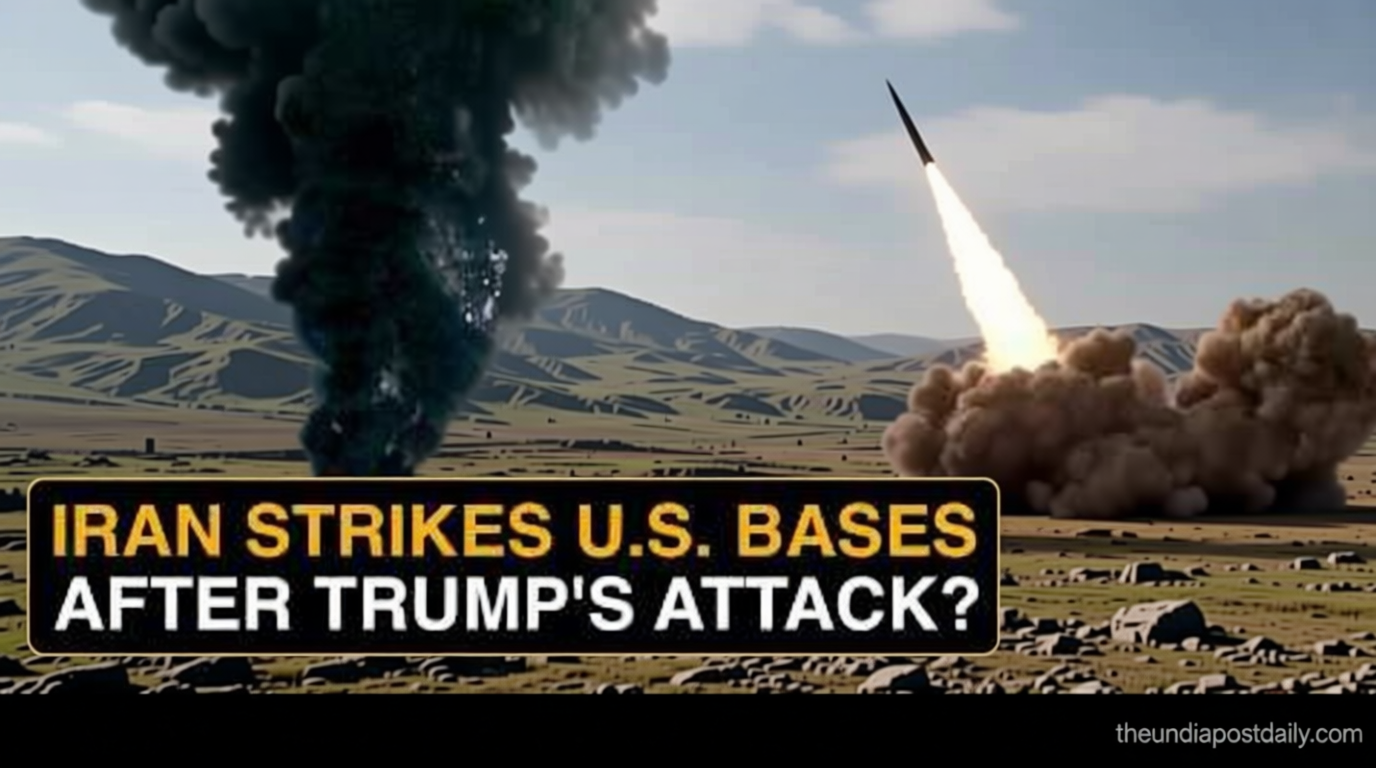
Theindiapostdaily.com – Iran launched a series of coordinated strikes against the US Navy’s 5th Fleet headquarters in Bahrain and the Al Asad Air Base in Kuwait, escalating tensions in the region after a recent US military operation. The attacks, conducted overnight, were carried out by Iran’s paramilitary Revolutionary Guard, which cited the US actions as a justification for its retaliation. According to reports from the Associated Press, the targets included critical military installations, signaling a significant step in the ongoing conflict between Iran and the United States.
“Let the enemy know that violating the ceasefire will lead to a complete halt of ongoing processes,” declared the Revolutionary Guard in a statement following the attacks. The message underscores Iran’s determination to assert dominance over the strategic Strait of Hormuz, a vital artery for global oil trade, and to challenge US military presence in the region. The strikes come amid heightened fears of a prolonged escalation, with both sides accusing each other of breaking diplomatic agreements.
Targeted Facilities and Their Strategic Importance
The US Navy’s Fifth Fleet, based in Bahrain, plays a crucial role in maintaining maritime security in the Persian Gulf and the Arabian Sea. Its headquarters, a key logistical and command center, was reportedly hit by Iranian drones and missiles during the overnight assault. Meanwhile, the Al Asad Air Base in Kuwait, a major US military outpost, also faced attacks, further destabilizing the region’s fragile security balance. These facilities are not only symbolic of US military influence but also vital for rapid response to regional threats.
Iran’s decision to target these locations reflects a calculated strategy to weaken US operational capabilities in the area. The Fifth Fleet’s base in Bahrain has been a focal point of Iranian aggression, with previous attacks on US vessels and infrastructure. The Al Asad Air Base in Kuwait, which hosts a significant number of US troops and aircraft, is another critical asset. The simultaneous assaults on both targets suggest a well-orchestrated effort to disrupt US military coordination and project power independently.
Kuwait’s military confirmed that its air defense systems intercepted several Iranian projectiles, though no damage was immediately reported. The country’s strategic position as a hub for US military activity makes it a prime target for Iranian retaliation. Analysts suggest that the attacks aim to demonstrate Tehran’s ability to strike deep into US-aligned territories, potentially pressuring allies into a more cautious stance.
Context of US-Iran Hostilities
The attacks are part of a broader cycle of military confrontations between Iran and the United States. Earlier in the week, the US had launched additional strikes on Iranian positions, responding to a drone attack on a Panama-flagged tanker in the Strait of Hormuz. This incident, which occurred just hours before Iran’s retaliation, was cited as a justification for the US’s military response, targeting drone storage facilities and communication hubs in Iran.
Iran’s Revolutionary Guard has consistently framed the US actions as aggressive, with statements emphasizing the need to protect its national interests and regional allies. The US, in turn, has accused Iran of using the drone attack to provoke a larger conflict, aiming to reassert control over the strategic waterway. This mutual blame has intensified the standoff, with both sides deploying advanced weaponry and increasing their military readiness.
As the situation unfolds, the strategic significance of the 5th Fleet and Al Asad Air Base becomes even more apparent. These installations are central to US efforts to maintain a foothold in the Middle East, supporting operations in Iraq, Syria, and beyond. The attacks not only threaten US military operations but also signal Iran’s intent to challenge American supremacy in the region, potentially leading to a new phase of hostilities.
The broader implications of these attacks extend beyond immediate military losses. They highlight the precarious state of the US-Iran interim agreement, which had been designed to suspend hostilities and ensure safe passage for commercial shipping through the Strait of Hormuz. With the agreement now under threat, the possibility of a full-scale conflict looms larger, prompting calls for diplomatic resolution from international stakeholders.