India-New Zealand FTA: 57 per cent of everything we export to India will be tariff-free, says Christopher Luxon
India-New Zealand FTA: 57% of Exports to India Will Be Tariff-Free Bilateral Trade Agreement Signed India New Zealand FTA - New Zealand Prime Minister
India-New Zealand FTA: 57% of Exports to India Will Be Tariff-Free
Bilateral Trade Agreement Signed
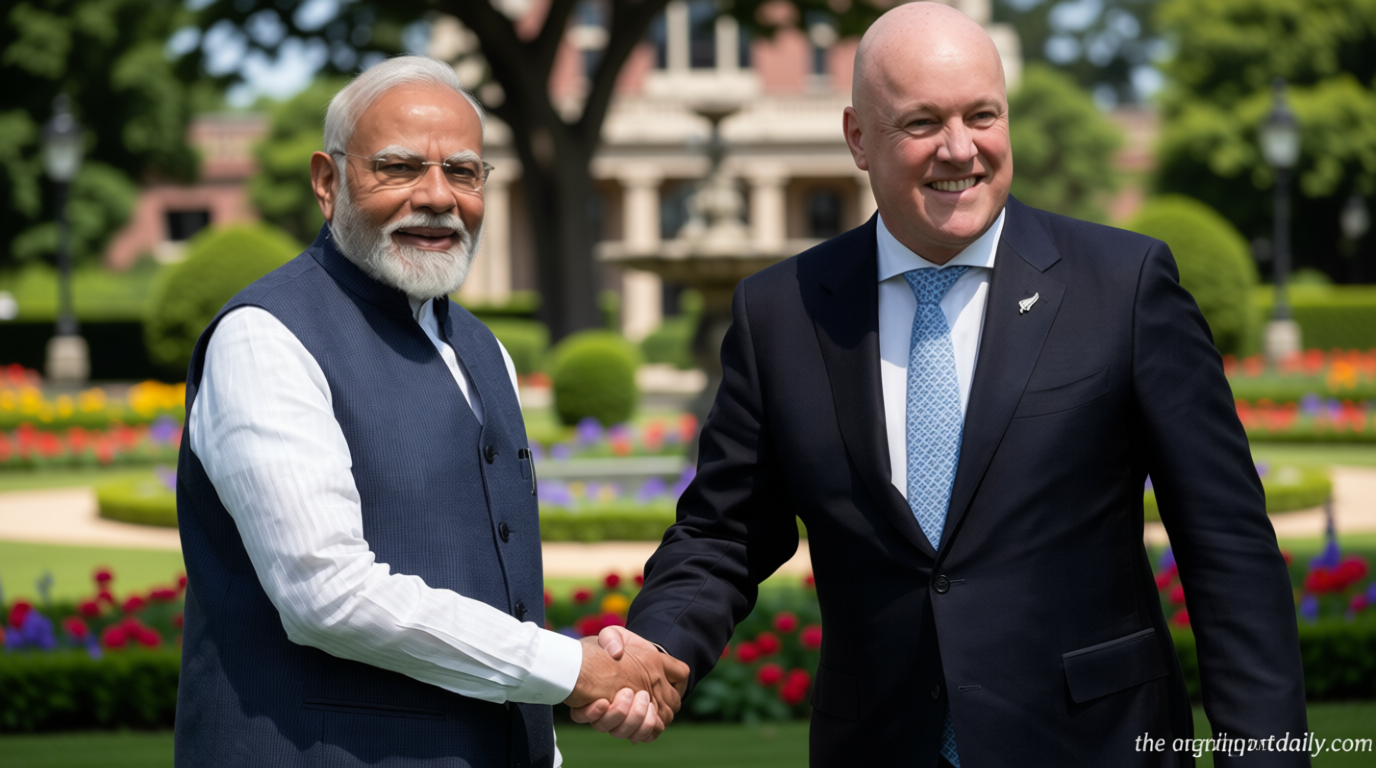
Theindiapostdaily.com – New Zealand Prime Minister Christopher Luxon announced the signing of the India-New Zealand Free Trade Agreement (FTA), a milestone in economic relations between the two nations. The deal, which came into effect immediately, is expected to significantly boost trade by eliminating tariffs on 57% of New Zealand’s exports to India. Luxon emphasized the importance of this agreement in opening new markets and enhancing business opportunities for New Zealand, stating,
“New Zealand businesses are set to thrive under the India-New Zealand FTA, which will immediately free 57% of our exports from tariff barriers.”
Immediate Tariff Relief and Economic Impacts
The India-New Zealand FTA marks a major step in reducing trade costs and fostering economic integration. By removing tariffs on key exports, the agreement aims to provide immediate relief to New Zealand’s exporters, particularly in sectors like dairy, meat, and horticulture. These industries have long sought greater access to India’s vast consumer market, which is projected to grow further in the coming years. The pact is designed to create a more predictable and favorable environment for trade, helping both countries capitalize on their comparative advantages.
Trade Statistics and Growth Trends
Bilateral trade between India and New Zealand has shown steady growth over the past few years, with merchandise trade reaching USD 1.16 billion in the fiscal year 2026. This growth has been driven by increased demand for New Zealand’s agricultural products and manufactured goods in India. However, the pace of growth has slowed in recent years, with India’s exports to New Zealand declining to USD 566 million in FY2026. Meanwhile, imports from India to New Zealand surged to USD 589 million, resulting in a trade deficit of USD 23 million. The FTA is seen as a strategic move to reverse this trend and boost mutual trade.
Export and Import Dynamics
New Zealand’s exports to India are largely composed of industrial raw materials such as wood logs, ferrous scrap, coal, and aluminium scrap, which support India’s manufacturing sector. In contrast, India’s exports to New Zealand have shifted toward higher-value products, including pharmaceuticals, passenger vehicles, and refined petroleum. This shift reflects the evolving economic priorities of both countries and the potential for the FTA to create a more balanced trade relationship. The agreement is expected to facilitate smoother trade flows and reduce bureaucratic hurdles for businesses on both sides.
Opportunities for Sectoral Growth
The India-New Zealand FTA is anticipated to unlock significant growth across multiple sectors. In agriculture, New Zealand’s dairy and meat products will benefit from tariff-free access, potentially increasing market share in India. For the manufacturing sector, the agreement could lead to expanded exports of machinery and equipment. Additionally, the FTA is expected to strengthen services trade, including tourism and education, by easing regulatory barriers. Luxon highlighted the potential for the deal to generate more jobs and drive economic expansion in New Zealand, with a particular focus on small and medium enterprises (MSMEs) that stand to gain from increased market access.
Modi’s State Visit and Strategic Collaboration
Prime Minister Narendra Modi’s upcoming visit to New Zealand from 10 to 11 July will underscore the significance of the India-New Zealand FTA. This visit, the first by an Indian leader in nearly four decades, is expected to focus on deepening bilateral ties across trade, commerce, and defense. Luxon had previously shared the news of Modi’s trip on X, noting,
“India’s Prime Minister Narendra Modi is set to visit New Zealand next week, strengthening our India-New Zealand FTA and expanding collaboration in key economic areas.”
The visit will provide an opportunity to discuss the agreement’s implementation and explore further partnerships that align with both nations’ strategic goals.
The India-New Zealand FTA also addresses long-standing issues in trade negotiations, including agricultural tariffs and non-tariff barriers. By streamlining customs procedures and harmonizing regulations, the agreement is designed to create a more efficient and transparent trade environment. Analysts suggest that the FTA could serve as a model for future trade deals, particularly in the Asia-Pacific region. With India’s growing economy and New Zealand’s focus on high-quality exports, the partnership is poised to yield long-term benefits for both countries. As the agreement takes effect, businesses and policymakers will closely monitor its impact on trade volumes and economic growth.