Giant pandas arrive in US after Trump-Xi summit: What is China’s ‘panda diplomacy’?
Two giant pandas from China have reached the United States, bringing a highly visible symbol of friendship to Zoo Atlanta after a major meeting between
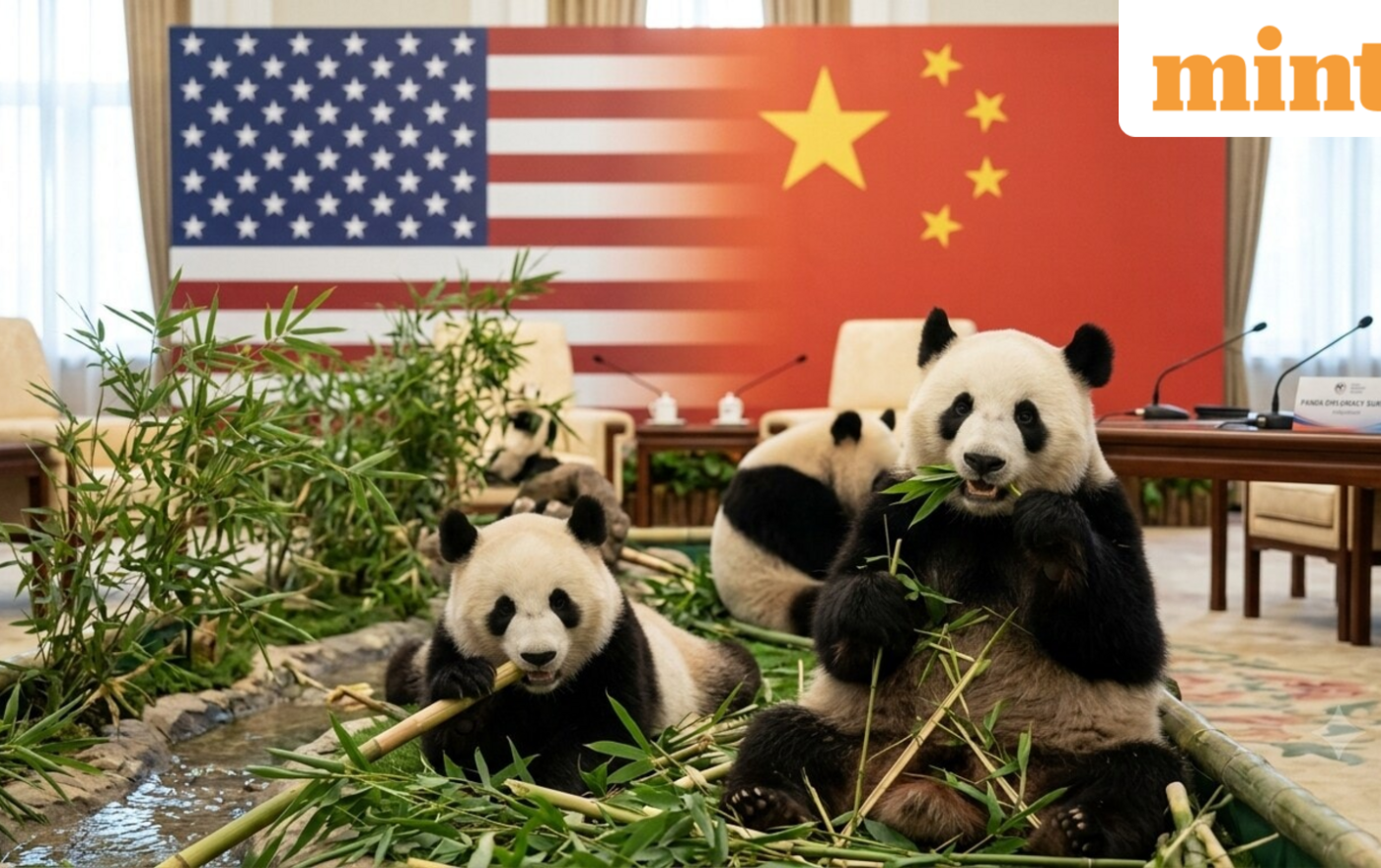
Giant pandas return to the United States as China renews a familiar diplomatic gesture
Theindiapostdaily.com – Two giant pandas from China have reached the United States, bringing a highly visible symbol of friendship to Zoo Atlanta after a major meeting between Chinese President Xi Jinping and US President Donald Trump in Washington.
The pair, Ping Ping and Fu Shuang, arrived in Atlanta on Sunday after leaving Chengdu Shuangliu International Airport aboard a chartered aircraft early Saturday. Their journey took roughly 16 hours. Zoo Atlanta is expected to host the pandas for a 10-year period under the new arrangement.
The transfer was announced by Xi during his Washington visit and meeting with Trump. By presenting the animals as a sign of continuing people-to-people ties, Beijing has again turned to one of its most recognizable diplomatic traditions.
“Envoy of friendship”
That is how Xi described the giant panda’s role in relations between China and the United States. The phrase reflects the unusual power these animals have acquired in international affairs: they can capture public attention, attract visitors to zoos, and convey a message that formal diplomatic statements often cannot deliver as easily.
What panda diplomacy means
Panda diplomacy is the term used for China’s practice of sending giant pandas abroad to build cultural connections and signal goodwill. Because giant pandas are native to China and deeply linked with the country’s national identity, their presence overseas carries meaning beyond a zoo exhibition.
The animals are especially effective as a form of soft power. Their broad appeal reaches families, schoolchildren, tourists, researchers and local communities, while also giving governments a positive occasion to highlight cooperation. In periods when major powers disagree over trade, security or other strategic issues, a panda arrival can offer a gentler public reminder that dialogue and exchange still matter.
The idea is not new. Historical accounts connect the practice to the Tang dynasty, when Empress Wu Zetian is said to have sent two live pandas to Japan during the seventh century. Whether viewed as an early diplomatic precedent or a symbolic story from China’s past, the account illustrates how long the panda has been associated with international goodwill.
From gifts to carefully managed loans
China’s modern use of pandas became more prominent during the 20th century. The country sent pandas to the Soviet Union in the 1950s, but the best-known American example followed President Richard Nixon’s landmark trip to China in 1972.
After that visit, Beijing gave two pandas, Ling-Ling and Hsing-Hsing, to the United States. Their arrival became an enduring symbol of the opening in relations between Washington and Beijing. The gesture made the diplomatic shift tangible for ordinary Americans, many of whom could experience its most charming result firsthand at the National Zoo.
China later revised its policy. Beginning in the 1980s, permanent panda gifts were largely replaced by long-term lending agreements. The shift coincided with increased attention to conservation and the special care required by the species.
Under today’s model, host institutions generally receive pandas for fixed terms and enter agreements involving animal care, scientific work, breeding and associated expenses. Cubs born outside China are normally required to return to China under the conditions of those agreements. The system gives panda exchanges a conservation and research dimension while preserving their diplomatic value.
For visitors, the distinction between a gift and a loan may seem technical. Politically, however, it is significant. A loan still allows a host city to welcome pandas and build public enthusiasm around them, while China retains a continuing relationship with the zoo and the country receiving the animals.
Why the Atlanta arrival carries added significance
Ping Ping and Fu Shuang are arriving at a moment when the United States and China are managing a relationship shaped by both competition and continued engagement. Trade disputes and wider strategic tensions have remained important features of bilateral ties, yet senior-level meetings still create opportunities to stress areas where communication can continue.
In that setting, the Atlanta transfer is more than an animal-transport story. It is a public symbol attached to a presidential meeting and a reminder of an earlier era in which pandas helped mark a dramatic improvement in US-China relations.
The comparison with 1972 is particularly striking. Nixon’s visit represented a turning point in relations, and Ling-Ling and Hsing-Hsing became immediate cultural celebrities in the United States. Their arrival translated a distant diplomatic breakthrough into something millions of people could see and discuss.
First Lady Pat Nixon had expressed interest in pandas after seeing them at the Beijing Zoo during her trip to China. When Ling-Ling and Hsing-Hsing reached Washington, she led an official welcome event at the National Zoo on April 20, 1972.
The public reaction was extraordinary. Roughly 20,000 people went to the zoo on the first day the pandas were displayed, fueling the “panda-monium” that became associated with their debut. The response demonstrated why pandas remain such potent diplomatic figures: they create immediate emotional connections that can extend far beyond official meetings.
A symbol understood beyond politics
Pandas do not resolve disagreements between governments, and their arrival does not erase the serious issues that can divide China and the United States. Their role is different. They provide a shared cultural point of contact in a relationship that is often discussed through the language of rivalry and risk.
For Zoo Atlanta, the arrival of Ping Ping and Fu Shuang will bring a major new attraction and an opportunity to introduce visitors to the broader story of giant panda conservation. For Beijing, the move renews a diplomatic language that has been understood internationally for decades. For Americans, the animals offer a rare, accessible link to a country that remains central to global politics.
That combination of charm, cultural meaning and political symbolism explains why panda diplomacy has endured. Long after formal statements fade from public memory, the image of two giant pandas settling into a new home can remain one of the clearest expressions of a nation’s wish to keep a relationship open.
Related Reading
Frequently Asked Questions
What is Giant pandas arrive in US after?
Giant pandas arrive in US after is the main topic of this guide. The article explains the context, practical details, and next steps readers should understand.
Why does Giant pandas arrive in US after matter?
Giant pandas arrive in US after matters because readers are looking for a useful answer, not just a short summary. Good content should match search intent and help them decide what to do next.