‘Earth still shaking’: Venezuela faces ongoing aftershock after twin earthquakes | Expert explains dire situation
Venezuela's Earth Still Shaking: Ongoing Aftershocks After Twin Quakes Earth still shaking as Venezuela grapples with the aftermath of two devastating
Venezuela’s Earth Still Shaking: Ongoing Aftershocks After Twin Quakes
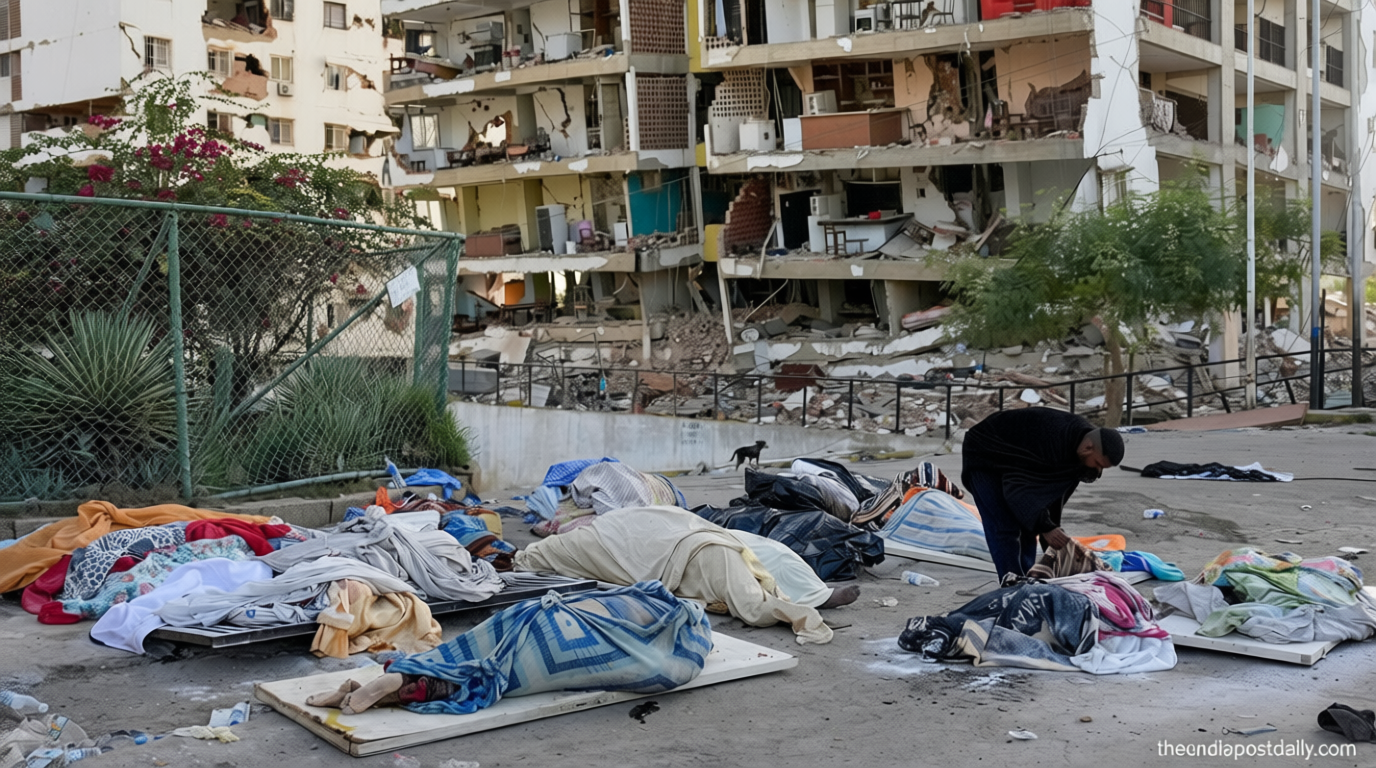
Theindiapostdaily.com – Earth still shaking as Venezuela grapples with the aftermath of two devastating earthquakes that struck the country in late April. The twin tremors, measuring 7.2 and 7.5 on the Richter scale, triggered widespread destruction, leaving communities in turmoil and raising urgent questions about the nation’s preparedness for seismic disasters. Rescue teams and local volunteers worked tirelessly to uncover survivors trapped beneath collapsed structures, but the scale of damage and limited resources have made the recovery process arduous.
International Rescue Efforts in La Guaira
La Guaira, a coastal region heavily affected by the quakes, became a focal point for emergency operations. Teams of international rescuers, local volunteers, and families mobilized to sift through rubble using everything from shovels to heavy machinery. Despite challenges such as restricted access and a shortage of supplies, the coordinated efforts underscored the gravity of the situation. Experts emphasized that the initial 48 to 72 hours following an earthquake are critical for saving lives, yet conditions on the ground have tested even the most resilient teams.
“The twin quakes have created a complex situation, with aftershocks still disrupting daily life. The window for rescue is shrinking, but every second counts,” said a geologist analyzing the disaster.
Government Response and Public Concerns
By Friday, the death toll had reached 920, with over 51,000 people still missing. While officials claimed a unified emergency response, residents in the hardest-hit areas reported delays in aid and a lack of visible support. The government’s reliance on military and police personnel to secure zones has sparked debates about the efficiency of its disaster management strategies. With earth still shaking, many Venezuelans are questioning whether the country is equipped to handle future seismic events or if the current crisis reflects deeper systemic weaknesses.
Historical Seismic Patterns and Expert Analysis
Understanding Seismic Doublets
Feliciano De Santis, a professor at the Central University of Venezuela and head of the Venezuelan Geological Society, provided insights into the seismic activity. He explained that consecutive strong earthquakes in a short timeframe are rare but not unheard of, often linked to “seismic doublets” where faults release energy in succession. De Santis drew a historical parallel to the 1902 earthquake, likely a doublet due to the linear nature of the fault in the region. Although modern instruments lack precise data on the 1902 event, its impact on the landscape and population mirrors the current disaster.
“The 1902 earthquake and today’s twin quakes share similarities in their fault patterns. A rupture in one segment could trigger another, creating a chain reaction that exacerbates the damage,” De Santis noted to Le Monde.
USGS Data and Venezuela’s Seismic Legacy
De Santis highlighted Venezuela’s reliance on the United States Geological Survey (USGS) for seismic monitoring, noting that the country’s first seismograph was installed during the Cold War to track nuclear activity. The 1967 earthquake, which devastated parts of the country, led to the creation of FUNVISIS, the national seismic network now in operation. He explained that USGS data, combined with FUNVISIS’s accelerograms, will determine whether the two quakes’ energy waves merged, intensifying the tremors felt in Caracas and La Guaira.
Uncertain Future and Unstoppable Aftershocks
As of the latest reports, over 190 aftershocks have been recorded since Wednesday, with several reaching magnitude 5. While most were minor, their frequency has kept the population on edge. De Santis warned that the energy released during the primary quakes might reduce the likelihood of larger tremors, but the risk of two strong aftershocks remains. “Even with the equivalent of 20 to 30 atomic bombs released, the ground is still unsettled,” he said, emphasizing the unpredictable nature of seismic activity.
Meanwhile, acting President Delcy Rodríguez announced the deployment of more than 14,000 military and police personnel to secure affected regions. Access to disaster zones was restricted to those with special permits, a measure that sparked both solidarity and frustration. As global rescue teams continue to arrive, the earth still shaking under Venezuela’s cities serves as a stark reminder of the country’s vulnerability to nature’s forces. The situation remains dire, with families like that of Nazareth Jiménez waiting anxiously for news of their missing loved ones, breaking through concrete with hammers and power tools in hopes of finding survivors.