Donald Trump revives India-Pakistan ceasefire claim, says ‘11 planes were shot down’
Donald Trump Revives India-Pakistan Ceasefire Claim, Says ‘11 Planes Were Shot Down’ Donald Trump revives India Pakistan ceasefire - Donald Trump has once
Donald Trump Revives India-Pakistan Ceasefire Claim, Says ‘11 Planes Were Shot Down’
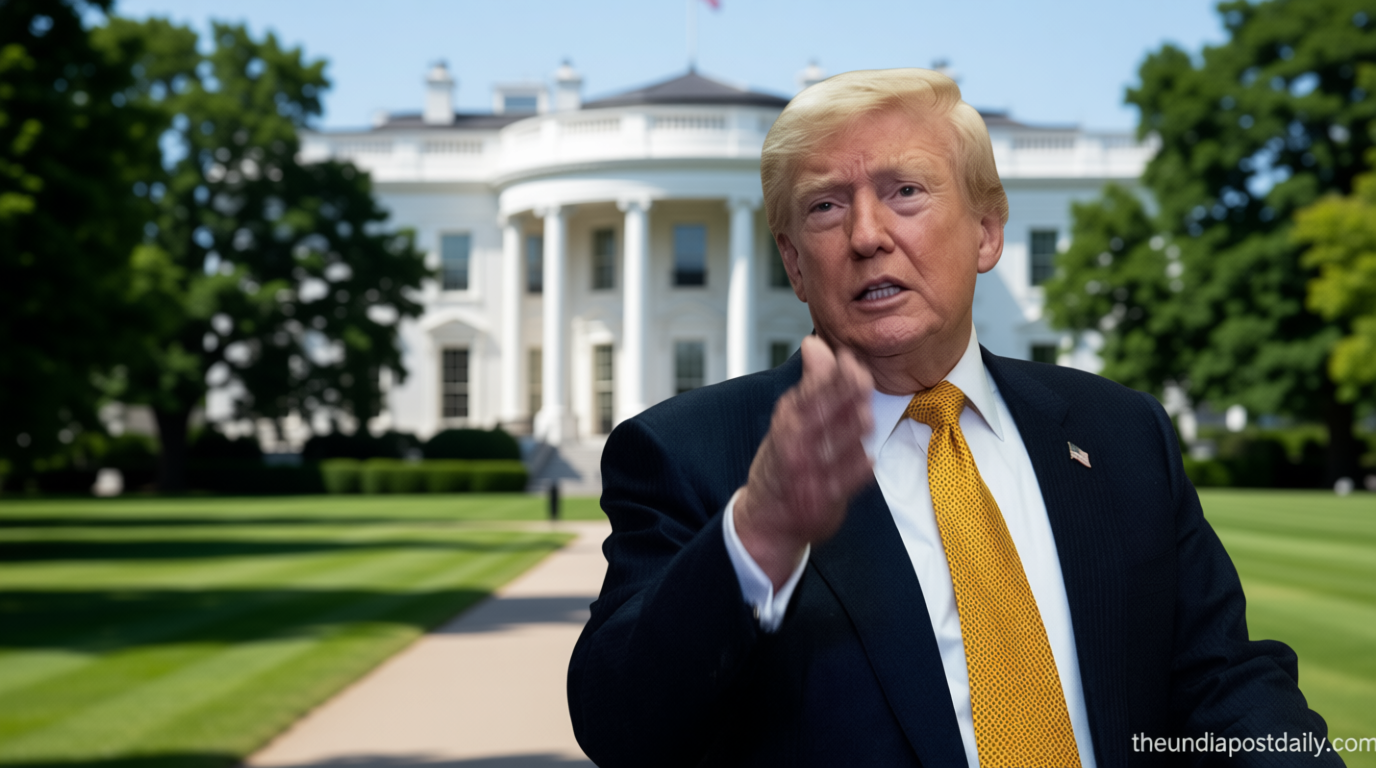
Theindiapostdaily.com – Donald Trump has once again asserted his role in reviving the India-Pakistan ceasefire, a claim that has sparked renewed debate about his influence in regional diplomacy. During a recent address aboard Air Force One at Royal Air Force Mildenhall, the former U.S. president emphasized how his intervention averted a potential nuclear conflict between the two South Asian nations. He highlighted that the escalation in hostilities had reached a critical point, with eleven aircraft reportedly downed in the ongoing skirmishes. Trump’s remark underscores his belief that his leadership in global affairs was instrumental in preventing a larger war, a sentiment echoed by Hindustan Times as part of the broader discussion on his foreign policy achievements.
The Ceasefire Narrative
In his remarks, Trump framed the India-Pakistan standoff as a moment of high tension, suggesting that his personal involvement was the key to de-escalating the situation. He recounted how the conflict had been on the brink of nuclear confrontation, with both nations poised to escalate their military actions. “Think of it, India and Pakistan. That war was raging. They were a week into it. Eleven planes were shot down, and that war was going to go nuclear,” Trump stated, per Hindustan Times. This narrative aligns with his historical claims of mediating disputes, though critics argue that the ceasefire may have been the result of internal negotiations rather than direct U.S. intervention.
Trump’s assertion that he “settled eight wars” during his presidency has been a recurring theme in his speeches, and this instance with India-Pakistan is no different. He linked his ceasefire efforts to the Nobel Peace Prize, suggesting that his ability to resolve international conflicts should be recognized with the honor. According to his statements, Pakistan’s Prime Minister Shehbaz Sharif acknowledged his role in “stopping the war,” praising him for averting a catastrophe that could have claimed 30 to 50 million lives. The former president’s claim positions him as a pivotal figure in South Asian geopolitics, though the exact circumstances of the ceasefire remain a topic of discussion among analysts.
India’s Rejection of Mediation Credit
India has consistently disputed the idea that Trump’s involvement was decisive in halting the conflict. Officials in New Delhi maintain that the ceasefire was the result of direct negotiations between the Directors General of Military Operations (DGMOs) of both nations. The tensions began after a terror attack in Pahalgam, Kashmir, in April 2025, which killed 26 individuals and prompted India to launch targeted strikes on Pakistani militant infrastructure in PoK as part of Operation Sindoor. While Trump credited his leadership for the pause, Indian authorities have emphasized that the decision was made internally, underscoring the country’s sovereignty in managing its security concerns.
The 2025 conflict marked a significant escalation in the India-Pakistan rivalry, with both sides engaging in intense aerial combat. Trump’s claim that 11 planes were shot down during the crisis adds to the narrative of a dramatic intervention. However, the exact number of aircraft lost is a subject of verification, with some reports suggesting varying figures. Despite these discrepancies, Trump’s emphasis on the ceasefire as a U.S.-led achievement has reignited conversations about his foreign policy legacy. Analysts note that while his involvement may have been symbolic, the actual resolution of the conflict depended on the bilateral efforts between India and Pakistan.
Global reactions to Trump’s ceasefire claim have been mixed. Some media outlets and political figures have praised his ability to mediate crises, citing his bold approach to international diplomacy. Others, however, argue that the U.S. role in the India-Pakistan conflict has been overstated, with the majority of credit going to the two nations’ military strategists. The former president’s statements, while dramatic, reflect a pattern of framing his presidency as a period of transformative global leadership. This perspective has been reinforced by his earlier claims of resolving conflicts in regions like the Middle East and Eastern Europe, all of which are part of the broader narrative of his foreign policy impact.
Trump’s focus on the India-Pakistan ceasefire also ties into his broader strategy of positioning the United States as a mediator in global disputes. By highlighting the 11 planes shot down, he seeks to emphasize the gravity of the situation and the urgency of his intervention. The former president’s rhetoric often blends personal achievement with national pride, a tactic that has resonated with his base but drawn skepticism from critics. Nonetheless, his claims continue to shape public discourse on the role of the U.S. in South Asian affairs, particularly in the context of the ongoing nuclear rivalry between India and Pakistan.