China sentences government official to death over $325 million bribery and embezzlement case
China Sentences Government Official to Death in $325 Million Corruption Case China sentences government official to death - China has sentenced a high-ranking
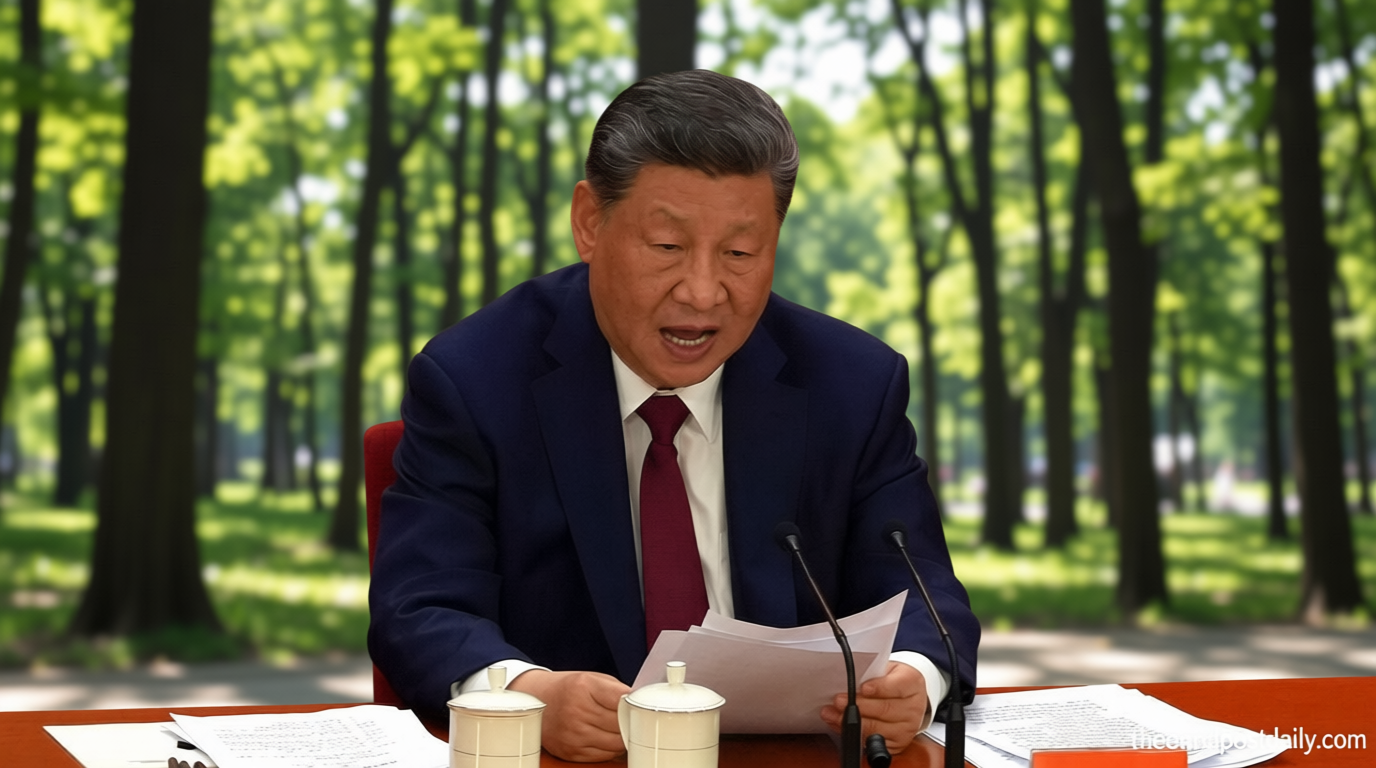
China Sentences Government Official to Death in $325 Million Corruption Case
Theindiapostdaily.com – China has sentenced a high-ranking government official to death for accepting bribes and embezzling public funds in a landmark corruption trial. Yang Youlin, a former economic development official in Nanjing, was convicted by the Changzhou Intermediate People’s Court and received a death penalty for his role in a bribery and embezzlement scheme spanning over three decades. The court also found him guilty of misappropriation of public funds, abuse of authority, and money laundering, marking a significant moment in China’s ongoing fight against graft. The case highlights the government’s commitment to cracking down on corruption at the highest levels.
A Major Victory in Xi’s Anti-Corruption Campaign
The conviction of Yang Youlin aligns with President Xi Jinping’s aggressive anti-corruption drive, which has targeted both high-profile and mid-level officials. Since 2012, Xi’s administration has launched sweeping investigations, resulting in the downfall of numerous leaders accused of embezzling billions in public funds. Yang’s case, involving bribes totaling approximately $325 million, underscores the scale of the challenge China faces in curbing corruption. The prosecution emphasized that Yang abused his position to secure lucrative contracts, land deals, and financial benefits for private interests.
“Yang Youlin illegally accepted property and assets worth 2.21 billion yuan ($325 million) from 1993 to 2023,” stated the court. This massive sum was derived from bribes paid by businesses seeking favors in infrastructure projects, business operations, and land grants. The case has drawn widespread attention, with analysts noting that it represents one of the largest corruption convictions in China’s history. The death sentence sent a strong message about the consequences of financial misconduct at the national level.
During the trial, Yang admitted guilt and expressed remorse, acknowledging his role in facilitating illicit transactions that enriched private entities at the expense of public resources. The hearings, which lasted two days in March and April, involved testimony from over 30 witnesses, including business associates and government officials. The court ruled that Yang’s assets would be confiscated, and efforts would be made to recover all the funds he misappropriated. This case has intensified discussions about the effectiveness of China’s legal system in holding powerful officials accountable.
Implications for China’s Legal and Political Landscape
The death sentence handed to Yang Youlin reflects a broader trend in China’s judicial system, where capital punishment is increasingly used to punish corruption. Over the past decade, more than 20 officials have been executed for similar offenses, including high-profile cases such as Lai Xiaomin and Li Jianping. These trials have not only targeted individual wrongdoing but also aimed to reshape the political culture by instilling fear of punishment among public servants. Analysts suggest that Yang’s case could serve as a model for future corruption prosecutions, reinforcing the government’s stance on zero tolerance for graft.
“The sentencing of Yang Youlin demonstrates the government’s resolve to address systemic corruption,” said a legal expert in Beijing. The case has sparked debates about the fairness of the trials and the role of political motivation in sentencing decisions. While supporters praise the move as a necessary step to clean up the system, critics argue that some officials are targeted for their opposition to Xi’s policies. Despite these concerns, the conviction has been widely seen as a powerful statement against corruption in China’s economic corridors.
Yang’s embezzlement and bribery practices are believed to have significantly impacted public projects and infrastructure development, diverting critical funds from essential services. The court’s decision to impose the death penalty has been interpreted as a symbolic gesture to deter future misconduct. In addition to Yang, several other officials have been implicated in related cases, raising questions about the extent of the corruption network and its influence on government operations. The trial has also drawn comparisons to international corruption scandals, with some observers highlighting China’s unique approach to enforcing accountability through capital punishment.
Public reactions to Yang’s conviction have been mixed, with many citizens applauding the sentence as a bold move against corruption. Social media platforms have seen a surge in discussions about the case, with some users calling for further investigations into other officials. Meanwhile, legal professionals have pointed to the case as a testament to the strengthening of China’s anti-corruption laws. As the government continues its efforts to root out graft, Yang’s death sentence is likely to be remembered as a pivotal moment in the nation’s fight for transparency and integrity in public service.