Carney-Trump trade war: Canada set to impose retaliatory tariffs on US products
In the escalating Carney Trump trade war, Ottawa will impose duty rates between 15% and 50% on hundreds of American-made goods beginning Tuesday, September 8
Canada’s Retaliatory Tariffs Escalate Trade Dispute
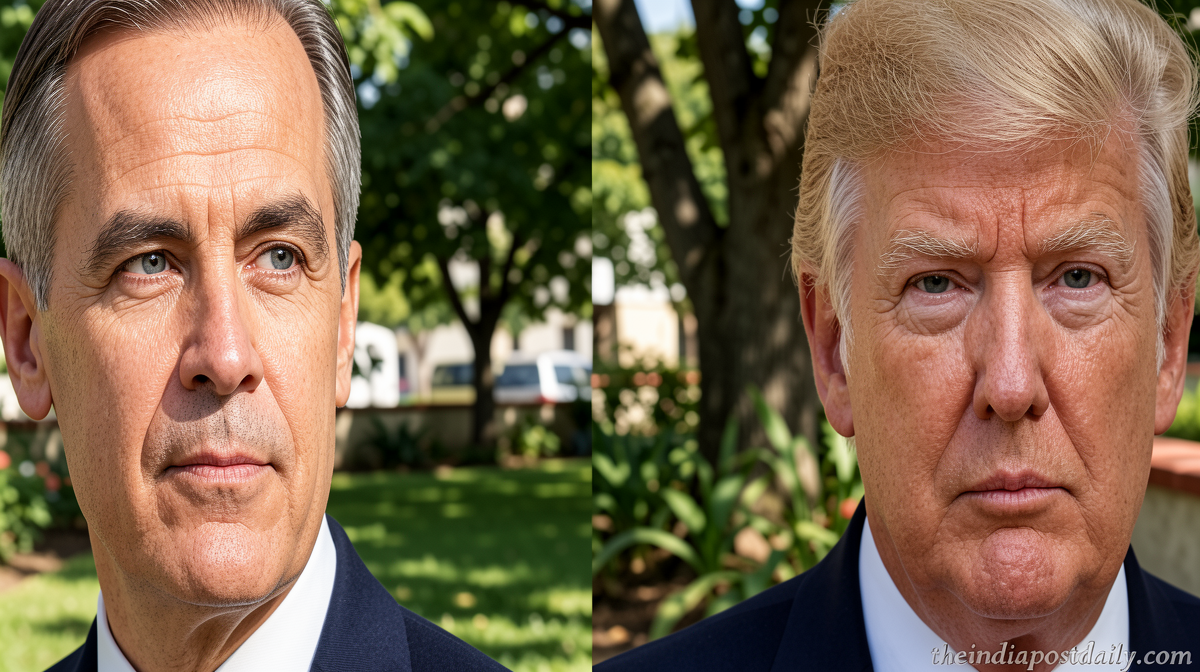
Theindiapostdaily.com – In the escalating Carney Trump trade war, Ottawa will impose duty rates between 15% and 50% on hundreds of American-made goods beginning Tuesday, September 8. The measures cover industrial inputs such as steel alongside everyday consumer items including motorcycles, cosmetics, and cheese. Prime Minister Mark Carney’s government is wagering that the financial cost borne by US exporters and domestic shoppers will push Washington back to the negotiating table.
The tariff package is a deliberate strategic gamble. Carney had earlier dismantled many of the countermeasures his predecessor, former Prime Minister Justin Trudeau, had placed on US goods. Reimposing and expanding those duties signals that Ottawa believes the diplomatic channel has been exhausted and that economic leverage is now the only remaining instrument to force a resolution.
Negotiations Collapse After an Apparent Breakthrough
The standoff did not develop overnight. For weeks, American and Canadian negotiators worked toward a framework intended to defuse tensions that had been building since the US administration’s tariff announcements. By mid-August, both sides appeared close to landing terms.
On August 18, the US president publicly declared that a preliminary deal had been reached and granted negotiators a three-day window to finalize details. That window closed without an agreement. The subsequent breakdown unleashed two weeks of mutual recrimination, with each government publicly assigning blame to the other for the failure to close the deal.
Brian Clow, a former senior Canadian adviser on trade and US relations during the Trudeau era, framed the retaliatory tariffs as a pressure mechanism rather than an end goal.
“Canada’s retaliatory tariffs are meant to make the cost of this conflict real enough for American businesses and consumers that Washington sees a clear incentive to return to the table. Canada isn’t imposing these tariffs because it wants a fight. It’s imposing them because it wants the fight to end.”
Currency Pressure and the Veiled Warning
Adding another layer of friction, the US president issued a pointed remark on Sunday targeting the Canadian dollar. In a Truth Social post, he wrote:
“Canada’s (currency) Dollar imbalance with the U.S. is unacceptable. It has been that way for years — but no longer!”
The White House has offered no further explanation of what a currency “imbalance” specifically entails in this context, leaving analysts to speculate whether the remark foreshadows pressure on the Bank of Canada’s monetary policy or signals a broader renegotiation of exchange-rate expectations embedded in any future compact.
The Existing Tariff Landscape and Sector Risks
The Canadian response is layered atop duties already in force. On August 22, the US administration imposed 50% duties on approximately $20 billion worth of Canadian exports. Three days later, Ottawa announced counter-tariffs calibrated to hit roughly the same dollar value of American goods. The new measures announced for September 8 push several steel categories from 25% up to 50% while extending coverage to additional consumer product lines.
US Trade Representative Jamieson Greer has signalled that Washington retains the option of further retaliatory steps, including additional tariff hikes or outright import bans on select Canadian products. No timetable has been attached to those threats, but their existence keeps the escalation ladder open in both directions.
Beyond the current round, a distinct threat looms over the auto industry. The US president has indicated an intention to raise vehicle tariffs from 25% to 50% effective January 1, 2027. Those measures have not yet been formally enacted, so their status remains uncertain. Whether they will be deployed as part of the next retaliatory move against Canada, or held in reserve as a longer-term bargaining chip, is still unclear.
For Canada, where the automotive, steel, and aluminium sectors are pillars of industrial employment, the prospect of a 50% auto tariff represents an existential competitive challenge. Carney has stressed that any eventual agreement must preserve the viability of those industries and added that Ottawa is pursuing what he described as a “durable” arrangement with Washington.
“We’re ready to sit down and strike that deal when the Americans are ready.”
Frequently Asked Questions
When do Canada’s retaliatory tariffs take effect?
The new duty schedule, covering rates from 15% to 50% across hundreds of US product lines, becomes operative on Tuesday, September 8. Steel categories jump from 25% to 50%, and consumer items such as motorcycles, cosmetics, and cheese enter the tariff net for the first time under this round.
What happened to the August negotiations?
On August 18, the US president announced a preliminary deal and allowed a three-day finalization window. The window expired without a signed agreement, and both governments subsequently blamed the other for the breakdown. No formal talks have resumed as of the tariff announcement.
Could auto tariffs hit 50% in 2027?
The US president has publicly stated an intention to raise vehicle tariffs from 25% to 50% effective January 1, 2027, but no legislation or executive order has been enacted. The measures remain a stated intention rather than a binding policy, and their timing depends on the broader state of bilateral negotiations.
What is Ottawa’s stated end goal?
Carney’s government frames the tariffs as leverage, not a destination. The stated objective is to make the economic cost of continued confrontation high enough that Washington returns to the table and negotiates a “durable” arrangement that protects Canadian industrial employment.