‘Blood for Blood,’ ‘We Kill Trump’, and Trump in a coffin — Iran’s growing campaign of anti-US billboards, graffiti
Iran’s relentless anti-US messaging has taken a striking visual
Iran’s Anti-US Propaganda: A Visual Campaign of Hostility
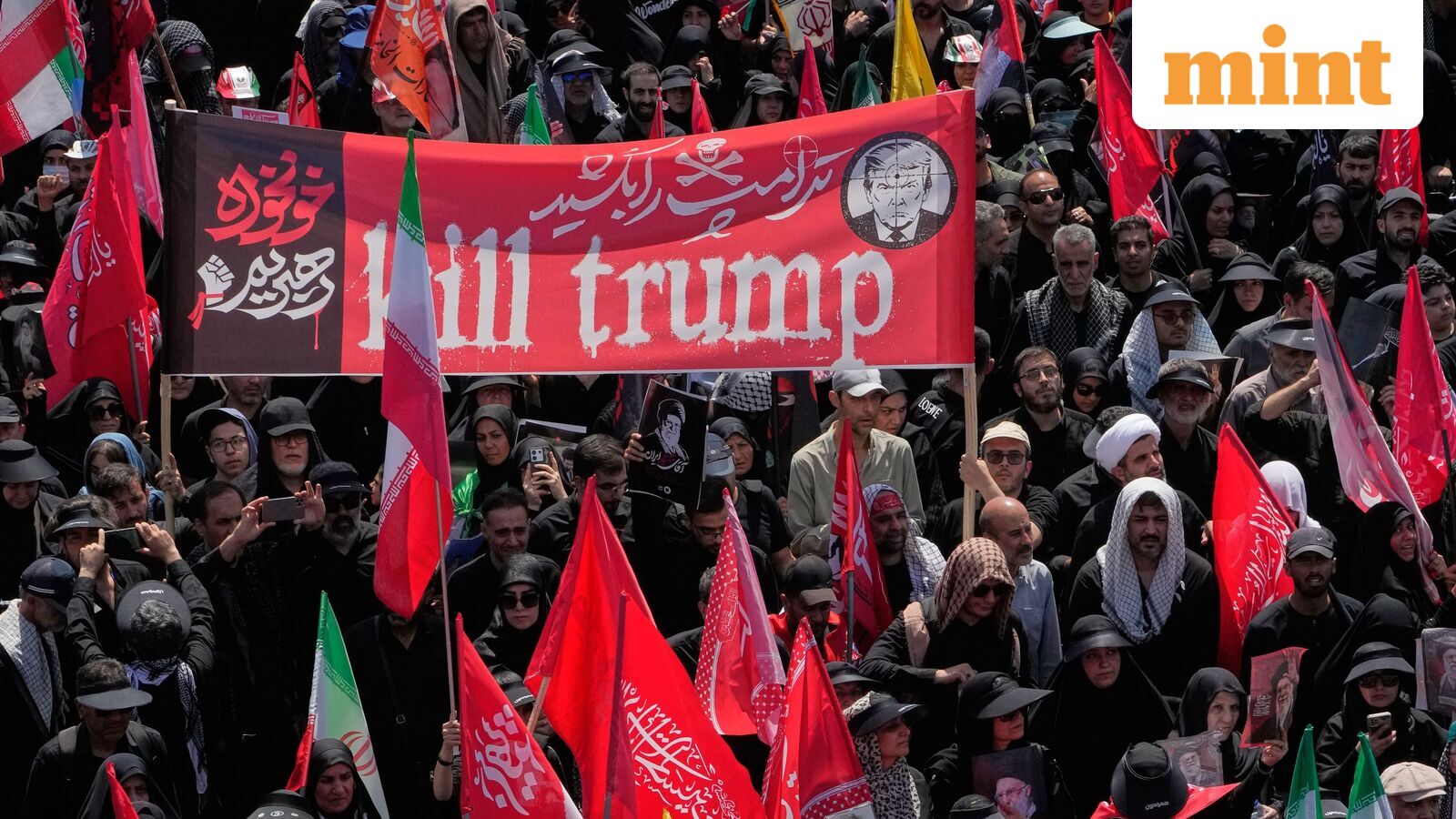
Theindiapostdaily.com – Iran’s relentless anti-US messaging has taken a striking visual form, with public spaces across the country now adorned by large-scale billboards, murals, and graffiti that depict U.S. President Donald Trump in threatening scenarios. The focus keyword “Blood for Blood We Kill” has become a central theme in these displays, underscoring Iran’s determination to retaliate against American actions. This campaign, which began in the wake of the U.S.-Israeli strikes on February 28, aims to evoke strong emotional responses and assert Iran’s narrative of vengeance. The imagery is not just symbolic; it serves as a powerful tool to rally public sentiment and demonstrate the nation’s resolve to counter perceived aggression from the United States.
Symbolic Imagery and Strategic Messaging
One of the most provocative installations in Palestine Square features a stark image of Trump, his family, and American officials above a line of coffins draped with American flags. The slogan “Blood for Blood We Kill” is prominently displayed, linking the loss of Ayatollah Ali Khamenei and his relatives to the death of Trump. This artwork, with its chilling juxtaposition of life and death, is intended to communicate that the U.S. will face retaliation for its actions. The backdrop of the White House in the image reinforces the direct connection between the attack and the symbolic target. Such displays are part of Iran’s broader strategy to frame the conflict as a personal and ideological battle, resonating deeply with domestic audiences and international observers alike.
“Why should we not kill the man who killed my imam?”
— Mohammad Rasouli, a poet who led chants during Khamenei’s funeral. His words capture the fervor behind Iran’s campaign, emphasizing the belief that U.S. actions justify their own. The use of personal narratives in public art helps solidify the emotional weight of the slogan, making it more than just a political statement—it becomes a call to action.
Expanding the Message Through Graffiti
Enghelab Square has also seen the emergence of graffiti that reinforces the “Blood for Blood We Kill” theme. A prominent piece shows Trump lying in an open black coffin, with the phrase “We Kill Trump” scrawled across the casket in both Persian and English. The graffiti-style presentation mimics memorial walls seen during Khamenei’s funeral, drawing parallels between the two events. This visual language is designed to create a sense of inevitability, as if the death of a U.S. leader is a natural consequence of the ongoing conflict. The bilingual approach ensures that the message reaches both local supporters and global audiences, amplifying its impact.
Targeting U.S. Leaders with Sniper Imagery
Other public art installations feature Trump and Israeli Prime Minister Benjamin Netanyahu with crosshairs over their faces, symbolizing Iran’s anger toward leaders it holds responsible for the strikes that killed Khamenei and his family. These images, often displayed alongside the “Blood for Blood We Kill” slogan, serve as a reminder of the stakes involved. The placement of such art in high-traffic areas ensures maximum visibility, turning everyday spaces into arenas of political confrontation. This strategy is not only about expressing outrage but also about reinforcing the idea that the U.S. and its allies are on the front lines of a broader conflict.
International Attention and Domestic Mobilization
The campaign has drawn significant international attention, with photographs of the billboards and graffiti circulating on social media and news platforms. For Iranians, these displays are a source of national pride, reflecting the country’s ability to articulate its position through art. The phrase “Blood for Blood We Kill” has become a rallying cry, encapsulating the idea that every American action must be met with a proportional response. As the conflict continues, Tehran’s propaganda efforts have evolved to focus not just on ideological slogans, but on direct, personal attacks against U.S. figures. This shift underscores the intensity of the current situation and the urgency with which Iran is communicating its message.
“The strike on Khamenei was a wake-up call for our people,”
— a statement from an Iranian official highlighting the symbolic importance of the attack. The repetition of the slogan in various forms across public spaces reinforces its significance, embedding it into the collective memory of the Iranian populace. This sustained presence of “Blood for Blood We Kill” in art and media ensures that the message remains fresh and compelling, even as the conflict unfolds over time.
A Broader Propaganda Strategy
Iran’s use of visual propaganda is part of a larger effort to shape public perception both domestically and internationally. The “Blood for Blood We Kill” campaign extends beyond billboards and graffiti, incorporating posters, digital displays, and even social media content to reach a wider audience. This multi-pronged approach allows Iran to maintain a consistent narrative while adapting to the evolving dynamics of the conflict. The imagery often includes references to historical events, linking the current situation to past grievances and reinforcing the idea of a long-standing struggle against U.S. dominance. Such strategic messaging ensures that the campaign remains relevant and impactful, even as new events unfold.
The visual campaign is also designed to evoke a sense of inevitability, suggesting that retaliation is not just a possibility but a certainty. This is particularly evident in the recurring depiction of Trump in a coffin, a powerful symbol of the consequences of U.S. actions. By framing the conflict in such stark terms, Iran aims to influence both public opinion and the behavior of its adversaries. The slogans and images are carefully crafted to resonate with the values and emotions of the Iranian people, turning the conflict into a personal and national narrative. As the campaign continues, it is likely to become even more entrenched, shaping the discourse around U.S.-Iran relations for years to come.