‘We had a difficult discussion’: Macron’s remark to Zelensky before Trump meeting caught on hot mic
Macron's 'Difficult Discussion' with Zelensky Emerge Before Trump Meeting Behind-the-Scenes Tensions at G7 Summit Theindiapostdaily.com – During the recent G7 summit, French President Emmanuel Macron revealed that his earlier conversation…
Macron’s ‘Difficult Discussion’ with Zelensky Emerge Before Trump Meeting
Behind-the-Scenes Tensions at G7 Summit
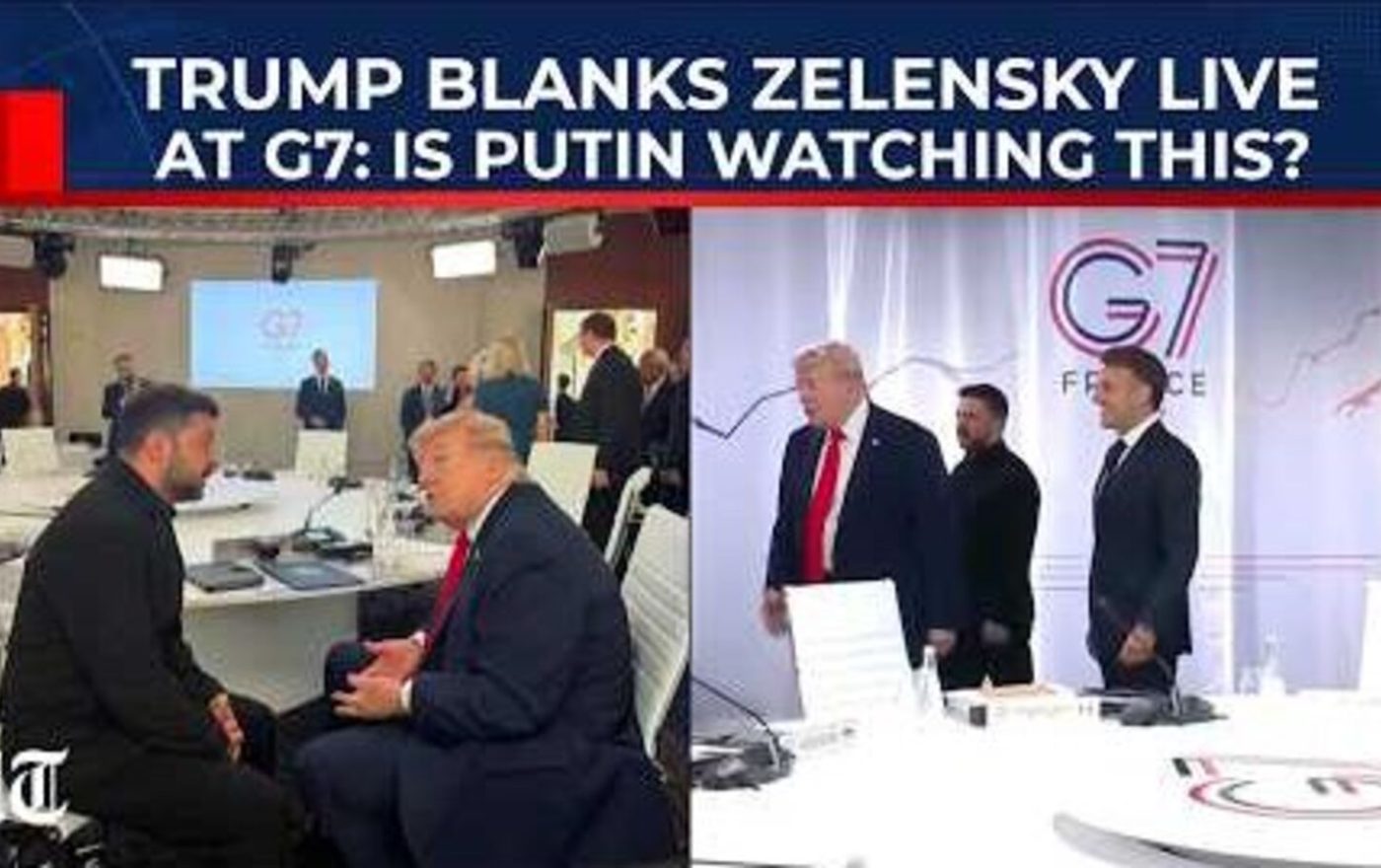
Theindiapostdaily.com – During the recent G7 summit, French President Emmanuel Macron revealed that his earlier conversation with U.S. President Donald Trump had been marked by a “difficult discussion,” offering a glimpse into the strained diplomatic relations among Western leaders. The exchange, inadvertently recorded on a hot mic, took place as Macron and Ukrainian President Volodymyr Zelensky walked through the grounds of the Hotel Royal in Biarritz, France. This moment of candid dialogue highlighted the growing friction between Trump and his European allies, with Macron’s remarks underscoring the challenges of aligning U.S. policy with NATO commitments.
“Yesterday we had a difficult discussion with President Trump,” Macron said to Zelensky, emphasizing the urgency of resolving differences over Ukraine’s war and broader strategic goals. The remark, though brief, captured the essence of the European leader’s frustration with Trump’s shifting priorities and his public comments about Zelensky.
Key Issues in the Diplomatic Clash
The “difficult discussion” between Macron and Trump revolved around critical issues, including Ukraine’s ongoing conflict, Iran’s nuclear program, and the administration’s approach to international alliances. Macron, known for his assertive leadership, pressed Trump on his hesitance to provide consistent military and financial support for Kyiv. A European diplomat later noted that Trump’s behavior during the summit had been “characteristically erratic,” with his team oscillating between firm commitments and conditional assurances. This inconsistency raised concerns among allies, who feared it could weaken the collective response to Russia’s aggression.
Meanwhile, Zelensky’s presence at the summit was framed as a strategic move to secure immediate aid for Ukraine. The Ukrainian leader had already faced challenges in negotiating aid packages, and Macron’s candid remarks suggested that the French president was determined to push for stronger U.S. involvement in the war effort. The unguarded conversation also provided a rare opportunity to assess the dynamics between European leaders and Trump, who had previously criticized his allies for being “too quick to make decisions” without full consultation.
Securing Trump’s Commitment to Ukraine
As the G7 session on Ukraine approached, Macron sought to address concerns about Trump’s reliability. The French leader asked Zelensky directly about the prospects of a private meeting with Trump, a request that came after weeks of diplomatic back-and-forth. Zelensky had previously tried to arrange a one-on-one conversation during a Sunday call with Trump, coinciding with the U.S. president’s 80th birthday. Macron’s response—“OK, I will arrange that”—signaled his willingness to take the lead in ensuring U.S. support, even as Trump delayed their meeting by 50 minutes.
Despite the delay, the private talks between Trump and Zelensky proved pivotal. The U.S. president eventually pledged to back Kyiv’s efforts, though his tone during the public session had been more skeptical. Zelensky later shared images of their meeting on social media, illustrating the high stakes of the conversation. Macron’s intervention, however, was not just about securing aid—it was a calculated effort to reinforce the unity of Western leaders in the face of Trump’s unpredictable approach.
Strategic Priorities and Aid Demands
During the summit, Zelensky reiterated Kyiv’s urgent needs, framing them as central to the war’s outcome. The “difficult discussion” with Trump had intensified the pressure on the U.S. to commit to a larger package of support, including advanced air defense systems, winter supplies, and funding for military production. Macron, leveraging his position as a key negotiator, emphasized the importance of these demands, arguing that without them, Ukraine would struggle to sustain its position in the conflict.
European officials observed that the conversation between Macron and Zelensky was part of a broader effort to align U.S. policy with European interests. The French president’s candidness with Zelensky, in contrast to his earlier public statements, reflected a deeper understanding of the stakes involved. This moment also highlighted the growing role of individual leaders in navigating the complexities of transatlantic diplomacy, as Trump’s administration continued to prioritize domestic issues over international commitments.
Proposing a Trilateral Dialogue
In the wake of the “difficult discussion,” Zelensky proposed a trilateral meeting between Trump, Putin, and himself as a potential solution to the escalating conflict. The idea was to create a direct dialogue that would bypass the usual diplomatic channels and force a clearer stance from Russia. “We will see what comes of it. If Russia refuses this chance as well, additional pressure will be needed,” Zelensky stated in a video message, underscoring the necessity of multilateral engagement.
Macron’s remarks suggested that the G7 summit was not only a platform for discussing Ukraine’s war but also a testing ground for diplomatic strategies. The French president’s willingness to confront Trump directly, even on a hot mic, demonstrated his confidence in the European Union’s position. This approach, however, also raised questions about how the U.S. would balance its commitments to Ukraine with its broader geopolitical objectives, particularly in the Middle East and Asia.
Context of the Summit and Global Pressures
The G7 summit in Biarritz occurred against a backdrop of intensifying Russian attacks on Ukrainian cities, which added urgency to the discussions. Moscow’s missile strikes, killing at least 11 people in a single day, underscored the need for immediate military assistance. Macron’s “difficult discussion” with Trump was thus not just a political maneuver but a response to the real-time pressures of the war. European leaders were keen to ensure that the U.S. would not backtrack on its promises, especially after Trump’s initial reluctance to commit to a direct meeting with Zelensky.
As the summit progressed, the “difficult discussion” between Macron and Trump became a focal point for media coverage. The candid exchange, which was captured in real time, provided a rare insight into the personal dynamics of transatlantic relations. While Trump’s public statements had often been dismissive of Ukraine’s plight, his private commitment to the country suggested a more nuanced understanding of the situation. Macron’s decision to share this moment with Zelensky, however, also highlighted the challenges of maintaining diplomatic unity when key leaders are at odds over strategic direction.