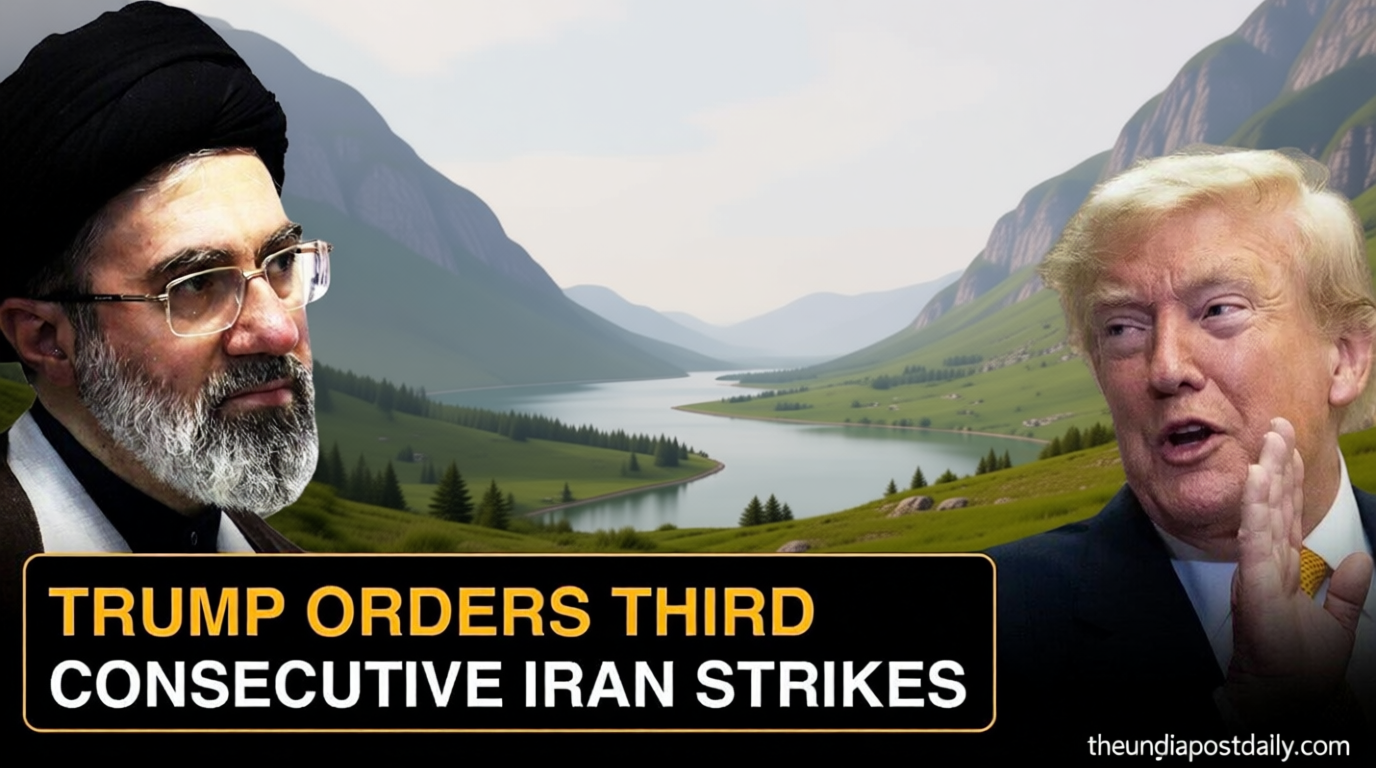
Trump formally notifies US Congress of renewed war with Iran as Washington hits targets in Tehran
Trump Formal Notice to Congress on Iran Conflict Theindiapostdaily.com – U.S. President Donald Trump has formally notified Congress of a renewed conflict with Iran, marking a pivotal shift in the…
Trump Formal Notice to Congress on Iran Conflict
Theindiapostdaily.com – U.S. President Donald Trump has formally notified Congress of a renewed conflict with Iran, marking a pivotal shift in the administration’s approach to military engagement. The declaration, issued on July 10, reaffirms the U.S. commitment to taking further action against Tehran, providing the government with an extended 60-day window to conduct operations without immediate legislative oversight. This move aligns with Trump’s broader strategy to leverage executive authority in addressing perceived threats to American interests, as highlighted by CBS News and corroborated by other reputable sources.
Strategic Strikes and Diplomatic Tensions
Trump’s formal notice follows a series of military strikes targeting Iranian assets in the Persian Gulf, which began on July 7. The president characterized these actions as a “necessary response” to Iran’s aggression, particularly its attacks on commercial vessels in the Strait of Hormuz—a critical maritime route for global oil trade. The decision to classify the situation as a “renewed war” signals a departure from the previous state of conflict, which had been temporarily suspended after Congress approved a resolution in May. This legal framework, known as the War Powers Resolution, requires the president to inform Congress within 60 days of deploying troops, and it allows for military action if Congress does not authorize it.
“The United States Armed Forces remain prepared to take further action as needed to defend American citizens and protect national interests,” stated the letter sent to Congress.
The document underscores the administration’s rationale, framing the conflict as an ongoing struggle to counter Iran’s destabilizing activities. While the initial strikes were conducted with speed, the formal declaration adds a layer of justification, emphasizing the need for sustained military pressure in the absence of diplomatic progress.
Historical Context and Political Implications
The resumption of hostilities traces back to February 2020, when U.S. forces targeted an Iranian oil tanker in the Gulf of Oman, escalating tensions between the two nations. This incident, followed by a retaliatory strike on a U.S. military base in Iraq, set the stage for a prolonged confrontation. Trump’s decision to reclassify the situation as a “renewed war” reflects not only the intensity of recent actions but also the administration’s desire to assert control over the conflict’s narrative. With midterm elections approaching, the move is seen as a calculated effort to bolster support for the president’s foreign policy stance, particularly among Republican voters.
Historically, the War Powers Resolution was designed to prevent prolonged military engagements without congressional approval. However, Trump’s invocation of it now raises questions about its effectiveness in curbing executive power. The president’s earlier termination of the war in May, which extended the 60-day period, was met with mixed reactions. While some lawmakers supported the decision, others expressed concern over the potential for unchecked military action. This latest move reinforces the administration’s reliance on the resolution to justify ongoing operations, particularly as Iran continues to challenge U.S. interests through its Revolutionary Guard Corps (IRGC).
International observers have noted the strategic importance of the Strait of Hormuz, which accounts for approximately 20% of the world’s oil supply. Iran’s requirement for ships to obtain approval from its IRGC before traversing the strait has been a major point of contention, prompting Washington to respond with targeted strikes. The formal notice to Congress ensures that the administration can act swiftly, while also signaling to global allies the U.S. resolve in safeguarding energy security. However, the declaration may also strain diplomatic ties, particularly with nations seeking to maintain a neutral stance in the region.
Legacy of the 2020 Conflict and Future Outlook
The 2020 conflict between the U.S. and Iran, which began with the downing of a U.S. drone by Iranian forces, has been a recurring flashpoint in the region. Trump’s renewed war declaration builds on this legacy, positioning the administration as a key player in shaping the geopolitical landscape. The 60-day window allows for rapid decision-making, which is crucial in a volatile environment where threats can escalate quickly. However, this period also serves as a test for the administration’s ability to balance military action with diplomatic efforts, especially as negotiations with Iran’s leadership remain uncertain.
Analysts suggest that Trump’s approach to the conflict is influenced by a combination of strategic and political factors. The emphasis on the War Powers Resolution highlights the president’s preference for legal clarity in justifying military operations. At the same time, the decision reflects broader concerns about Iran’s growing influence in the Middle East and its support for groups like Hezbollah and Hamas. As the situation unfolds, the U.S. will need to navigate both domestic and international scrutiny, ensuring that its actions are seen as both necessary and proportionate. The formal notice to Congress remains a critical tool in this effort, providing the administration with the flexibility to respond to emerging threats in real time.
The renewed war with Iran has significant implications for global energy markets, as the Strait of Hormuz remains a focal point for oil exports. With the U.S. and Iran locked in a cycle of strikes and counterstrikes, the risk of disrupting oil shipments has heightened, potentially leading to spikes in fuel prices and economic uncertainty. The formal notice to Congress not only legitimizes the current military posture but also sets the stage for potential legislative debates on the broader implications of the conflict. As the 60-day period begins, the administration faces the challenge of maintaining public support while addressing concerns from both allies and adversaries about the escalation of hostilities.