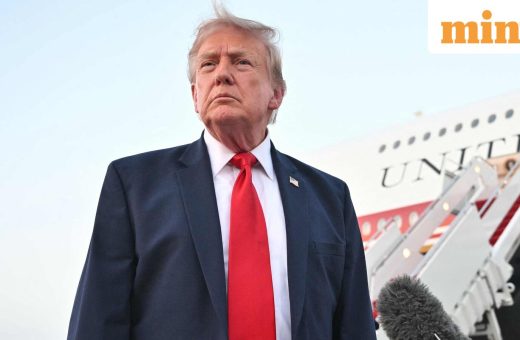
‘Poorly timed, meaningless’: Trump slams US Congress for passing War Powers resolution to end Iran war
Poorly Timed, Meaningless: Trump Condemns Congress on Iran War Resolution Theindiapostdaily.com – In a sharp critique, former U.S. President Donald Trump called a recent congressional resolution to end the Iran…
Poorly Timed, Meaningless: Trump Condemns Congress on Iran War Resolution
Theindiapostdaily.com – In a sharp critique, former U.S. President Donald Trump called a recent congressional resolution to end the Iran war “poorly timed and meaningless,” expressing frustration over the decision to intervene in his military strategy against Tehran. The resolution, passed by the Senate on Tuesday, marked a symbolic shift as lawmakers sought to assert control over the conflict, which had begun in early March. Trump’s remarks, posted on Truth Social, underscored his belief that the move was not only politically motivated but also counterproductive to his administration’s goals.
“So, I have Iran on the ‘ropes,’ ready to go down for the fall, willing to give us practically anything, and for the first time in decades, respecting the hell out of the United States and its President, ME, and the U.S. Senate decides to have a poorly timed and meaningless War Powers Act Vote, telling the Number One Sponsor of Terror in the World that the United States doesn’t like what I am doing to them, and I must stop. By doing so, they’ve provided aid and comfort to the enemy,”
Trump’s criticism extended to Republican lawmakers who supported the resolution, accusing them of undermining his leadership. “Four Republican Losers voted with the Dumocrats,” he said, adding that their actions confused Iran and made his job more difficult. Despite his ire, the president insisted he would still achieve his objectives, emphasizing his history of getting things done regardless of political opposition.
Congress Approves Resolution to End Iran Conflict
The resolution, which passed the Senate 50-48, was a direct response to the U.S. military’s ongoing operations in Iran. It came just days after the House of Representatives had already endorsed similar measures earlier in the month, signaling a bipartisan effort to curtail the war. The passage of the resolution highlighted growing concerns among lawmakers about the conflict’s duration and impact, even as some of Trump’s allies in the Republican Party voiced support.
While the measure was not binding without the president’s signature, it carried significant symbolic weight. Critics argued that it represented a lack of unified support for Trump’s foreign policy, particularly as the administration continued to assert that the war was progressing successfully. The resolution also coincided with Trump’s plans to seek additional funding for the Iran campaign, raising questions about its real-world consequences.
White House Challenges Validity of War Powers Act
Following the resolution’s approval, the White House quickly dismissed its effectiveness, claiming the War Powers Act was unconstitutional and lacked enforceable power. A spokesperson noted that the resolution, which did not require Trump’s endorsement, was essentially a ceremonial gesture. “The measure passed only because two Republicans were absent,” the official added, framing the vote as a political maneuver rather than a legislative necessity.
Trump’s administration maintained that the resolution was irrelevant, as the ceasefire with Iran had already been declared. They argued that Congress’s actions were a “poorly timed” move, done out of convenience rather than genuine intent. The White House’s stance reflected a broader strategy to downplay the resolution’s impact and keep the war on track for its strategic goals.
Understanding the War Powers Resolution
The 1973 War Powers Resolution (WPR) is a key legislative tool designed to limit presidential authority in foreign conflicts. It requires the president to notify Congress within 48 hours of committing forces to military action and to withdraw them within 60 days if Congress does not authorize the use of force. However, concurrent resolutions, such as the one passed in February, are not binding unless signed by the president, leaving room for executive discretion.
Despite this, the resolution’s passage was seen as a bold statement by Congress. It signaled a desire to reclaim influence over military decisions, especially after years of near-unanimous Republican support for Trump’s policies. The “poorly timed” nature of the vote, however, was criticized for coming at a moment when the administration had already achieved critical momentum in the Iran war.
Political Implications and Public Reaction
Trump’s backlash against the resolution highlighted the deepening rift between him and some members of his own party. The “meaningless” label suggested he viewed the vote as a superficial attempt to assert control, rather than a meaningful step toward ending the conflict. Public reactions were mixed, with some supporters praising Congress for checking presidential power and others condemning the move as an unnecessary interference.
Analysts noted that the resolution’s timing and phrasing could influence the upcoming budget debates. With the administration planning to seek billions in funding for the Iran war, the “poorly timed” resolution might complicate efforts to secure continued support. However, its symbolic value remained clear, as it marked a rare moment of congressional unity on a foreign policy issue, even if it was short-lived.