Humanoid robots perform surgeries for first time in breakthrough UC San Diego trial
Humanoid Robots Perform Surgeries for First Time in UC San Diego Breakthrough Trial Humanoid robots perform surgeries for first - Humanoid robots perform
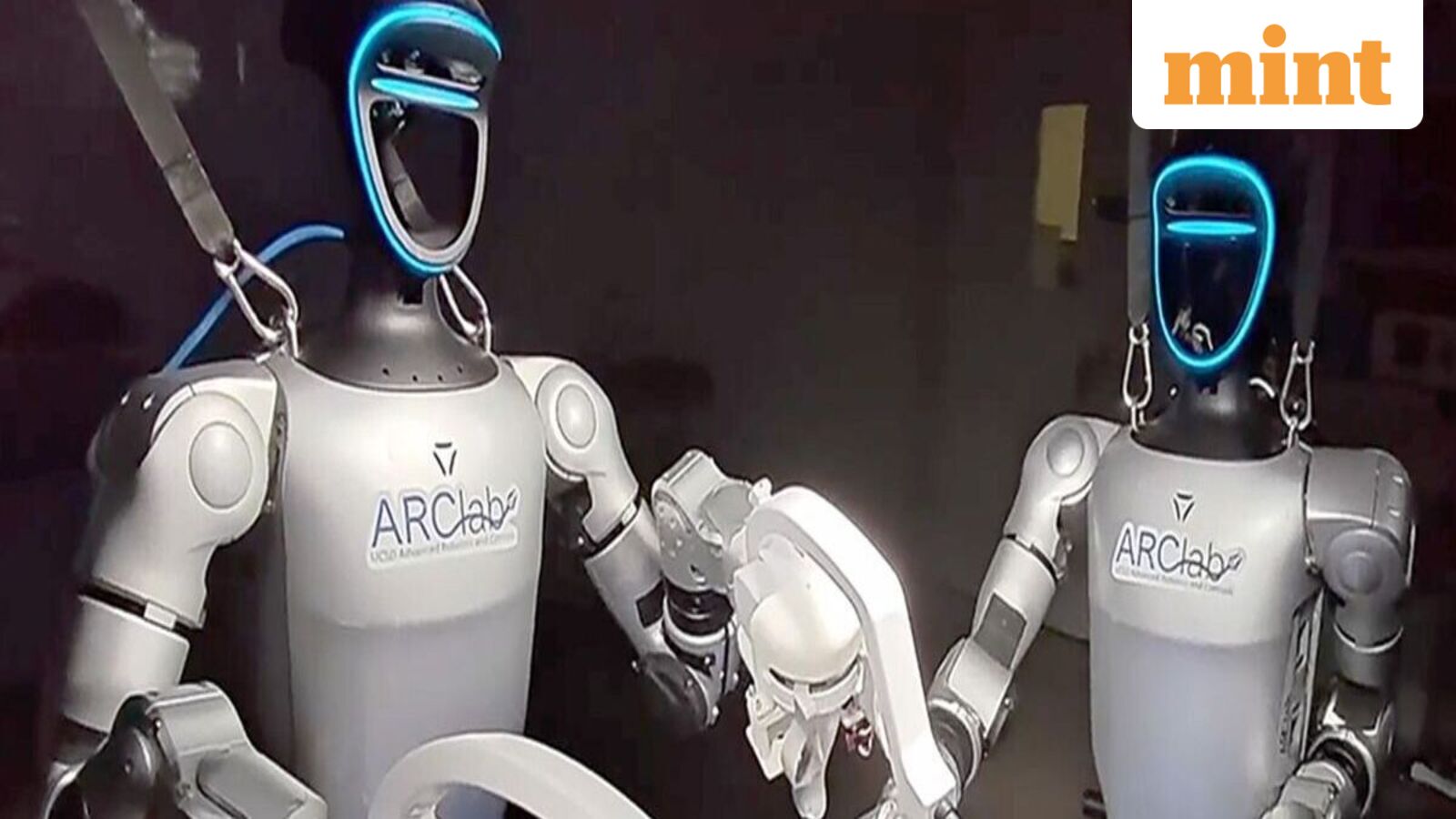
Humanoid Robots Perform Surgeries for First Time in UC San Diego Breakthrough Trial
Theindiapostdaily.com – Humanoid robots perform surgeries for the first time in a landmark medical trial conducted by researchers at the University of California San Diego. This pioneering effort demonstrates the potential of advanced robotics to revolutionize surgical practices, offering new solutions for complex procedures. The trial, which involved two successful operations on large non-primate mammals, marks a significant step toward integrating humanoid robots into real-world surgical environments. By combining human expertise with robotic precision, the experiment highlights how technology might soon redefine healthcare delivery in hospitals, disaster zones, and even space missions.
Key Surgical Demonstrations
The trial showcased two distinct scenarios where humanoid robots played a critical role. In one procedure, a human surgeon guided a robot through a gallbladder removal, maintaining direct control while the machine executed precise movements. In the second case, two robots operated independently in tandem, demonstrating their ability to collaborate without human intervention. These experiments not only tested the robots’ technical capabilities but also evaluated their adaptability in dynamic settings. The success of both procedures provides valuable insights into the future of robotic-assisted surgery.
Humanoid robots perform surgeries for the first time by leveraging cutting-edge teleoperation systems. The robots, designed for mobility and precision, were equipped with sensors and tools to mimic human dexterity. During the trial, surgeons used specialized interfaces to control the robots in real time, ensuring accuracy and responsiveness. This approach bridges the gap between fully autonomous systems and traditional robotic surgery, offering a hybrid model that could enhance efficiency and safety in high-stakes operations.
Teleoperation at the Core
Teleoperation remains the cornerstone of this trial’s success. Unlike conventional robotic systems that operate within fixed setups, the humanoid robots used in the study can navigate varied environments, from operating rooms to remote locations. This adaptability is crucial for addressing challenges in areas with limited medical resources. By enabling surgeons to perform procedures on patients thousands of kilometers away, the technology could transform healthcare accessibility. For instance, experts in urban centers could assist in rural or disaster-stricken regions, reducing the need for physical presence during critical surgeries.
The trial also revealed the importance of human oversight. While the robots executed tasks with remarkable precision, surgeons remained actively involved, monitoring progress and making adjustments as needed. This collaboration ensures that the technology complements rather than replaces human expertise. The integration of teleoperation with humanoid robots opens doors for applications in military operations, where rapid medical intervention can save lives in combat zones. Future developments may further streamline this process, allowing for more autonomous decision-making under human supervision.
Advantages Over Traditional Systems
Humanoid robots offer distinct advantages over traditional surgical robots. Their human-like mobility allows them to maneuver in tight spaces and perform tasks beyond simple incisions. For example, they can retrieve equipment, prepare the surgical area, and even assist with patient positioning, reducing the workload on medical staff. Additionally, these robots require minimal infrastructure changes, making them easier to integrate into existing hospitals without costly overhauls. This flexibility is particularly beneficial for facilities with limited resources, as it allows for scalable adoption of the technology.
Another key benefit is the potential to alleviate the shortage of skilled surgeons. In regions where specialist availability is low, humanoid robots could provide essential support, ensuring that patients receive timely and accurate care. The Surgie robots, which are smaller than conventional systems—measuring about 5 feet in height and weighing 60 pounds—exemplify this innovation. Their compact design reduces logistical challenges, enabling easier transport and use in diverse settings. As the technology matures, these robots may become standard tools in both routine and high-risk surgical scenarios.
Potential Impact on Healthcare
This breakthrough has far-reaching implications for healthcare. By enabling remote surgeries, it addresses the challenge of geographic disparities in medical care. Patients in underserved areas could gain access to expert procedures without the need for specialist travel. Furthermore, the use of humanoid robots in disaster scenarios, such as earthquakes or pandemics, could save lives by maintaining surgical operations in unstable environments. In space exploration, the technology might one day support medical interventions on other planets, expanding human reach beyond Earth.
Humanoid robots perform surgeries for the first time in this trial, but their applications extend beyond the operating room. For example, they could assist in training medical professionals by simulating complex procedures or in research settings by conducting repetitive tasks with consistency. The technology also reduces the risk of human error in intricate steps, as robots can maintain steady precision. However, achieving full integration will require overcoming challenges such as latency and calibration time, which the research team is actively addressing.
Role of Human Supervision
While humanoid robots are not designed to replace surgeons entirely, their role as assistants is crucial. Early applications focus on supporting human operators by handling non-surgical tasks, such as holding instruments or adjusting lighting. As the technology advances, robots may take on more complex roles, such as performing partial procedures under human guidance. This evolution will depend on refining key aspects like response time and error correction mechanisms. The trial’s results suggest that with continued development, humanoid robots could become indispensable tools in modern medicine.
Researchers are optimistic about the future of this technology. They aim to improve robot reliability, reduce operation delays, and enhance automation capabilities to ensure seamless adoption. As humanoid robots perform surgeries for the first time, they set a new standard for precision and accessibility. The next step involves human clinical trials, which will test the technology’s effectiveness in real-world conditions. If successful, this innovation could mark a new era in healthcare, where human and machine collaboration leads to better patient outcomes and broader medical accessibility.