Detainees at Florida’s Alligator Alcatraz transferred elsewhere as detention centre likely to be closed, says ICE
Detainees at Florida's Alligator Alcatraz Relocated Amid Closure Plans, Says ICE Detainees at Florida s Alligator Alcatraz - Detainees at Florida's Alligator
Detainees at Florida’s Alligator Alcatraz Relocated Amid Closure Plans, Says ICE
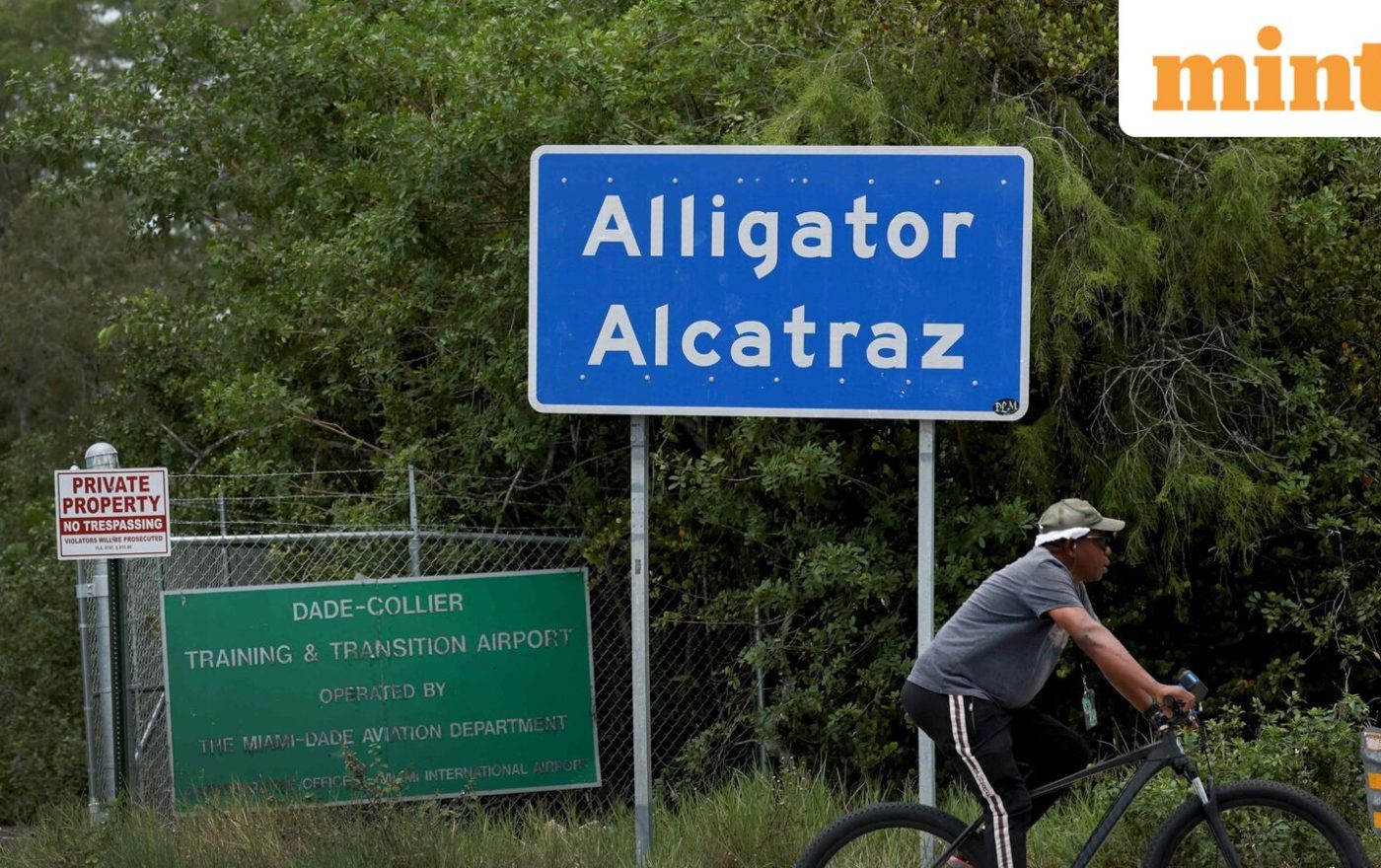
Theindiapostdaily.com – Detainees at Florida’s Alligator Alcatraz have been moved to other facilities as the detention center faces potential closure, according to ICE. On Tuesday, U.S. Immigration and Customs Enforcement (ICE) officials confirmed that all individuals held at the facility had been transferred to alternative locations ahead of the 2025 hurricane season. This proactive move aims to safeguard detainees during the extreme weather conditions that often threaten the remote facility. While the exact number of individuals relocated and their new destinations were not disclosed, the decision signals a shift in ICE’s operational strategy for the state.
‘With the onset of hurricane season, we and the state of Florida have relocated individuals detained at the facility to ensure their safety during the weather event,’ said an ICE statement. The agency emphasized that the closure is not a permanent decision but a temporary measure to address seasonal risks. However, the move has raised questions about the future of the facility, which has been a focal point of both political and public debate since its inception.
Facility Background and Governor’s Comments
Located in a secluded part of Big Cypress National Preserve, Florida’s Alligator Alcatraz was established in July 2024 under Governor Ron DeSantis’s administration. The facility, named for its isolation and resemblance to a peninsular ‘alcatraz,’ was built to support immigration enforcement efforts, particularly those targeting undocumented migrants. DeSantis, who has consistently advocated for stricter immigration policies, highlighted the center’s role as a key component of his strategy to expedite removals. In a press briefing on Tuesday, he reiterated that the state had no control over the facility’s operation, which was managed by the Department of Homeland Security (DHS).
‘The state doesn’t direct people there. It’s DHS that directs them. If DHS stops directing them, we won’t continue,’ DeSantis stated. ‘It was never intended to be permanent.’ He added that the $600 million investment in the facility was a strategic choice to address immediate needs, but the state remains committed to its sustainability only if the demand for immigration detention persists.
Legal and Environmental Concerns
Florida’s Alligator Alcatraz has faced multiple legal challenges since its opening, with critics arguing that its conditions fall short of federal standards. In April, a federal appellate court ruled to temporarily maintain the facility’s operation, citing that it was not subject to federal environmental oversight. This decision allowed the center to remain open despite a lower court’s order to shut it down, as the state had not yet been required to conduct an impact assessment. However, the lack of federal oversight has drawn scrutiny from advocacy groups, who claim the facility’s location in a protected natural area could harm local ecosystems.
Environmentalists have raised concerns about the facility’s proximity to Big Cypress National Preserve, a region known for its wetlands and wildlife. ‘While the facility serves a critical role in immigration enforcement, its operation may disrupt the delicate balance of the environment,’ said a spokesperson for a conservation organization. The legal battle highlights the tension between national security priorities and environmental stewardship, a debate that has intensified with the center’s expanding use.
Immigration Arrests Surge in Florida
Florida has become a major hub for immigration arrests, with numbers surging since the start of President Donald Trump’s second term on January 20, 2025. According to data from the Associated Press, over 39,000 immigrants were apprehended in the 416 days following that date, compared to just 11,088 during the same period under the Biden administration. This sharp increase has been attributed to heightened enforcement efforts, including the use of Florida’s Alligator Alcatraz as a key detention site. The facility’s capacity and strategic location have enabled rapid processing of detainees, though its temporary status has sparked uncertainty about its long-term role.
‘We’ve invested over $600 million in this facility, but we believed it would only be necessary for six months to a year,’ DeSantis said during the press briefing. The governor’s comments underscore the financial commitment to the project, yet the closure discussions suggest that the state may reassess its investment if the demand for immigration detention declines. With daily arrests averaging 93 in Florida, second only to Texas’s 239, the facility’s operation has been tied to broader enforcement trends across the country.
Future Implications and Public Reaction
The relocation of detainees from Florida’s Alligator Alcatraz has prompted mixed reactions from stakeholders. Advocacy groups have praised the move as a step toward improving safety and reducing environmental risks, while some lawmakers have expressed concern about the potential impact on immigration operations. The facility’s closure would mean a significant shift in how ICE manages detainees in the region, particularly as the agency prepares for the 2025 hurricane season. With no official timeline for the center’s shutdown, officials have left room for uncertainty, but the decision to transfer detainees signals a possible end to its use in the near future.
As the facility’s fate remains in question, its role in the broader context of immigration policy continues to evolve. The relocation of detainees highlights the dynamic nature of immigration enforcement, where strategic decisions are often influenced by both operational needs and external factors such as natural disasters. Florida’s Alligator Alcatraz, once a symbol of aggressive border control, now stands as a case study in the challenges of balancing efficiency, safety, and environmental responsibility in immigration detention. The outcome of this situation will likely shape the future of similar facilities across the nation, as policymakers grapple with the costs and consequences of maintaining large-scale detention operations in vulnerable regions.